-
Use Cases
-
Resources
-
Pricing
1525 - 1701
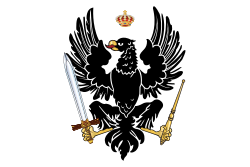
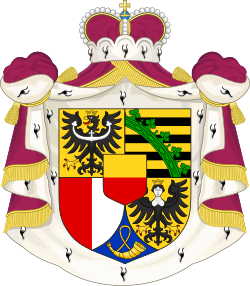
The House of Hohenzollern ruled Prussia as a feudal monarchy from 1525 until 1701, before the state’s transformation into a kingdom and eventually an absolute monarchy.
Image source: Duchy of Prussia

1600 - 1696
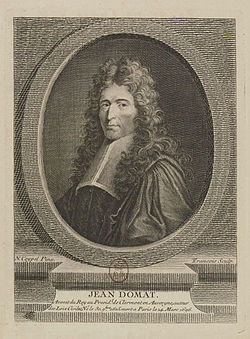
In the 17th century, French legal theorist Jean Domat defended absolute monarchy in works including On Social Order and Absolute Monarchy, arguing that it preserved the natural order intended by God.
Image source: Jean Domat
1629 - 1640
Charles I ruled without the Parliament of England for 11 years beginning in 1629. His attempt to govern along absolutist European lines intensified political and religious opposition.
1637 - 1638
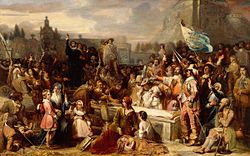
Charles I’s attempt to impose episcopal polity on the Church of Scotland provoked resistance from the Covenanters. Their rebellion helped produce the Bishops’ Wars.
Image source: Bishops' Wars
1639 - 1640
The Bishops’ Wars pitted Charles I’s government against Scottish Covenanters and exposed the political and religious dangers of the king’s effort to impose centralized authority.
1642 - 1651
Fear that Charles I sought to establish absolutist government along European lines became a major cause of the English Civil War, which challenged royal authority and reshaped the English constitution.
Image source: English Civil War

1643 - 1715
Louis XIV, who reigned from 1643 to 1715, became the emblematic ruler of French absolutism. His long reign concentrated political power around the monarchy.
Image source: Louis XIV

1650 - 1715
Louis XIV is traditionally associated with the declaration L’état, c’est moi!, meaning “I am the State!” The phrase expresses the absolutist ideal of sovereignty embodied in the monarch.
1660 - 1848
Absolute monarchy lasted in Denmark until 1848, when political change associated with the Revolutions of 1848 brought the absolutist era to a close.
Image source: History of Denmark

1660 - 1814
Absolute monarchy lasted in Norway until 1814. Its end marked the disappearance of one of Europe’s long-standing absolutist systems.
Image source: History of Norway

This Age of Absolutism timeline was generated with the help of AI, using information found on the internet.
We work hard to keep these timelines accurate, but mistakes do get through. If you spot one, email us at [email protected] and we'll fix it for future visitors.
Generate yours with AI or build it from scratch, for free.