
-
Use Cases
-
Resources
-
Pricing
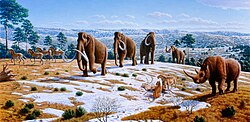
The Pleistocene Epoch, often called the Ice Age, was a geological epoch lasting from about 2.58 million to 11,700 years ago. It was characterized by repeated glacial cycles, the rise and spread of early humans, and iconic megafauna such as woolly mammoths, saber-toothed cats, and giant ground sloths. More Less
65000 BCE
Cave paintings in Spain, such as those at La Pasiega and Maltravieso, have been dated to over 60,000 years ago, suggesting Neanderthals produced symbolic art before modern humans arrived in Europe.
Image source: Art of the Upper Paleolithic

130000 BCE - 115000 BCE
The Eemian interglacial was the last warm period before the final glacial advance, with global temperatures slightly warmer than today and sea levels several meters higher.
Image source: Last Interglacial

26500 BCE - 20000 BCE
Ice sheets reached their greatest extent of the last glacial cycle, covering much of North America and northern Europe, with global sea levels dropping about 120 meters below present levels.
Image source: Last Glacial Maximum

160000 BCE - 40000 BCE
Denisovans, an archaic human group known mainly from genetic evidence and a few fossils from Denisova Cave in Siberia, lived across Asia during the Pleistocene and interbred with both Neanderthals and modern humans.
Image source: Denisovan

70000 BCE - 50000 BCE
During the Late Pleistocene, Homo sapiens undertook major migrations out of Africa around 70,000 to 50,000 years ago, spreading along coastal routes into Asia and eventually reaching Australia and Europe.
Image source: Recent African origin of modern humans

65000 BCE - 50000 BCE
Archaeological evidence indicates humans reached the Australian continent by at least 50,000 years ago, crossing sea channels and becoming the continent's first inhabitants.
Image source: Prehistory of Australia

30000 BCE - 11000 BCE
Lowered sea levels exposed Beringia, a land bridge connecting Siberia and Alaska, enabling humans and animals to migrate between Asia and the Americas.
Image source: Beringia

16000 BCE - 13000 BCE
Paleoindians moved southward from Beringia into North and South America, likely following coastal routes and ice-free corridors, establishing human populations across two continents.
Image source: Peopling of the Americas

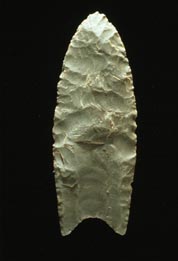
13500 BCE - 12800 BCE
The Clovis culture is recognized by distinctive fluted spear points found across North America, associated with big-game hunting near the end of the Pleistocene.
Image source: Clovis culture
50000 BCE - 10000 BCE
A wave of megafaunal extinctions swept the planet, eliminating species such as mammoths, giant sloths, and marsupial lions, driven by a combination of climate change and expanding human populations.
Image source: Quaternary extinction event
This Pleistocene Epoch timeline was generated with the help of AI, using information found on the internet.
We work hard to keep these timelines accurate, but mistakes do get through. If you spot one, email us at [email protected] and we'll fix it for future visitors.
Generate yours with AI or build it from scratch, for free.


