-
Use Cases
-
Resources
-
Pricing
The Polio Epidemic was a devastating period in modern medical history, primarily spanning the 1940s and 1950s, when poliomyelitis outbreaks paralyzed thousands of people—mostly children—each year across the United States and worldwide. The fear of summer outbreaks led to quarantines and school closures until Dr. Jonas Salk's inactivated polio vaccine, announced safe in 1955, and Albert Sabin's oral vaccine transformed prevention. Global vaccination campaigns have since reduced polio to near eradication, with only a few countries still reporting endemic cases. More Less
1773
% complete
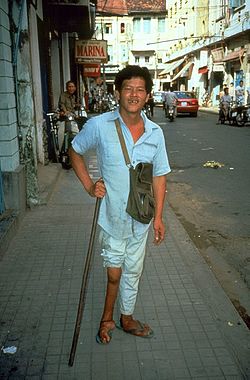
In 1773, Scott was said to have developed 'a severe teething fever which deprived him of the power of his right leg', an early anecdotal account consistent with paralytic polio.
Image source: Polio
1789
% complete
In 1789, British physician Michael Underwood provided the first clinical description of poliomyelitis, referring to polio as 'a debility of the lower extremities'.
1800 - 1850
% complete
In the early nineteenth century the disease was known variously as Dental Paralysis, Infantile Spinal Paralysis, Creeping Paralysis, Essential Paralysis of Children, Regressive Paralysis, Myelitis of the Anterior Horns, Tephromyelitis (from the Greek tephros, meaning 'ash-gray') and Paralysis of the Morning.
1840
% complete
The first medical report on poliomyelitis was published by Jakob Heine in 1840; he called the disease Lähmungszustände der unteren Extremitäten ('Paralysis of the lower Extremities').
Image source: Jakob Heine
1890
% complete
Karl Oskar Medin was the first to empirically study a poliomyelitis epidemic in 1890, contributing to the disease sometimes being known as Heine-Medin disease.
Image source: Karl Oskar Medin
1843
% complete
The first report of multiple polio cases was published in 1843 and described an 1841 outbreak in Louisiana.
1893
% complete
A report documented a cluster of 26 cases of polio in Boston in 1893, one of the earliest recognized outbreaks in the United States.
1900
% complete
Major polio epidemics were unknown before the 20th century; localized paralytic polio epidemics began to appear in Europe and the United States around 1900. By 1910, frequent epidemics became regular events throughout the developed world, primarily in cities during the summer months.
1907
% complete
Numerous epidemics of varying magnitude began to appear throughout the country; by 1907 approximately 2,500 cases of poliomyelitis were reported in New York City.
1916 - 1955
% complete
From 1916 onward, a polio epidemic appeared each summer in at least one part of the United States, with the most serious occurring in the 1940s and 1950s.
1916
% complete
The 1916 epidemic caused widespread panic and thousands fled the city to nearby mountain resorts; movie theaters were closed, meetings were canceled, public gatherings were almost nonexistent, and children were warned not to drink from water fountains, and told to avoid amusement parks, swimming pools, and beaches.
Image source: 1916 New York City polio epidemic
Jun 17, 1916
% complete
On Saturday, June 17, 1916, an official announcement of the existence of an epidemic polio infection was made in Brooklyn, New York.
1949
% complete
In the epidemic of 1949, 42,173 cases were reported in the United States and 2,720 deaths from the disease occurred.
1950
% complete
By 1950, the peak age incidence of paralytic poliomyelitis in the United States had shifted from infants to children aged 5 to 9 years; about one-third of the cases were reported in persons over 15 years of age.
1952
% complete
In the United States, the 1952 polio epidemic was the worst outbreak in the nation's history, with 3,145 deaths, and is credited with heightening parents' fears of the disease and focusing public awareness on the need for a vaccine.
1979
% complete
The last cases of paralytic poliomyelitis caused by endemic transmission of poliovirus in the United States were in 1979, when an outbreak occurred among the Amish in several Midwestern states.
1917 - 1953
% complete
Following the 1916 epidemics and having experienced little success in treating polio patients, researchers set out to find new and better treatments. Between 1917 and the early 1950s, several therapies were explored in an effort to prevent deformities, including hydrotherapy and electrotherapy.
1919
% complete
Some families received support through philanthropic organizations such as the Ancient Arabic Order of the Nobles of the Mystic Shrine fraternity, which established a network of pediatric hospitals in 1919, the Shriners Hospitals for Children, to provide care free of charge for children with polio.
Image source: Shriners Hospitals for Children
1926
% complete
In 1926, Franklin Roosevelt, convinced of the benefits of hydrotherapy, bought a resort at Warm Springs, Georgia, where he founded the first modern rehabilitation center for treatment of polio patients, which still operates as the Roosevelt Warm Springs Institute for Rehabilitation.
Image source: Warm Springs Historic District
1928 - 1940
% complete
In treating polio cases in rural Australia between 1928 and 1940, Sister Elizabeth Kenny developed a form of physical therapy that—instead of immobilizing affected limbs—aimed to relieve pain and spasms through hot, moist packs and early activity and exercise to maximize the strength of unaffected muscle fibers.
Oct 12, 1928
% complete
The first iron lung used in the treatment of polio was invented by Philip Drinker, Louis Agassiz Shaw, and James Wilson at Harvard, and tested October 12, 1928, at Children's Hospital, Boston.
Image source: Iron lung
1940
% complete
In 1940, Sister Elizabeth Kenny, an Australian bush nurse from Queensland, arrived in North America and challenged the standard immobilization approach to polio treatment. Slowly her ideas won acceptance, and by the mid-20th century had become the hallmark for the treatment of paralytic polio.
1952
% complete
When the big polio epidemic hit Denmark in 1952, the epidemic hospital, Blegdamshospitalet in Copenhagen, had only one Emerson iron lung and some cuirass-type ventilators. Large numbers of patients were ventilated by hand ('bagged') by medical students and anyone else on hand because of the large number of bulbar polio patients.
Image source: Bjørn Aage Ibsen
1952
% complete
The hand-ventilation crisis during the Copenhagen epidemic led to the invention of the positive pressure ventilator by anesthesiologist Bjørn Aage Ibsen in 1952. Lessons from Copenhagen bore fruit in Stockholm one year later in 1953 during the next European polio epidemic.
1970
% complete
The Emerson Iron Lung, a widely used negative-pressure ventilator for polio patients, was produced until 1970.
2009
% complete
In 2009 as part of the Q150 celebrations, the Kenny regimen for polio treatment was announced as one of the Q150 Icons of Queensland for its role as an iconic 'innovation and invention'.
Image source: Elizabeth Kenny
2025
% complete
By 2025, the majority of those polio survivors who need artificial respiration use the positive pressure ventilator, reflecting the lasting impact of Ibsen's innovation during the 1952 Copenhagen epidemic.
1935
% complete
In 1935 Maurice Brodie, a research assistant at New York University, and William Hallock Park of the New York City Department of Health attempted to produce a polio vaccine, procured from virus in ground up monkey spinal cords and killed by formaldehyde.
Image source: Polio vaccine
1938
% complete
In 1938 Roosevelt helped to found the National Foundation for Infantile Paralysis (now known as the March of Dimes), that raised money for the rehabilitation of people with paralytic polio, and was instrumental in funding the development of polio vaccines.
Image source: March of Dimes
1950
% complete
In 1950 William Hammon at the University of Pittsburgh isolated serum, containing antibodies against poliovirus, from the blood of polio survivors. Between September 1951 and July 1952 nearly 55,000 children were involved in a clinical trial of the anti-polio serum.
1950
% complete
The first successful demonstration of a polio vaccine was by Hilary Koprowski in 1950, using a live attenuated virus in an oral vaccine.
Image source: Hilary Koprowski
1952
% complete
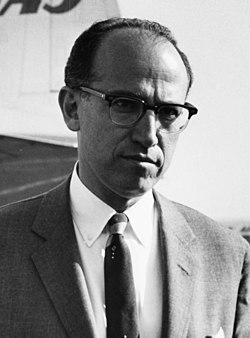
The first polio vaccine was developed by Jonas Salk, first tested in 1952 using the HeLa cell, and announced to the world by Salk on April 12, 1955.
Image source: Jonas Salk
1954
% complete
Researchers including Enders, Weller, and Robbins were recognized for their labors with the Nobel Prize in 1954 for their work enabling the growth of poliovirus in tissue culture, paving the way for vaccine development.
1954
% complete
In 1954, the Salk vaccine was tested for its ability to prevent polio; its field trials grew to be the largest medical experiment in history. By 1955 the March of Dimes had invested $25.5 million in research, funding both Jonas Salk's and Albert Sabin's vaccine development, the field trial, and supplies of free vaccine for thousands of children.
Apr 12, 1955
% complete
On April 12, 1955, Jonas Salk announced his polio vaccine to the world, and in 1955 it was chosen for use throughout the United States.
1957
% complete
By 1957, following mass immunizations promoted by the March of Dimes, the annual number of polio cases in the United States was reduced, from a peak of nearly 58,000 cases, to 5,600 cases.
1957 - 1962
% complete
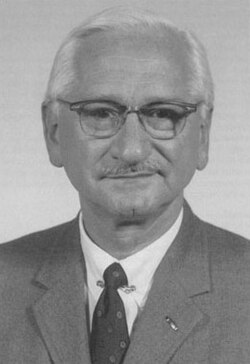
Human trials of Albert Sabin's oral polio vaccine began in 1957 and it was licensed in 1962.
Image source: Albert Sabin
1961
% complete
Following the development of oral polio vaccine, a second wave of mass immunizations led to a further decline in the number of cases: by 1961, only 161 cases were recorded in the United States.
1970 - 1990
% complete
Polio survivors were often in the forefront of the disability rights movement that emerged in the United States during the 1970s, and pushed legislation such as the Rehabilitation Act of 1973 which protected qualified individuals from discrimination based on their disability, and the Americans with Disabilities Act of 1990.
Image source: Americans with Disabilities Act of 1990
1977
% complete
In 1977, the National Health Interview Survey reported that there were 254,000 people living in the United States who had been paralyzed by polio.
Image source: Post-polio syndrome
2001
% complete
The World Health Organization estimated that there were 10 to 20 million polio survivors worldwide in 2001. According to local polio support groups and doctors, some 40,000 polio survivors with varying degrees of paralysis lived in Germany, 30,000 in Japan, 24,000 in France, 16,000 in Australia, 12,000 in Canada and 12,000 in the United Kingdom.
Or browse the full history timeline directory, with more than 2,000 topics.
This Polio Epidemic timeline was generated with the help of AI, using information found on the internet.
We work hard to keep these timelines accurate, but mistakes do get through. If you spot one, email us at [email protected] and we'll fix it for future visitors.
Generate yours with AI or build it from scratch, for free.
Export your timeline, add your own events, edit or remove AI-generated events, and much more
No credit card required.
Cancel anytime.
Cancel anytime.
You can create an unlimited number of timelines with up to 10 events on each one, customize how they look, export them to PDF, PNG, PowerPoint, CSV, and Excel, and share them with a link. Paid plans raise the event limit and add features like spreadsheet imports and collaborators.
Yes. You can cancel your subscription from your account page at any time, and you will not be charged again. Your subscription stays active for the rest of the period you already paid for.
Yes. We will email you a reminder before the annual renewal, and we will also email you a receipt.
Yes. You can email us within 15 days of any payment, and we will issue you a full refund.
Check out our pricing docs or send us an email anytime: [email protected].