-
Use Cases
-
Resources
-
Pricing
Smallpox is one of the deadliest diseases in human history, caused by the variola virus. It plagued humanity for thousands of years, killing millions and shaping empires, until Edward Jenner's 1796 vaccination breakthrough paved the way for a global eradication campaign that succeeded in 1980 — the only human disease ever fully eradicated. More Less
165 - 180
% completado
The Antonine Plague swept through the Roman Empire during the reign of Marcus Aurelius, killing an estimated five million people. Many historians believe it was caused by smallpox or measles, though the exact pathogen remains uncertain.
Image source: Antonine Plague
585
% completado
Smallpox reached Japan from the Asian mainland around 585, marking one of the earliest documented introductions of the disease to East Asia. Epidemics recurred there repeatedly over subsequent centuries.
Image source: History of smallpox
900
% completado
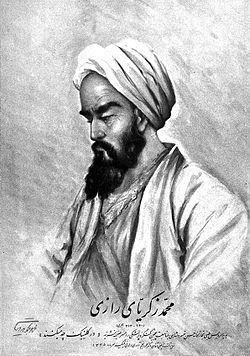
The Persian physician Rhazes wrote 'Kitab al-Jadari wa al-Hasbah,' the first clear clinical description distinguishing smallpox from measles. His work became a foundational medical text in Europe for centuries.
Image source: Abu Bakr al-Razi
1096 - 1291
% completado
The Crusades accelerated the movement of armies and pilgrims between Europe and the Middle East, facilitating the spread of smallpox throughout the region and contributing to recurring epidemics in medieval Europe.
1520
% completado
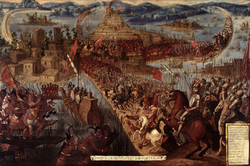
A devastating smallpox epidemic killed large portions of the Aztec population, including Emperor Cuitlahuac, severely weakening resistance to Hernán Cortés's forces. The epidemic was pivotal in the fall of Tenochtitlan.
Image source: Fall of Tenochtitlan
1525
% completado
Smallpox preceded the Spanish into the Andes, killing the Inca emperor Huayna Capac and triggering a war of succession that weakened the empire before Francisco Pizarro's arrival.
Image source: Spanish conquest of the Inca Empire
1721
% completado
After observing variolation practices in the Ottoman Empire, Lady Mary Wortley Montagu promoted the technique in Britain, having her daughter inoculated in 1721. It marked the first deliberate attempt to prevent smallpox in Western Europe.
Image source: Variolation
1721 - 1722
% completado
During the Boston epidemic, Reverend Cotton Mather and physician Zabdiel Boylston conducted the first variolation trials in America despite fierce public opposition, demonstrating reduced mortality among inoculated patients.
Image source: 1721 Boston smallpox outbreak
1770
% completado
A major pandemic of smallpox ravaged Europe in the late 18th century, killing an estimated 400,000 Europeans annually at its height and underscoring the urgent need for prevention.
May 14, 1796
% completado
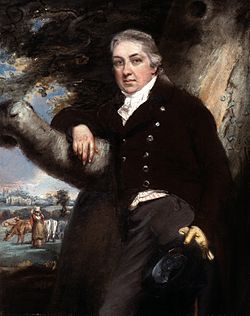
Edward Jenner inoculated eight-year-old James Phipps with material from a cowpox sore and later demonstrated immunity to smallpox. His experiment founded the science of vaccination and gave the practice its name, from 'vacca,' Latin for cow.
Image source: Edward Jenner
1798
% completado
Jenner published his findings on vaccination, documenting 23 cases. Despite initial skepticism, his work gradually gained acceptance and spread across Europe and North America within a few years.
1803 - 1806
% completado
King Charles IV of Spain sponsored the Balmis Expedition, which used arm-to-arm transmission of the vaccine by orphan boys to carry smallpox vaccination across the Atlantic to Spanish America and on to the Philippines.
Image source: Balmis Expedition
1807
% completado
Bavaria became one of the first states to mandate smallpox vaccination in 1807, followed by Sweden. These laws began the long history of compulsory vaccination legislation in Europe.
Image source: Vaccination policy
1840
% completado
Britain's Vaccination Act of 1840 provided free smallpox vaccination through the poor law system and discouraged variolation, marking a shift toward state-sponsored immunization programs.
1853
% completado
Following stricter compulsory vaccination laws, the Anti-Vaccination League formed in England, protesting mandatory inoculation and sparking debates over personal liberty and public health that continue today.
Image source: Anti-vaccine activism
1870 - 1872
% completado
A massive smallpox epidemic during and after the Franco-Prussian War killed hundreds of thousands in Europe, with unvaccinated French troops suffering far more than vaccinated Prussian soldiers, demonstrating vaccination's protective value.
Image source: Smallpox
1898 - 1904
% completado
Outbreaks in cities like Boston and Milwaukee led to quarantine campaigns, forced vaccinations, and civil rights disputes, including the landmark case of Henning Jacobson that led to Massachusetts v. Moberly-style legal battles over compulsory vaccination.
1901 - 1902
% completado
William Gorgas's sanitation and vaccination campaigns in post-war Havana dramatically reduced smallpox and yellow fever, demonstrating that systematic public health measures could control epidemic diseases in urban settings.
Image source: William C. Gorgas
Feb 20, 1905
% completado
The U.S. Supreme Court ruled that states could lawfully compel vaccination to protect public health, establishing a foundational precedent for American public health law.
Image source: Jacobson v. Massachusetts
1920
% completado
Advances in freeze-drying technology in the early 20th century made smallpox vaccine heat-stable, a critical development that later enabled mass vaccination in remote and tropical regions.
Image source: Freeze drying
1936
% completado
Through compulsory mass vaccination, the Soviet Union eliminated endemic smallpox by 1936, becoming one of the first large countries to do so and inspiring later proposals for global eradication.
Image source: Smallpox
1958
% completado
At the Eleventh World Health Assembly, Soviet deputy minister of health Viktor Zhdanov proposed a worldwide program to eradicate smallpox. The WHO adopted the resolution, launching the first global eradication effort.
1967
% completado
The World Health Organization launched its Intensified Programme under D.A. Henderson, combining mass vaccination with surveillance and containment. It aimed to eradicate smallpox within ten years using improved freeze-dried vaccines and bifurcated needles.
1968 - 1969
% completado
In eastern Nigeria during the Nigerian Civil War era, teams led by William Foege successfully contained outbreaks through targeted ring vaccination rather than blanket campaigns, validating the surveillance-containment approach adopted worldwide.
Image source: Ring vaccination
Oct 26, 1977
% completado
Ali Maow Maalin, a hospital cook in Merka, Somalia, developed the last naturally occurring case of smallpox. He recovered, and no further natural cases were ever detected anywhere in the world.
Image source: Ali Maow Maalin
Aug 11, 1978
% completado
Medical photographer Janet Parker died after contracting smallpox from a laboratory above her workplace at the University of Birmingham Medical School. The incident prompted tighter global biosafety regulations for poxvirus research.
Image source: 1978 smallpox outbreak in the United Kingdom
Dec 9, 1979
% completado
The WHO Global Commission for the Certification of Smallpox Eradication concluded that smallpox had been eradicated worldwide, following two years without any reported cases. It was the first human disease ever eliminated globally.
May 8, 1980
% completado
The Thirty-third World Health Assembly formally declared smallpox eradicated, adopting a resolution urging all nations to cease vaccination. The achievement saved an estimated five million lives annually and cost only about $300 million over the campaign.
Image source: World Health Assembly
1983
% completado
All known remaining stocks of variola virus were consolidated into two WHO collaborating centers: the Centers for Disease Control and Prevention in Atlanta and the State Research Center of Virology and Biotechnology VECTOR in Russia.
Dec 2002
% completado
Following the 2001 anthrax attacks and fears of smallpox as a bioweapon, the United States resumed vaccination for military personnel and selected healthcare workers and expanded national stockpiles of vaccine.
Image source: Smallpox vaccine
Or browse the full history timeline directory, with more than 2,000 topics.
This History of Smallpox timeline was generated with the help of AI, using information found on the internet.
We work hard to keep these timelines accurate, but mistakes do get through. If you spot one, email us at [email protected] and we'll fix it for future visitors.
Generate yours with AI or build it from scratch, for free.
Export your timeline, add your own events, edit or remove AI-generated events, and much more
No credit card required.
Cancel anytime.
Cancel anytime.
You can create an unlimited number of timelines with up to 10 events on each one, customize how they look, export them to PDF, PNG, PowerPoint, CSV, and Excel, and share them with a link. Paid plans raise the event limit and add features like spreadsheet imports and collaborators.
Yes. You can cancel your subscription from your account page at any time, and you will not be charged again. Your subscription stays active for the rest of the period you already paid for.
Yes. We will email you a reminder before the annual renewal, and we will also email you a receipt.
Yes. You can email us within 15 days of any payment, and we will issue you a full refund.
Check out our pricing docs or send us an email anytime: [email protected].