-
Use Cases
-
Resources
-
Pricing
The history of organ transplantation traces humanity's remarkable journey to replace failing organs with healthy ones. Beginning with pioneering surgical experiments in the early 1900s, the field achieved its first major success with the 1954 kidney transplant between identical twins, followed by breakthroughs in immunosuppressive drugs, heart transplantation, and life-saving advances that continue to evolve today. More Less
1902
% complete
French surgeon Alexis Carrel developed methods for suturing blood vessels, making organ transplantation surgically feasible. His work on vascular anastomosis earned him the Nobel Prize in Physiology or Medicine in 1912 and laid the technical foundation for all future transplant surgery.
Image source: Alexis Carrel
1933
% complete
Ukrainian surgeon Yuriy Voronoy performed the first human kidney transplant from a deceased donor, followed by attempts at Brigham Hospital in Boston. These early grafts failed due to lack of immunosuppression and understanding of rejection, but they proved the surgical procedure was technically possible.
Image source: Kidney transplantation
1945
% complete
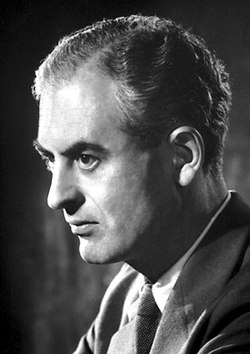
Working on skin grafts for burned WWII pilots, Peter Medawar established that transplant rejection is an immune response. He later demonstrated acquired immunological tolerance in mice, work that won the 1960 Nobel Prize and transformed transplantation science.
Image source: Peter Medawar
1958
% complete
Jean Dausset discovered the first human leukocyte antigen (HLA), revealing the genetic basis of tissue compatibility. HLA matching became central to donor-recipient pairing, dramatically improving graft survival and earning Dausset a share of the 1980 Nobel Prize.
Image source: Human leukocyte antigen
Aug 5, 1968
% complete
A Harvard Medical School committee published criteria defining irreversible coma as death. Establishing brain death as a legal and medical standard enabled procurement of viable organs from beating-heart donors, vastly expanding the pool of transplantable organs.
Image source: Brain death
Oct 19, 1984
% complete
Congress passed the National Organ Transplant Act, prohibiting the sale of human organs and establishing a national task force and registry system. The law created the legal framework ensuring equitable, non-commercial organ allocation in the United States.
Image source: National Organ Transplant Act of 1984
1995
% complete
The Maastricht classification formalized categories of donation after cardiac death, helping revive non-heart-beating organ donation. This expanded the donor pool significantly amid growing organ shortages worldwide.
2013
% complete
Large clinical trials demonstrated that pumping donor kidneys with oxygenated perfusion fluid outside the body reduced delayed graft function compared to cold static storage. Machine perfusion technology subsequently extended to livers, hearts, and lungs, allowing longer preservation distances and use of marginal organs.
Dec 23, 1954
% complete
Surgeon Joseph Murray led the team at Peter Bent Brigham Hospital in Boston that transplanted a kidney from Ronald Herrick to his identical twin Richard. Because the twins were genetically identical, no immunosuppression was needed, and Richard lived eight years with the graft. Murray later received the 1990 Nobel Prize.
1962
% complete
At Peter Bent Brigham Hospital, Joseph Murray's team performed a kidney transplant from a deceased unrelated donor using azathioprine and prednisone for immunosuppression. The patient survived over a year, proving that chemical suppression of immunity could enable transplantation across genetic barriers.
Image source: Joseph E. Murray
Feb 2016
% complete
Following the HOPE Act of 2013, Johns Hopkins surgeons performed the first US kidney transplant from an HIV-positive donor to an HIV-positive recipient, expanding the donor pool and challenging long-standing prohibitions on organs from HIV-infected donors.
Mar 1, 1963
% complete
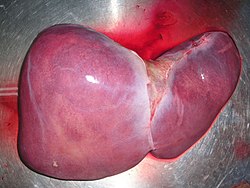
Thomas Starzl performed the first human liver transplant at the University of Colorado. Although early patients survived only days to weeks, Starzl's persistence and refinement of technique eventually made liver transplantation a standard life-saving therapy.
Image source: Liver transplantation
1989
% complete
Building on pediatric living donor liver transplantation begun in Brazil and refined in Chicago, surgeons successfully transplanted segments of adult livers between related donors and recipients. Living donor programs grew rapidly, offering an alternative for patients dying while awaiting deceased donor organs.
Jun 11, 1963
% complete
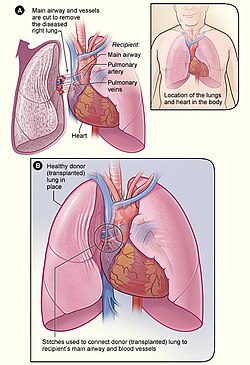
James Hardy at the University of Mississippi Medical Center performed the first human lung transplant. The graft functioned briefly but failed after 18 days when the patient died of renal failure, marking the beginning of the difficult path toward successful lung replacement.
Image source: Lung transplantation
Dec 3, 1967
% complete
South African surgeon Christiaan Barnard transplanted the heart of Denise Darvall into Louis Washkansky at Groote Schuur Hospital in Cape Town. Although Washkansky died 18 days later of pneumonia, the operation stunned the world and launched the era of cardiac transplantation.
Image source: Christiaan Barnard
Jan 6, 1968
% complete
Norman Shumway performed the first US heart transplant at Stanford University. Through meticulous research on cardiac preservation and rejection monitoring via endomyocardial biopsy, Shumway's Stanford program became the world leader and made heart transplantation durable therapy.
Mar 9, 1981
% complete
Bruce Reitz and Norman Shumway at Stanford performed the first successful heart-lung transplant in Mary Gohlke, who lived five years with her new organs. The procedure offered hope to patients with end-stage pulmonary vascular disease and cystic fibrosis.
Jan 7, 2022
% complete
Surgeons at the University of Maryland transplanted a genetically modified pig heart into David Bennett Sr., a terminally ill man ineligible for human transplant. Bennett survived two months, providing invaluable proof-of-concept data for cross-species organ transplantation.
Image source: Xenotransplantation
Dec 17, 1966
% complete
Richard Lillehei and William Kelly at the University of Minnesota performed the first pancreas transplant in a diabetic patient. Though the graft lasted only months, the operation opened the door to transplantation as a treatment for type 1 diabetes.
Image source: Pancreas transplantation
1973
% complete
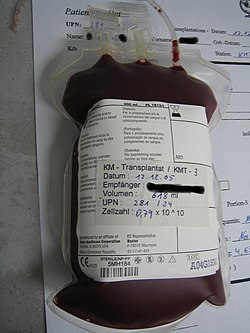
Robert Good's team at the University of Minnesota achieved the first successful allogeneic bone marrow transplant curing a child with leukemia using an HLA-matched sibling donor, establishing hematopoietic stem cell transplantation as a curative therapy.
Image source: Hematopoietic stem cell transplantation
Sep 23, 1998
% complete
A French team in Lyon led by Jean-Michel Dubernard and Owen Wontree transplanted a donor hand onto Clint Hallam, a New Zealander who had lost his own hand. This composite tissue allotransplantation marked the extension of transplantation beyond vital internal organs to limbs.
Mar 20, 2010
% complete
Spanish surgeons at Vall d'Hebron University Hospital in Barcelona performed the world's first full face transplant on Óscar, a man disfigured by a shooting accident. A 30-person team worked 24 hours to attach muscles, nerves, skin, nose, lips, and jaw, advancing reconstructive allotransplantation.
Image source: Face transplant
Sep 4, 2014
% complete
Swedish surgeon Mats Brännström's team at Sahlgrenska Academy achieved the first birth from a transplanted uterus. Mother Malin Stenberg, born without a womb, received her mother's uterus and delivered a healthy boy named Vincent, opening reproductive options for women with absolute uterine infertility.
1968
% complete
Antilymphocyte globulin (ALG), an antibody preparation targeting immune cells, entered clinical use alongside azathioprine and steroids. It provided potent induction therapy against acute rejection and represented the first biologic immunosuppressant in routine transplant practice.
1976
% complete
Jean Borel at Sandoz discovered cyclosporine's selective inhibition of T-cell activation. After Roy Calne's pioneering clinical trials beginning in 1978, cyclosporine revolutionized transplantation by dramatically reducing acute rejection and transforming one-year survival rates worldwide.
Image source: Ciclosporin
Mar 21, 1984
% complete
UNOS was founded to manage the US organ transplant system under contract with the federal government. It created the national Organ Procurement and Transplantation Network, standardizing allocation policies, matching, and data collection for all solid organ transplants in America.
Image source: United Network for Organ Sharing
1994
% complete
Tacrolimus (FK506), discovered in Japanese soil samples by Fujisawa scientists, received FDA approval for liver transplantation. More potent than cyclosporine, it broadened immunosuppressive options and improved outcomes across all organ types.
Image source: Tacrolimus
Sep 15, 1999
% complete
The FDA approved sirolimus, an mTOR inhibitor derived from soil bacteria found on Easter Island. Its distinct mechanism allowed steroid-sparing regimens and combination strategies that reduced nephrotoxicity associated with calcineurin inhibitors.
Image source: Sirolimus
Jun 17, 2011
% complete
The FDA approved belatacept, a costimulation blockade agent, for kidney transplant recipients. As the first maintenance immunosuppressant avoiding calcineurin inhibitor nephrotoxicity, it promised better long-term kidney function despite higher early rejection rates.
Or browse the full history timeline directory, with more than 2,000 topics.
This History of Organ Transplantation timeline was generated with the help of AI, using information found on the internet.
We work hard to keep these timelines accurate, but mistakes do get through. If you spot one, email us at [email protected] and we'll fix it for future visitors.
Generate yours with AI or build it from scratch, for free.
Export your timeline, add your own events, edit or remove AI-generated events, and much more
No credit card required.
Cancel anytime.
Cancel anytime.
You can create an unlimited number of timelines with up to 10 events on each one, customize how they look, export them to PDF, PNG, PowerPoint, CSV, and Excel, and share them with a link. Paid plans raise the event limit and add features like spreadsheet imports and collaborators.
Yes. You can cancel your subscription from your account page at any time, and you will not be charged again. Your subscription stays active for the rest of the period you already paid for.
Yes. We will email you a reminder before the annual renewal, and we will also email you a receipt.
Yes. You can email us within 15 days of any payment, and we will issue you a full refund.
Check out our pricing docs or send us an email anytime: [email protected].