-
Use Cases
-
Resources
-
Pricing
The organ is one of the oldest musical instruments in the world, evolving from the ancient Greek hydraulis (water organ) of the 3rd century BCE through medieval church organs, the grand Baroque pipe organs, and into modern electronic instruments. Renowned as the 'King of Instruments,' it has played a central role in religious ceremonies, concert halls, and musical composition for over two millennia. More Less
250 BC
% complete
The Greek engineer Ctesibius of Alexandria invented the hydraulis, a water organ that used a hydraulic mechanism to regulate air pressure through pipes. It became a popular instrument at Roman public spectacles, games, and circuses, marking the birth of the organ as an instrument.
Image source: Water organ
400
% complete
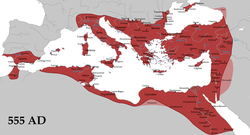
The organ survived the fall of the Western Roman Empire in the Eastern Roman (Byzantine) Empire, where it became a prestigious ceremonial instrument played at imperial banquets, coronations, and state occasions in Constantinople.
Image source: Byzantine Empire
757
% complete
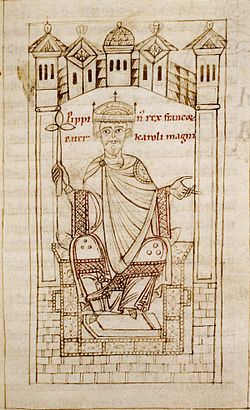
Emperor Constantine V of Byzantium sent an organ as a diplomatic gift to King Pepin the Short of the Franks. The instrument caused great fascination in Western Europe and stimulated interest in organ building among the Franks.
Image source: Pepin the Short
812
% complete
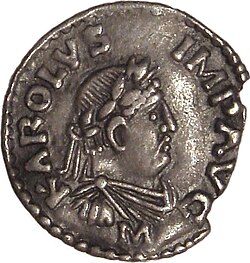
An organ was constructed for Charlemagne's chapel at Aachen, reportedly by craftsmen from Venice or Constantinople. This helped establish the organ as an instrument associated with Christian worship in Western Europe.
Image source: Charlemagne
980
% complete
Bishop Æthelwold commissioned a monumental organ for Winchester Cathedral, described in verse as requiring seventy men to pump its bellows and having four hundred pipes. Its enormous scale astonished contemporaries across medieval Europe.
Image source: Winchester Cathedral
1100
% complete
Around the twelfth century, the portative organ—a small portable organ carried and played with one hand while the other worked the bellows—became widespread in medieval Europe, appearing frequently in manuscript illuminations and church art.
Image source: Portative organ
1200
% complete
The positive organ, a small stationary instrument placed on a table or stand, came into common use in churches and chapels across Europe during the thirteenth century, expanding the organ's liturgical role.
Image source: Positive organ
1300
% complete
German builders developed the Blockwerk principle, in which all ranks of pipes sounded together from a single key. This powerful chorus sound laid the foundation for later developments such as mixtures and principal stops.
Image source: Pipe organ
1361
% complete
The great organ at Halberstadt Cathedral in Germany was built with three manuals and a pedal, one of the first instruments to include an independent keyboard for the feet. It remained influential until its dismantling in the seventeenth century.
Image source: Halberstadt Cathedral
1450
% complete
Full pedalboards became increasingly common on North German organs in the mid-fifteenth century, enabling bass lines to be played independently and shaping the distinctive character of the northern European organ school.
Image source: Pedal keyboard
1470
% complete
The development of the slider windchest allowed individual ranks of pipes to be turned on and off, giving players control over registration and paving the way for the varied tonal palettes of Renaissance instruments.
Image source: Methodist Central Hall, Westminster
1660 - 1790
% complete
Builders such as Thierry, Clicquot, and Cavaille-Coll's predecessors perfected the French classical organ with its colorful reeds and tierce-based cornets. Composers like François Couperin wrote suites exploiting its distinct registration system.
1680 - 1719
% complete
Arp Schnitger, the most prolific Baroque organ builder of Northern Europe, created more than 150 instruments known for their powerful principals, rich reeds, and grand plenum. His work profoundly shaped the North German organ tradition.
Image source: Arp Schnitger
1700 - 1789
% complete
The Silbermann workshop in Saxony produced some of the finest Baroque organs, blending French and German traditions. Gottfried Silbermann's instruments, many still preserved, are prized for their brilliant, clear tone and meticulous craftsmanship.
Image source: Gottfried Silbermann
1703 - 1750
% complete
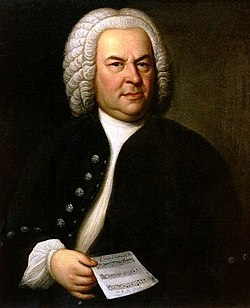
Johann Sebastian Bach composed his celebrated organ works, including the Toccata and Fugue in D minor and the Orgelbüchlein, and served as a consultant on new organ construction, leaving an unmatched legacy for the instrument.
Image source: Johann Sebastian Bach
1833
% complete
Aristide Cavaillé-Coll established his workshop and revolutionized organ design with innovations including Barker levers for lighter key action, unified stops, and powerful reed choruses, creating the definitive Romantic symphonic organ.
Image source: Aristide Cavaillé-Coll
1845
% complete
Charles Spackman Barker's pneumatic lever, first used by Cavaillé-Coll at Saint-Denis, dramatically reduced touch resistance on large organs, allowing heavier wind pressures and bigger scales without fatiguing the player.
Image source: Tracker action
1862
% complete
Cavaillé-Coll rebuilt the organ of Saint-Sulpice into a five-manual giant of over one hundred stops. Widor and later Marcel Dupré held the post of titular organist there, composing symphonic works for this monumental instrument.
Image source: Saint-Sulpice, Paris
1872
% complete
Charles-Marie Widor began publishing his ten organ symphonies, treating the organ orchestrally with idiomatic writing for its Romantic resources. His Fifth Symphony's Toccata remains among the most famous pieces in the repertoire.
Image source: Charles-Marie Widor
1890
% complete
Electro-pneumatic actions replaced mechanical linkages with electric signals and magnets, freeing console placement from proximity to the pipework and enabling vast American concert hall and cathedral organs of the early twentieth century.
1910 - 1930
% complete
The theater organ, pioneered by Robert Hope-Jones and mass-produced by Wurlitzer, accompanied silent films with orchestral imitative voices, percussions, and effects. Thousands were installed in cinemas across America before the advent of sound film.
Image source: Theatre organ
1925
% complete
The organ reform movement led by figures like Albert Schweitzer and Oscar Walcker called for a return to Baroque principles: tracker action, lower wind pressures, and clear polyphonic voicing inspired by historic instruments like those of Silbermann.
Image source: Organ reform movement
Apr 1935
% complete
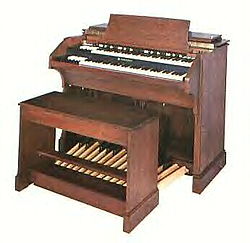
Laurens Hammond unveiled his electromechanical tonewheel organ in Chicago. Affordable and compact, it transformed home entertainment, churches, and later jazz, blues, rock, and gospel music through its distinctive drawbar sound and Leslie speaker pairing.
Image source: Hammond organ
1956
% complete
Dutch builder Dirk Flentrop installed a mechanical-action instrument at Oberlin College's Warner Concert Hall, one of the first important neo-Baroque organs in the United States and a catalyst for renewed interest in historically informed organ building.
Image source: Oberlin College
1967
% complete
American builder Charles Fisk completed a major tracker-action organ for Harvard University, establishing him as a leading figure in the American organ reform movement and inspiring a generation of domestic mechanical-action builders.
1979
% complete
Ronald Sharp's Grand Organ, the largest mechanical-action tracker organ in the world with over 10,000 pipes, was inaugurated in Sydney's Concert Hall, showcasing ambitious modern craftsmanship on an unprecedented scale.
1980
% complete
Advances in digital sampling enabled manufacturers like Allen and Rodgers to produce convincing electronic reproductions of pipe organ sound, making sophisticated instruments affordable for smaller congregations, homes, and studios worldwide.
Image source: Electric organ
1998
% complete
Efforts intensified to restore the world's largest pipe organ, the Midmer-Losh instrument in Atlantic City's Boardwalk Hall, whose seven manuals and 33,000 pipes represent the pinnacle of early twentieth-century American organ building.
Image source: Boardwalk Hall Auditorium Organ
2000 - Aug 2021
% complete
Historically informed performance practice flourished in the twenty-first century, with festivals, recordings, and scholarship devoted to Claudio Merulo, Buxtehude, Bach, and Franck, while builders continued crafting instruments modeled on sixteenth- to nineteenth-century antecedents worldwide.
Image source: Historically informed performance
2020 - 2022
% complete
A major conservation project restored the Sydney Opera House Grand Organ after years of planning, renewing its thousands of pipes, leather components, and mechanical systems to preserve this late twentieth-century masterpiece.
Image source: Sydney Opera House Grand Organ
Or browse the full history timeline directory, with more than 2,000 topics.
This History of the Organ timeline was generated with the help of AI, using information found on the internet.
We work hard to keep these timelines accurate, but mistakes do get through. If you spot one, email us at [email protected] and we'll fix it for future visitors.
Generate yours with AI or build it from scratch, for free.
Export your timeline, add your own events, edit or remove AI-generated events, and much more
No credit card required.
Cancel anytime.
Cancel anytime.
You can create an unlimited number of timelines with up to 10 events on each one, customize how they look, export them to PDF, PNG, PowerPoint, CSV, and Excel, and share them with a link. Paid plans raise the event limit and add features like spreadsheet imports and collaborators.
Yes. You can cancel your subscription from your account page at any time, and you will not be charged again. Your subscription stays active for the rest of the period you already paid for.
Yes. We will email you a reminder before the annual renewal, and we will also email you a receipt.
Yes. You can email us within 15 days of any payment, and we will issue you a full refund.
Check out our pricing docs or send us an email anytime: [email protected].