-
Use Cases
-
Resources
-
Pricing
Drums are among the oldest musical instruments in human history, dating back thousands of years. From ancient ritual and communication tools in Africa, Asia, and the Americas, to military snare drums, jazz innovations, and the modern rock drum kit, percussion has continuously shaped music and culture worldwide. This timeline highlights key milestones in the development of drums and drumming. More Less
Jan 1, 3000 BC
% complete
In ancient Mesopotamia, cylindrical and frame drums became central to religious ceremonies and court music. Sumerian artifacts depict drummers playing in ritual contexts, showing drums' early role in organized worship.
Image source: Frame drum
Jan 1, 2686 BC
% complete
Reliefs from Egypt's Old Kingdom show musicians playing hand drums during festivals and military processions. Drums were used to accompany dances honoring deities such as Hathor, the goddess of music.
Image source: Music of Egypt

Jan 1, 500 BC
% complete
West African cultures developed the hourglass-shaped talking drum, which could mimic the tones of human speech. It allowed long-distance communication between villages and became a vital cultural instrument across the region.
Image source: Talking drum
Jan 1, 800 BC
% complete
The tympanon, a shallow frame drum played with the hands, featured prominently in Greek religious rituals dedicated to Cybele and Dionysus, often played by women during ecstatic processions.
Image source: Tympanum (hand drum)
Jan 1, 100 BC
% complete
The Roman army employed drums and horns to signal maneuvers on the battlefield. Percussion helped coordinate large formations of soldiers, establishing the military tradition of drumming that would persist for centuries.
Image source: Roman army
Jan 1, 200
% complete
Early pushkara drums described in Sanskrit texts are considered ancestors of the tabla. Over centuries these paired hand drums evolved into one of Indian classical music's most sophisticated percussion traditions.
Image source: Tabla
Jan 1, 553
% complete
Taiko drums were introduced to Japan from China and Korea, initially used in Buddhist ceremonies and court music. They later became integral to Japanese festival culture and warfare communication.
Image source: Taiko
1200
% complete
The tabor, a small rope-tensioned snare-like drum, became a favorite accompaniment for pipe-and-tabor players entertaining medieval European dancers and traveling minstrels.
Image source: Tabor (instrument)
1299
% complete
The Ottoman Janissary mehter bands marched with massive kös kettle drums to inspire troops and intimidate enemies. Their thunderous sound influenced European military music after exposure through conflicts with the empire.
Image source: Ottoman military band
1386
% complete
After the Battle of Sempach, Swiss mercenaries popularized fife-and-drum ensembles for marching and battlefield signaling. This tradition spread throughout Europe and laid the groundwork for the modern snare drum's development.
Image source: Fife (instrument)
1400
% complete
European craftsmen added gut snares beneath a two-headed drum, creating the snare drum. Its crisp rattle made it ideal for military signals and eventually earned it a place as the centerpiece of the drum kit.
Image source: Snare drum
1650
% complete
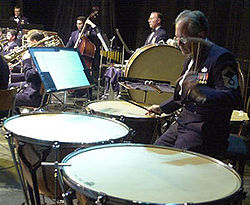
Kettledrums, refined by Polish horse-mounted musicians, entered Baroque orchestras under composers like Lully and Bach. Tunable via foot pedals centuries later, timpani became orchestral percussion's most prominent voice.
Image source: Timpani
1775 - 1783
% complete
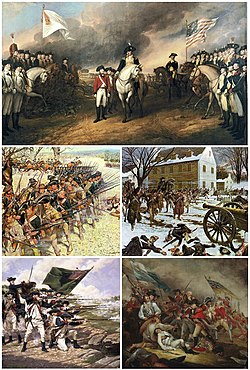
Drummers served crucial roles in the Continental Army, beating calls for assembly, retreat, and battle. The rudimentary drumming styles of this era formed the foundation of American rudimental drumming.
Image source: American Revolutionary War
1909
% complete
William F. Ludwig Sr. designed and patented an improved bass drum pedal, allowing a single drummer to play the bass drum with a foot while using their hands. This innovation made the modern drum kit possible.
Image source: Bass drum
1926
% complete
The hi-hat evolved from the 'sock cymbal,' operated by the knee or foot. Its refinement gave drummers precise control over a clashing pair of cymbals, becoming essential for swing-era timekeeping and beyond.
Image source: Hi-hat
1933
% complete
The National Association of Rudimental Drummers standardized thirteen essential rudiments, preserving and formalizing the snare drum techniques passed down through military drumming traditions.
Image source: Drum rudiment
1957
% complete
Remo Belli pioneered the weather-resistant Mylar drumhead, replacing fragile calfskin. Synthetic heads offered consistent tone and tuning stability, transforming both live performance and recording.
Image source: Drumhead
1969
% complete
Graeme Edge collaborated with Sussex University professor Brian Groves to build one of the first electronic drum kits for Moody Blues recordings. Electronic percussion opened new sonic possibilities for decades to come.
Image source: Electronic drum
1980
% complete
Roger Linn's LM-1 was the first drum machine with digitally sampled sounds, used by Prince, Michael Jackson, and Stevie Wonder. It reshaped pop and R&B production and challenged traditional drummers.
Image source: Linn LM-1
Nov 1, 1980
% complete
Roland's TR-808 produced distinctive analog sounds that shaped hip-hop, house, and techno. Its booming kick and crisp snare remain among the most recognizable and influential drum sounds ever created.
Image source: Roland TR-808
1917
% complete
In New Orleans' Storyville district, drummers like Baby Dodds combined bass drum, snare, cymbals, and woodblocks into a single setup played by one musician, creating the drum kit and defining early jazz rhythm.
Image source: Jazz drumming
1937
% complete
Gene Krupa's explosive performance of 'Sing, Sing, Sing' with Benny Goodman's orchestra showcased the drummer as a solo star. His showmanship elevated public perception of drummers and boosted drum sales nationwide.
Image source: Gene Krupa
1944
% complete
Max Roach revolutionized jazz drumming by shifting the pulse to the ride cymbal and treating the drums as a melodic, conversational instrument. His work with Charlie Parker defined bebop's rhythmic language.
Image source: Max Roach
1955
% complete
The rise of rock and roll, powered by drummers like Elvis Presley's D.J. Fontana, created massive demand for drum kits. Backbeats and driving rhythms made the drummer a cornerstone of every rock band.
Image source: Rock and roll
1964
% complete
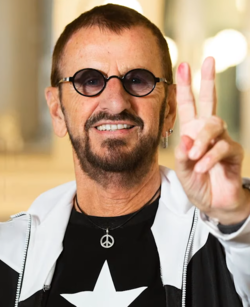
As The Beatles conquered America, Ringo Starr's distinctive feel and left-handed style on a right-handed kit inspired millions to pick up sticks. He became arguably the most influential rock drummer of his era.
Image source: Ringo Starr
1969
% complete
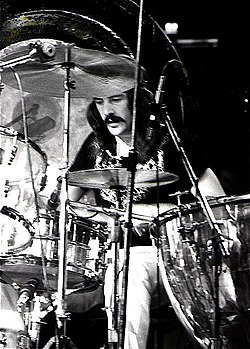
Led Zeppelin's debut introduced John Bonham's thunderous, blues-infused playing. Tracks like 'Moby Dick' and 'When the Levee Breaks' set new standards for power, groove, and studio drum sound in rock.
Image source: John Bonham
1981
% complete
Rush's Neil Peart, with his massive kit and intricate compositions like 'YYZ' and 'Tom Sawyer,' became the archetype of the technical progressive rock drummer, inspiring generations of aspiring players.
Image source: Neil Peart
1984
% complete
Slayer's Dave Lombardo and others brought double bass drumming to thrash metal, enabling blistering speeds and relentless blast patterns. The technique became a defining feature of extreme metal genres.
Image source: Heavy metal drumming
1999
% complete
Blink-182's Travis Barker fused punk energy with hip-hop-influenced precision, becoming one of the most visible drummers of the era and helping drumming thrive in the digital streaming age.
Image source: Travis Barker
Or browse the full history timeline directory, with more than 2,000 topics.
This History of the Drums timeline was generated with the help of AI, using information found on the internet.
We work hard to keep these timelines accurate, but mistakes do get through. If you spot one, email us at [email protected] and we'll fix it for future visitors.
Generate yours with AI or build it from scratch, for free.
Export your timeline, add your own events, edit or remove AI-generated events, and much more
No credit card required.
Cancel anytime.
Cancel anytime.
You can create an unlimited number of timelines with up to 10 events on each one, customize how they look, export them to PDF, PNG, PowerPoint, CSV, and Excel, and share them with a link. Paid plans raise the event limit and add features like spreadsheet imports and collaborators.
Yes. You can cancel your subscription from your account page at any time, and you will not be charged again. Your subscription stays active for the rest of the period you already paid for.
Yes. We will email you a reminder before the annual renewal, and we will also email you a receipt.
Yes. You can email us within 15 days of any payment, and we will issue you a full refund.
Check out our pricing docs or send us an email anytime: [email protected].