-
Use Cases
-
Resources
-
Pricing
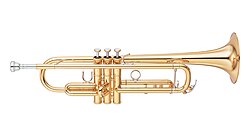
The trumpet is one of the oldest musical instruments in the world, with a history stretching back over 3,000 years. Originally used for military and ceremonial signaling in ancient Egypt, China, and Mesopotamia, it gradually evolved from a simple valveless horn into a sophisticated chromatic instrument. Key developments include the addition of slides in the Renaissance, the brilliant natural trumpets of the Baroque era, valves in the early 19th century, and its central role in jazz and popular music of the 20th century. Today the trumpet remains a cornerstone of orchestras, brass bands, jazz ensembles, and solo performance worldwide. More Less
1480 BC
% complete
An early image of an Egyptian trumpet comes from the New Kingdom, circa 1480 B.C., showing that trumpet-like instruments were already established in ancient Egyptian culture by this period.
Image source: Trumpet
1467 BC - 1445 BC
% complete
At Deir el-Bahari, a relief dated between 1467 and 1445 B.C. depicts a trumpeter taking part in a military parade, providing early visual evidence of the trumpet's ceremonial and martial role.
Image source: Deir el-Bahari
1323 BC
% complete
The oldest surviving examples of metallic trumpets are two instruments discovered in the tomb of Tutankhamun in 1922. One is 58.2 cm (22.9 in) long, made of silver, with a conical tube 1.7 to 2.6 cm (0.67 to 1.02 in) in diameter and a flaring bell 8.2 cm (3.2 in) wide.
Image source: Tutankhamun's trumpets
Nov 1922
% complete
In November 1922, archaeologists excavating Tutankhamun's tomb uncovered two metallic trumpets, including a silver instrument over half a metre long — the oldest surviving metallic trumpets known.
1000 BC - 500 BC
% complete
The ancient Nordic lur was made of bronze and dates back to the Late Bronze Age (1000–500 BCE), representing an early European bronze trumpet tradition.
1000 BC
% complete
Beginning around 1000 BCE, Nordic craftsmen cast the lur from bronze, producing large, curved natural trumpets used during the Late Bronze Age in Scandinavia.
Image source: Lurs
500 BC
% complete
By around 500 BCE, the Late Bronze Age lur tradition reached its close, leaving behind surviving bronze instruments that testify to sophisticated early trumpet-making in Northern Europe.
1700 AD - 1799 AD
% complete
In the 18th century the German music theorist Johann Ernst Altenburg compared two styles of playing to the two registers of trumpet playing prevalent in the Late Baroque: the low principale and the high clarino.
1720 AD
% complete
During the Late Baroque, trumpet playing divided into two registers — the low principale and the high clarino — with clarino players performing brilliant melodic lines in the upper range.
450 BC
% complete
The salpinx now in Boston's Museum of Fine Arts was crafted in thirteen cylindrical ivory sections, held together by bronze rings, demonstrating the elaborate craftsmanship applied to Greek trumpets.
Image source: Salpinx
450 BC - 400 BC
% complete
A fine example of the salpinx is on display in Boston's Museum of Fine Arts; its tube is 157 cm (62 in) long and consists of thirteen cylindrical parts made of ivory, while the bell, mouthpiece, and joining rings are all made of bronze. The instrument dates from the second half of the 5th century BCE.
200 AD
% complete
During the last centuries of the Roman Empire, the name buccina was widely used throughout the Near East for a straight trumpet similar to, and probably derived from, the Roman tuba.
Image source: Buccina
300 AD
% complete
The Near Eastern buccina was probably derived from the Roman tuba, a straight military trumpet of the Roman legions, spreading Roman trumpet design into the eastern Mediterranean.
Image source: Roman tuba
750 AD
% complete
The būq al-nafīr ('buc[cina] of war') was a long straight metal trumpet used in the military bands of the Abbasid period (750–1258) and thereafter.
Image source: Nafir
750 AD - 1258 AD
% complete
Throughout the Abbasid period (750–1258), military bands employed the būq al-nafīr, a long straight metal trumpet that announced battles and ceremonies across the Islamic world.
Image source: Abbasid Caliphate
801 AD
% complete
From the buccina undoubtedly derives the generic term būq, which first occurs after 800; it was the name Arabs used to describe a variety of both trumpet-like and horn-like instruments.
801 AD
% complete
After 800, Arabic writers used the term būq as a generic name covering a variety of both trumpet-like and horn-like instruments, reflecting the spread of Roman-derived trumpets into Arab musical culture.
1000 AD
% complete
From the 11th century onward, a particular term was used to denote any long straight trumpet, standardizing the description of these instruments in medieval sources.
1050 AD
% complete
Medieval writers from the 11th century applied a single term to any long straight trumpet, a usage that helped distinguish these instruments from shorter horns in contemporary accounts.
1350 AD
% complete
By the 14th century the būq al-nafīr could be as much as 2 metres (7 ft) long, an extraordinary extension of the long straight metal war trumpet tradition.
1400 AD
% complete
Fourteenth-century būq al-nafīr trumpets reached lengths of up to 2 metres (7 ft), their great size producing the powerful sound required for military signaling.
1200 AD - 1299 AD
% complete
Thirteenth-century Arabic and Persian manuscripts depict straight trumpets, images which the Tibetan dung monastic trumpet is similar to and probably derives from.
Image source: Tibetan horn
1250 AD
% complete
Arabic and Persian manuscripts of the 13th century contain depictions of long straight trumpets, preserving visual evidence of these instruments in medieval Islamic art.
Image source: Persian miniature
1300 AD
% complete
A double trumpet of this type is depicted on a relief in Chandi Jawri, Indonesia, dated to 1300, showing the presence of paired straight trumpets in Southeast Asia.
Image source: Indonesia
1300 AD
% complete
The Chandi Jawri relief in Indonesia, dated to 1300, shows a double trumpet, indicating that straight-trumpet traditions had reached the Indonesian archipelago by the early 14th century.
Image source: Candi of Indonesia
1400 AD
% complete
The dung is the long monastic trumpet of Tibet; it is similar to, and probably derives from, straight trumpets depicted in 13th-century Arabic and Persian manuscripts.
1500 AD
% complete
The dung has been used for centuries in Buddhist ceremonies for the purposes of exorcism, sounding deep tones from monastery rooftops to drive away evil spirits.
1600 AD
% complete
For centuries, Tibetan Buddhist ritual has employed the dung trumpet in exorcistic ceremonies, its low drone believed to dispel malevolent forces.
1500 AD
% complete
Gourd trumpets have been used in Africa for centuries, and are also to be found in Asia and the Americas; one variety of gourd, the calabash, is even known as the 'trumpet gourd'.
Image source: Kakaki
1600 AD
% complete
One particular variety of gourd used for trumpets, the calabash, became so associated with these instruments that it is even known as the 'trumpet gourd'.
Image source: Calabash
1800 AD - 1899 AD
% complete
In the 19th century Dutch missionaries introduced European brass bands to the island of Sumba in Indonesia, bringing modern European trumpet traditions to the region.
Image source: Tuning mechanisms for stringed instruments
1850 AD
% complete
Through 19th-century Dutch missionary activity, European-style brass bands were introduced to Indonesian islands, transplanting Western trumpet music into local culture.
Image source: Brass band
1920 AD - 1929 AD
% complete
Later, in the 1920s, local craftsmen began to make bamboo replicas of the modern brass instruments introduced by Dutch missionaries, creating a distinctive hybrid trumpet tradition.
Image source: Bamboo musical instruments
1925 AD
% complete
During the 1920s, Indonesian craftsmen adapted the European brass band idiom by crafting bamboo replicas of modern instruments, blending imported repertoire with indigenous materials.
Image source: Bamboo
Or browse the full history timeline directory, with more than 2,000 topics.
This History of the Trumpet timeline was generated with the help of AI, using information found on the internet.
We work hard to keep these timelines accurate, but mistakes do get through. If you spot one, email us at [email protected] and we'll fix it for future visitors.
Generate yours with AI or build it from scratch, for free.
Export your timeline, add your own events, edit or remove AI-generated events, and much more
No credit card required.
Cancel anytime.
Cancel anytime.
You can create an unlimited number of timelines with up to 10 events on each one, customize how they look, export them to PDF, PNG, PowerPoint, CSV, and Excel, and share them with a link. Paid plans raise the event limit and add features like spreadsheet imports and collaborators.
Yes. You can cancel your subscription from your account page at any time, and you will not be charged again. Your subscription stays active for the rest of the period you already paid for.
Yes. We will email you a reminder before the annual renewal, and we will also email you a receipt.
Yes. You can email us within 15 days of any payment, and we will issue you a full refund.
Check out our pricing docs or send us an email anytime: [email protected].