-
Use Cases
-
Resources
-
Pricing
The history of vitamins traces how scientists identified essential micronutrients, connected them to deficiency diseases, developed methods to isolate and synthesize them, and introduced fortification and supplements that transformed public health. More Less
Build a timeline like this one in minutes, for free. Start Yours →
1747
Scottish surgeon James Lind discovered that citrus foods helped prevent scurvy, a disease involving impaired collagen formation, poor wound healing, bleeding gums, severe pain, and death. Portuguese and Spanish sailors had independently observed that oranges and vegetables such as yams and turnips reduced the disease.
Image source: James Lind

1753
James Lind published A Treatise of the Scurvy, recommending lemons and limes to prevent the disease. His recommendations were adopted by the British Royal Navy.
Image source: Scurvy

1800 - 1899
During the nineteenth century, limes grown in the West Indies were substituted for lemons in maritime practice. They were later found to contain much less vitamin C, contributing to continued scurvy and other deficiency diseases during Arctic expeditions.
Image source: Scurvy

1881
Russian medical doctor Nikolai Lunin studied the effects of scurvy at the University of Tartu, contributing to the developing investigation of diet-related disease.
1884
Takaki Kanehiro, a British-trained physician in the Imperial Japanese Navy, observed that beriberi was common among low-ranking crew members who often ate only rice, but not among officers who consumed a Western-style diet.
Image source: Takaki Kanehiro

1897
Christiaan Eijkman found that feeding chickens unpolished rice instead of polished rice prevented a form of polyneuritis equivalent to beriberi. The experiment strengthened the idea that diseases could result from dietary deficiencies.
Image source: Christiaan Eijkman

1901 - 1913
When Robert Falcon Scott undertook his two Antarctic expeditions in the early twentieth century, the prevailing medical theory attributed scurvy to tainted canned food rather than to a dietary deficiency.
Image source: Robert Falcon Scott

1905
Cornelis Adrianus Pekelharing reported a similar result in the Dutch medical journal Nederlands Tijdschrift voor Geneeskunde. The finding was not widely reported at the time.
Image source: Cornelis Adrianus Pekelharing

1910
Japanese scientist Umetaro Suzuki isolated a water-soluble complex of micronutrients from rice bran. He named it aberic acid, later called Orizanin.
Image source: Umetaro Suzuki

1910 - 1948
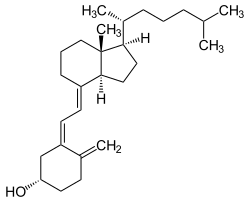
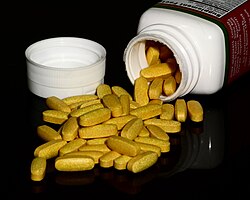
The vitamins were discovered during the period from 1910 through 1948, as nutritional research identified previously unknown micronutrients associated with the prevention of deficiency diseases.
Image source: Vitamin
Build a timeline like this one in minutes, for free. Start Yours →
This History of Vitamins timeline was generated with the help of AI, using information found on the internet.
We work hard to keep these timelines accurate, but mistakes do get through. If you spot one, email us at [email protected] and we'll fix it for future visitors.
Generate yours with AI or build it from scratch, for free.