
-
Use Cases
-
Resources
-
Pricing
The History of Dermatology traces how societies understood, diagnosed, and treated skin, hair, and nail disorders, from ancient medicine to contemporary clinical science. More Less
Build a timeline like this one in minutes, for free. Start Yours →
1600 BCE
The ancient Egyptian Smith Papyrus is among the oldest preserved medical documents relevant to skin diseases. Although dated to around 1600 BCE, its contents may have been copied from much older folk remedies.
Image source: Edwin Smith Papyrus

1600 BCE
The medical contents preserved in the Smith and Ebers papyri were likely copied and passed down over generations, indicating that some of the earliest recorded approaches to skin disease originated in much older folk remedies.
1550 BCE
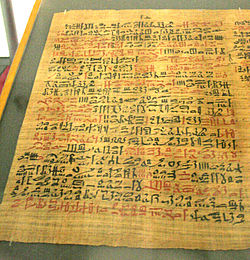
The Ebers Papyrus, dating to around 1550 BCE, is another of the oldest preserved medical documents containing material relevant to skin diseases. Its remedies may ultimately derive from older traditions.
Image source: Ebers Papyrus
1500 BCE
Around a century after the Egyptian papyri, the work later associated with Hippocratic medicine described the anatomy and physiological processes of the skin.
Image source: Hippocratic Corpus

1500 BCE
The Hippocratic material discussed sweating as one of the physiological processes of the skin, contributing to early medical understanding of skin function.
1500 BCE
The same body of work addressed glandular secretion, expanding early descriptions of how the skin operates as a living organ.
1400 BCE
Around a century later, the earlier Hippocratic work was compiled into the Corpus Hippocraticum, preserving descriptions of skin anatomy and physiology.
800 - 1099
The Salerno Medical School, founded in the 9th century, became increasingly influential by the 11th century and helped shape the transmission of medical knowledge.
Image source: Schola Medica Salernitana
1000 - 1099
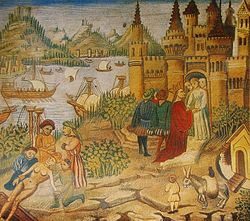
Constantine the African used his translated medical collection to inform his teaching at the Abbey of Monte Cassino, a major center of learning during the 11th century.
Image source: Constantine the African

1000 - 1099
The Benedictine monk Constantine the African assembled a vast collection of medical works and translated them into Latin, helping transmit medical knowledge relevant to dermatology in medieval Europe.
Build a timeline like this one in minutes, for free. Start Yours →
This History of Dermatology timeline was generated with the help of AI, using information found on the internet.
We work hard to keep these timelines accurate, but mistakes do get through. If you spot one, email us at [email protected] and we'll fix it for future visitors.
Generate yours with AI or build it from scratch, for free.


