-
Use Cases
-
Resources
-
Pricing
The history of neurology traces humanity's understanding of the brain and nervous system, from ancient Egyptian and Greek theories about mental functions, through the Renaissance anatomical studies of Vesalius and Willis, to landmark 19th- and 20th-century discoveries such as Broca's localization of speech, Cajal's neuron doctrine, and modern advances in electrophysiology and neuroimaging that transformed the diagnosis and treatment of neurological diseases. More Less
500 BCE
% complete
Buddha's physician, Jīvaka Komārabhacca, performed surgery to remove two parasites from a patient's brain in the 5th century BCE, one of the earliest recorded instances of cranial surgery.
Image source: Jīvaka
936 AD - 1013 AD
% complete
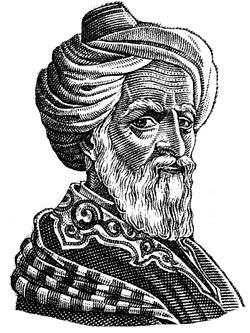
In Al-Andalus from 936 to 1013 AD, Al-Zahrawi evaluated patients and performed surgical treatments of head injuries, skull fractures, spinal injuries, hydrocephalus, subdural effusions and headache.
Image source: Al-Zahrawi
1499
% complete
Johann Peyligk's Compendium philosophiae naturalis, published in Leipzig, Germany in 1499, is an early example of the academic study of the nervous system.
Image source: History of neurology and neurosurgery
1543
% complete
A revolution took place in both neurology in particular and in anatomy in general when Andreas Vesalius published his De humani corporis fabrica in 1543, providing detailed anatomical illustrations including the brain.
Image source: De Humani Corporis Fabrica Libri Septem
1549
% complete
In 1549, Jason Pratensis published De Cerebri Morbis, a volume devoted to neurological diseases, in which he discussed symptoms as well as ideas from Galen and other Greek, Roman, and Arabic authors.
Image source: Jason Pratensis
1610
% complete
Anatomist Jean Riolan the Younger used the word "neurology" in 1610, among the first recorded uses of the term, which Thomas Willis later popularized.
Image source: Jean Riolan the Younger
1799
% complete
Matthew Baillie (1761–1823) illustrated the lesions of stroke in 1799, an important early contribution to neuropathology.
Image source: Matthew Baillie
1829
% complete
Jean Cruveilhier (1791–1874) illustrated the lesions of stroke in 1829, complementing Matthew Baillie's earlier work and advancing understanding of cerebrovascular disease.
Image source: Jean Cruveilhier
1637
% complete
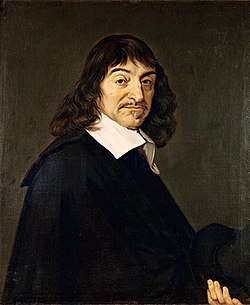
The famous philosopher René Descartes (1596–1650) speculated that every activity of an animal was a necessary reaction to some external stimulus; the connection between the stimulus and the response was made through a definite nervous path.
Image source: René Descartes
1664
% complete
Thomas Willis published his Anatomy of the Brain in 1664, followed by Cerebral Pathology in 1667. He was among the first few authors to use the word "neurology," after Jean Riolan the Younger in 1610.
Image source: Thomas Willis
1718
% complete
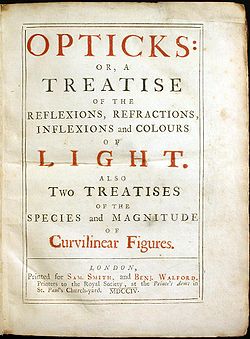
In 1718, Isaac Newton opined in his book Opticks that the brain was sending signals to the muscles through the path of nerves.
Image source: Opticks
1791
% complete
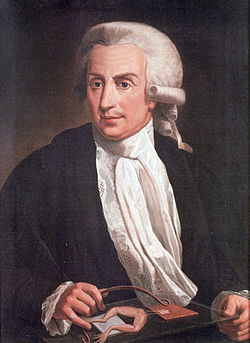
Luigi Galvani (1737–1798) demonstrated that electrical stimulation of nerve produced muscle contraction, founding the field of bioelectricity.
Image source: Luigi Galvani
1822
% complete
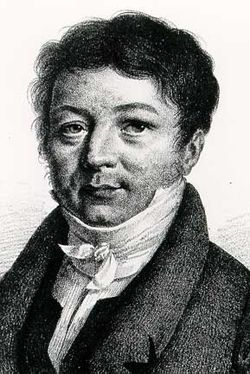
The competing work of Charles Bell (1774–1842) and François Magendie (1783–1855) led to the view that the ventral horns of the spinal cord were motor and the dorsal horns sensory.
Image source: François Magendie
1837
% complete
Purkinje (1787–1869) in 1837 gave the first description of neurones, indeed a very early description of cells of any kind.
Image source: Jan Evangelista Purkyně
1848
% complete
A railroad worker who had an iron bar driven through his left frontal lobe in 1848, Phineas Gage became a famous case in neuroscience. Though it is often said that the development of lobotomy was inspired by his case, the evidence is against this.
Image source: Phineas Gage
1850
% complete
By 1850, Helmholtz was able to measure the signal conductance speed on a frog's sciatic nerve, about 27 m/s at 20–21 °C, a landmark in neurophysiology.
Image source: Hermann von Helmholtz
1861
% complete
A hemiplegic patient who could not speak led Paul Broca (1824–1880) to the view that functions in the cerebral cortex were anatomically localised, a foundational discovery for neuropsychology.
Image source: Paul Broca
1897
% complete
Ivan Pavlov (1849–1936) realised as his dogs dribbled that a simple reflex could be modified by higher brain functions, laying groundwork for behavioral neuroscience.
Image source: Ivan Pavlov
1906
% complete
These neurological ideas were coordinated and integrated by the neurophysiologist Charles Scott Sherrington (1857–1952), whose synapse concept unified reflex physiology.
Image source: Charles Scott Sherrington
1800 - 1900
% complete
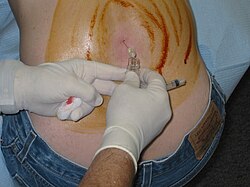
This happened step by step in the 19th century — tendon hammer, ophthalmoscope, pin and tuning fork, syringe and lumbar puncture — transforming the neurological examination.
Image source: Lumbar puncture
1878
% complete
In 1878 Richard Caton discovered that electrical signals transmitted through an animal's brain, an important milestone in the history of electrodes in the brain.
Image source: Richard Caton
1886
% complete
Gowers (1845–1915) owned a major text in two volumes on the cerebrospinal tract, contributing significantly to clinical neurology in the late 19th century.
1900
% complete
By the end of the nineteenth century, the connection was established between stroke and hemiplegia, between trauma and paraplegia, between the spirochaete and the paralysed demency people who filled the mental hospitals.
Image source: General paresis of the insane
1920
% complete
The formal organization of the medical specialties of neurology and neurosurgery is relatively recent, taking place in Europe and the United States only in the 20th century with the establishment of professional societies distinct from internal medicine, psychiatry and general surgery.
1972
% complete
In 1972 the cochlear implant, a neurological prosthetic that allowed deaf people to hear was marketed for commercial use.
Image source: Cochlear implant
1998
% complete
In 1998 researcher Philip Kennedy implanted the first brain–computer interface (BCI) into a human subject, opening a new era of neural prosthetics.
Image source: Brain–computer interface
1879
% complete
In 1879 after locating it via neurological signs alone, Scottish surgeon William Macewen (1848–1924) performed the first successful brain tumor removal.
Image source: William Macewen
Nov 25, 1884
% complete
On 25 November 1884 after English physician Alexander Hughes Bennett (1848–1901) used Macewen's technique to locate it, English surgeon Rickman Godlee (1849–1925) performed the first primary brain tumor removal, operating on the exposed brain, whereas Macewen operated outside of the "brain proper" via trepanation.
Image source: Rickman Godlee
1887
% complete
Three years after the first primary brain tumor removal, Victor Horsley (1857–1916) was the first physician to remove a spinal tumour.
Image source: Victor Horsley
1890 - 1920
% complete
There was not much advancement in neurosurgery until late 19th early 20th century, when electrodes were placed on the brain and superficial tumors were removed.
Mar 16, 1907
% complete
On 16 March 1907 Austrian surgeon Hermann Schloffer became the first to successfully remove a pituitary tumor.
Image source: Hermann Schloffer
1909
% complete
American surgeon Harvey Cushing (1869–1939), a pioneer of modern neurosurgery, successfully removed a pituitary adenoma from an acromegalic patient in 1909.
Image source: Harvey Cushing
1936
% complete
Egas Moniz (1874–1955) in Portugal developed a procedure of leucotomy (now mostly known as lobotomy) to treat severe psychiatric disorders. Though often said to be inspired by the case of Phineas Gage, the evidence is against this.
Image source: António Egas Moniz
Or browse the full history timeline directory, with more than 2,000 topics.
This History of Neurology timeline was generated with the help of AI, using information found on the internet.
We work hard to keep these timelines accurate, but mistakes do get through. If you spot one, email us at [email protected] and we'll fix it for future visitors.
Generate yours with AI or build it from scratch, for free.
Export your timeline, add your own events, edit or remove AI-generated events, and much more
No credit card required.
Cancel anytime.
Cancel anytime.
You can create an unlimited number of timelines with up to 10 events on each one, customize how they look, export them to PDF, PNG, PowerPoint, CSV, and Excel, and share them with a link. Paid plans raise the event limit and add features like spreadsheet imports and collaborators.
Yes. You can cancel your subscription from your account page at any time, and you will not be charged again. Your subscription stays active for the rest of the period you already paid for.
Yes. We will email you a reminder before the annual renewal, and we will also email you a receipt.
Yes. You can email us within 15 days of any payment, and we will issue you a full refund.
Check out our pricing docs or send us an email anytime: [email protected].