
-
Use Cases
-
Resources
-
Pricing
The history of stem cell research traces over 150 years of scientific discovery, beginning with early theories of blood cell formation and culminating in revolutionary advances such as bone marrow transplantation, embryonic stem cell isolation, induced pluripotent stem cells (iPSCs), and cutting-edge regenerative medicine therapies. More Less
1964
In 1964, researchers Lewis Kleinsmith and G. Barry Pierce made early contributions to the identification and understanding of stem cells, laying important groundwork for the modern field of stem cell research.
Image source: Stem cell
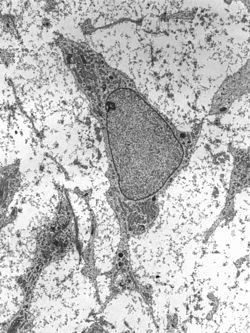
1981
Embryonic stem cells were independently first derived from mouse embryos in 1981 by two separate research groups. This breakthrough established the foundation for decades of subsequent research into pluripotent cells and their potential therapeutic applications.
Image source: Embryonic stem cell
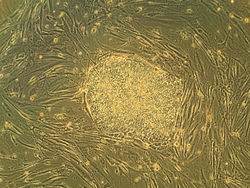
1998
In 1998, a team from the University of Wisconsin, Madison led by James A. Thomson successfully derived human embryonic stem cell lines, opening new possibilities for regenerative medicine while sparking ethical debate.
Image source: Stem cell controversy
Jan 24, 2005
The online edition of Nature Medicine published a study on January 24, 2005, stating that the human embryonic stem cells available for federally funded research were contaminated with non-human molecules from the culture medium used to grow the cells.
Mar 8, 2005
A study published in the online edition of Lancet Medical Journal on March 8, 2005 detailed a new stem cell line derived from human embryos under completely cell- and serum-free conditions, addressing contamination concerns.
Image source: Stem-cell line
Aug 23, 2006
On August 23, 2006, the online edition of Nature published a letter by Dr. Robert Lanza and colleagues describing a method of deriving embryonic stem cell lines without destroying embryos. This technical achievement could potentially enable scientists to work with new lines of embryonic stem cells using public funding in the US.
2010
Multilineage-differentiating stress-enduring (Muse) cells were discovered in 2010 by Mari Dezawa and her research group, adding a novel type of endogenous pluripotent-compatible stem cell to the field.
1996
In 1996, Dolly became the first mammal cloned from an adult cell by the Roslin Institute of the University of Edinburgh. Her creation demonstrated that adult differentiated cells could be reprogrammed, revolutionizing ideas about cellular plasticity.
Image source: Dolly (sheep)
Jan 16, 2008
On January 16, 2008, California-based company Stemagen announced that they had created the first mature cloned human embryos from single skin cells taken from adults, advancing somatic cell nuclear transfer techniques.
2001
In August 2001, President George W. Bush announced restrictions limiting federal funding for embryonic stem cell research to existing cell lines derived prior to August 2001, significantly shaping the direction of US research.
Image source: Stem cell controversy
Mar 9, 2009
Executive Order 13505 was signed by President Barack Obama in March 2009, removing the restrictions placed on federal funding for human embryonic stem cell research by the previous presidential administration.
Image source: List of executive actions by Barack Obama
2006
Japanese scientists Shinya Yamanaka and Kazutoshi Takahashi published a paper describing the induction of pluripotent stem cells from cultures of adult mouse fibroblasts by introducing four specific genes encoding transcription factors, pioneering iPS cell technology.
Image source: Induced pluripotent stem cell
2007
In 2007, it was shown that pluripotent stem cells highly similar to embryonic stem cells can be induced by delivery of four factors (Oct3/4, Sox2, c-Myc, and Klf4) to differentiated human cells, confirming iPS technology in humans.
Dec 6, 2007
As a first indication that iPS cell technology could rapidly lead to new cures, a research team headed by Rudolf Jaenisch of the Whitehead Institute used iPS cells to cure mice of sickle cell anemia, as reported by Science journal's online edition on December 6, 2007.
Jan 23, 2009
The US Food and Drug Administration approved Geron Corporation's phase I clinical trial of their human embryonic stem cell-derived treatment for spinal cord injuries. Phase I trials involved transplanting oligodendrocytes derived from human ESCs into spinal cord-injured individuals.
Image source: Geron Corporation
Aug 2009
In August 2009, the FDA placed Geron's spinal cord injury trial on hold due to concerns regarding a small number of microscopic cysts found in several treated rat models.
Jul 30, 2010
On July 30, 2010, the FDA lifted its hold on Geron's phase I clinical trial, allowing the study of human embryonic stem cell-derived oligodendrocytes in spinal cord injury patients to resume.
Oct 2010
In October 2010, researchers enrolled and administered human embryonic stem cell-derived treatment to the first patient at Shepherd Center in Atlanta, marking the first-ever use of hESC therapy in a human patient in the United States.
Nov 2011
In November 2011, Geron announced it was halting the trial and dropping out of stem cell research for financial reasons, but would continue monitoring existing patients and attempted to find a partner that could continue their research.
2013
In 2013, BioTime, led by CEO Dr. Michael West, took up continuation of the spinal cord injury program originally developed by Geron, keeping the pursuit of embryonic stem cell therapies alive after Geron's exit.
Or browse the full history timeline directory, with more than 2,500 topics.
This History of Stem Cell Research timeline was generated with the help of AI, using information found on the internet.
We work hard to keep these timelines accurate, but mistakes do get through. If you spot one, email us at [email protected] and we'll fix it for future visitors.
Generate yours with AI or build it from scratch, for free.
Export your timeline, add your own events, edit or remove AI-generated events, and much more
No credit card required.
Cancel anytime.
Cancel anytime.
You can create an unlimited number of timelines with up to 10 events on each one, customize how they look, export them to PDF, PNG, PowerPoint, CSV, and Excel, and share them with a link. Paid plans raise the event limit and add features like spreadsheet imports and collaborators.
Yes. You can cancel your subscription from your account page at any time, and you will not be charged again. Your subscription stays active for the rest of the period you already paid for.
Yes. We will email you a reminder before the annual renewal, and we will also email you a receipt.
Yes. You can email us within 15 days of any payment, and we will issue you a full refund.
Check out our pricing docs or send us an email anytime: [email protected].