-
Resources
-
Pricing
The history of autopsy traces how postmortem examinations evolved from ancient anatomical study into essential tools for diagnosing disease, advancing medical knowledge, investigating deaths, and improving public health. More Less
Build a timeline like this one in minutes, for free. Start Yours →
Part of our collection of science timelines.
300 BCE - 201 BCE
In the 3rd century BCE, Greek physicians Herophilus of Chalcedon and Erasistratus worked in Alexandria and became notable early autopsists. Their investigations contributed to the study of human anatomy through the examination of bodies.
Image source: Herophilos
1109 - 1186
Ibn Tufail, a Moorish philosopher and physician who lived approximately from 1109/10 to 1185/86, elaborated on autopsy in his treatise Hayy ibn Yaqzan. Later discussion has identified him as an early supporter of autopsy and vivisection.
Image source: Ibn Tufayl
1200
By around 1200, dissections were being performed with enough regularity in Europe for practitioners to develop significant skill. These activities formed part of the long development of systematic anatomical examination.
Image source: Dissection
1200
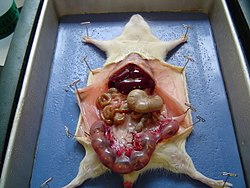
European practitioners developed successful methods for preserving bodies, including filling veins with wax and metals. Such techniques supported the examination and transport of bodies during the medieval period.
Image source: Embalming
1200
Evidence of forensic autopsies dates back to at least the 13th century in Bologna. These examinations connected the study of a dead body with legal investigations and helped establish an early forensic tradition.
Image source: Forensic pathology
1230 - 1303
Pope Boniface VIII, who lived from approximately 1230 to 1303, was among the medieval individuals associated with the historical debate surrounding the handling and examination of human bodies.
Image source: Pope Boniface VIII
1300
The anatomic autopsy rose to significance in Padua. From there, the practice influenced other European cities and became part of the developing institutional study of human anatomy.
Image source: University of Padua
1471 - 1484
In the late 15th century, Pope Sixtus IV issued a bull permitting students at the universities of Bologna and Padua to dissect human bodies. This represented an important beginning of wider acceptance of autopsy and dissection by the Catholic Church.
Image source: Pope Sixtus IV
1480
The late-15th-century permission for students in Bologna and Padua to dissect bodies helped create conditions for future anatomists. It paved the way for figures such as Andreas Vesalius and Giovanni Battista Morgagni.
Image source: History of anatomy
1500 - 1900
Until the 20th century, historians commonly thought that the modern autopsy process derived from Renaissance anatomists. This interpretation emphasized the Renaissance as the central origin point of modern anatomical examination.
1514 - 1564
Andreas Vesalius, a Netherlands-born anatomist who lived approximately from 1514 to 1564, advanced the study of human anatomy through anatomical autopsy. He focused on the structure and function of the human body.
Image source: Andreas Vesalius
1543
In 1543, Andreas Vesalius conducted a public dissection of the body of a former criminal. The event exemplified the increasing public and scholarly importance of direct anatomical examination.
1543
Vesalius published De Humani Corporis Fabrica Libri Septem in 1543. The work gained traction across Europe and became a foundational text of early modern anatomy, reshaping medical understanding of the skeletal and muscular systems.
Image source: De Humani Corporis Fabrica Libri Septem
1543 - 1600
Through illustrations of skeletons contemplating their own deaths, Vesalius connected anatomical study with human mortality. These images helped make human anatomy central to 16th-century investigations.
1600 - 1699
The word autopsy has been in use since around the 17th century. Its emergence as a term accompanied the development of more formal practices for examining the body after death.
1620 - 1689
During the lifetime of Théophile Bonet, autopsy-based anatomical knowledge continued to expand. His work helped preserve the period's growing body of observations about disease and the dead body.
Image source: Théophile Bonet
1679
The Swiss anatomist Théophile Bonet, who lived from 1620 to 1689, published Sepulchretum in 1679. The work belongs to the period in which autopsy observations were being collected and organized for medical study.
1682 - 1771
Giovanni Battista Morgagni, an Italian anatomist who lived from 1682 to 1771, performed clinical autopsies to study mechanisms of disease. He linked symptoms observed in living patients to physical changes in organs after death.
1700 - 1771
Morgagni's clinical investigations helped establish the discipline of anatomical pathology. He is widely celebrated as its father because of his systematic use of autopsy findings to explain disease.
Image source: Giovanni Battista Morgagni
1734
The term post-mortem was first recorded in 1734. This documented use reflects the establishment of a specific vocabulary for postmortem examination.
1769
Morgagni published De Sedibus et Causis Morborum per Anatomen Indagatis, or The Seats and Causes of Diseases Investigated by Anatomy, in 1769. It was the first exhaustive work on pathology and connected clinical symptoms with anatomical findings.
1800 - 1900
In the 19th and early 20th centuries, clinical autopsy rose in popularity. It became a principal method of anatomical research and an important way to investigate the physical basis of disease.
1800 - 1900
The 19th century was marked by a general lack of standardization in autopsy practice. Despite the growing importance of clinical autopsy, procedures and reporting methods were not yet uniform.
1900
Around the turn of the 20th century, people began to further develop forensic science. This development strengthened the role of autopsy in investigations involving unexplained or legally significant deaths.
Image source: Forensic science
1955 - 2026
In most Western countries, the number of hospital autopsies performed has decreased every year since 1955. The long-term decline contrasts with the central role clinical autopsy held during the 19th and early 20th centuries.
1980 - 1989
In the United States, autopsy rates fell from 17% in 1980 to 14% in 1985 and 11.5% in 1989. The figures varied notably from county to county.
2004
In 2004, England and Wales recorded 514,000 deaths, of which 225,500 were referred to the coroner. The figures illustrate the substantial role of coroner investigations in determining when postmortem examination may be considered.
Image source: Coroner
2004
Following the Human Tissue Act 2004 in the United Kingdom, all organs and tissue must be returned to the body unless the family gives permission to retain tissue for further investigation. The law established a requirement for consent regarding continued retention.
Image source: Human Tissue Act 2004
2013
In the United Kingdom in 2013, only 0.7% of inpatient adult deaths were followed by a consented autopsy. This figure demonstrates the continuing decline in routine hospital autopsy practice.
Build a timeline like this one in minutes, for free. Start Yours →
Or browse the full history timeline directory, with more than 2,500 topics.
This History of Autopsy timeline was generated with the help of AI, using information found on the internet.
We work hard to keep these timelines accurate, but mistakes do get through. If you spot one, email us at [email protected] and we'll fix it for future visitors.
Generate yours with AI or build it from scratch, for free.
Export your timeline, add your own events, edit or remove AI-generated events, and much more
No credit card required.
15-day money-back guarantee.
You can create an unlimited number of timelines with up to 10 events on each one, customize how they look, export them to PDF, PNG, PowerPoint, CSV, and Excel, and share them with a link. Timelines made with Timeline Maker AI keep every event the generator created, and you can add up to 5 events of your own. Paid plans remove the event limit, add spreadsheet imports and hide Preceden's branding, and the higher-priced plan also adds collaborators, a custom logo and a custom domain.
Yes. You can cancel your subscription from your account page at any time, and you will not be charged again. Your subscription stays active for the rest of the period you already paid for.
Yes. We email you a reminder 15 days before your annual renewal, and we email you a receipt after every payment.
Yes. You can email us within 15 days of any payment, and we will issue you a full refund.
Check out our pricing docs or send us an email anytime: [email protected].