-
Use Cases
-
Resources
-
Pricing
The history of anatomy traces humanity's evolving understanding of the structure of the human body, spanning ancient civilizations' early observations, the revival of dissection during the Renaissance, the establishment of anatomy as a rigorous scientific discipline, and the modern era of advanced imaging technologies that continue to deepen our knowledge of human form. More Less
2000 BCE
% complete
The history of anatomy in Mesopotamia did not start in a single year but rather began to be formally recorded and studied starting around 2000 BCE, marking one of the earliest known efforts to document the structure of the human body.
Image source: History of anatomy
1600 BCE
% complete
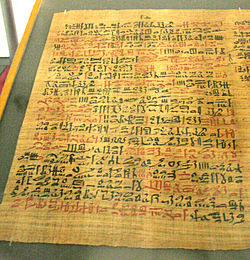
The study of anatomy begins at least as early as 1600 BC, the date of the Edwin Smith Surgical Papyrus, an ancient Egyptian medical text that contains detailed observations of the human body, injuries, and treatments.
Image source: Edwin Smith Papyrus
1550 BCE
% complete
The Ebers Papyrus (c. 1550 BC) features a treatise on the heart, demonstrating early Egyptian understanding of the cardiovascular system and its role in the body.
Image source: Ebers Papyrus
450 BCE
% complete
In the fifth-century BCE, the philosopher Alcmaeon may have been one of the first to have dissected animals for anatomical purposes in ancient Greece, and possibly identified the optic nerves and Eustachian tubes.
Image source: Alcmaeon of Croton
350 BCE
% complete
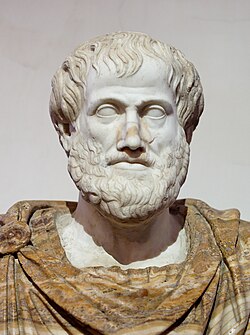
The philosopher Aristotle (4th century BCE), alongside some of his contemporaries, labored to produce a system that made room for empirical research, laying groundwork for systematic biological study.
Image source: Aristotle
300 BCE - 200 BCE
% complete
In the Hellenistic period, the first recorded school of anatomy was formed in Alexandria from the late fourth century to the second century BCE, where scholars such as Herophilus and Erasistratus conducted pioneering human dissections.
100 CE - 200 CE
% complete
The final major anatomist of ancient times was Galen, active in the second century CE. His writings became the foundation of authority for all medical writers and physicians for the next 1300 years, until they were challenged by Vesalius and Harvey in the 16th century.
Image source: Galen
150 CE
% complete
Galen was able to demonstrate that living arteries contain blood, but his error, which became the established medical orthodoxy for centuries, was to assume that the blood goes back and forth from the heart in an ebb-and-flow motion.
1180
% complete
Galen's work was translated into Latin by Gerard of Cremona around 1180, making classical anatomical knowledge accessible to medieval European scholars. A Latin translation of it was later edited in the 16th century by Andreas Vesalius.
Image source: Gerard of Cremona
1200 - 1299
% complete
In the 12th century, as universities were being established in Italy, Emperor Frederick II made it mandatory for students of medicine to take courses on human anatomy and surgery.
1276
% complete
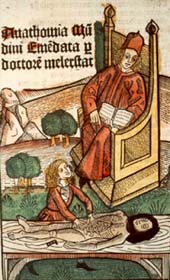
Mondino de Luzzi "Mundinus" was born around 1276 and died in 1326; from 1314 to 1324 he presented many lectures on human anatomy at Bologna university, reviving the practice of human dissection in Europe.
Image source: Mondino de Luzzi
1298
% complete
While it was claimed by 19th century polemicists that dissection was restricted after Boniface VIII passed a papal bull forbidding the dismemberment and boiling of corpses for funerary purposes, this claim has been debunked as a myth by modern historians of science.
Image source: Pope Boniface VIII
1315
% complete
"Mundinus" carried out the first systematic human dissections since Herophilus of Chalcedon and Erasistratus of Ceos 1500 years earlier, re-establishing direct observation of the human body as central to anatomical study.
1316
% complete
Mondino de'Luzzi put together a book called "Anathomia" in 1316 that consisted of detailed dissections that he had performed; this book was used as a textbook in universities for 250 years.
Image source: Mondino de Luzzi
1400 - 1499
% complete
Following de Liuzzi's early studies, 15th century anatomists included Alessandro Achillini and Antonio Benivieni, who continued to advance anatomical knowledge through observation and dissection.
1452 - 1519
% complete
Leonardo da Vinci (1452–1519) was trained in anatomy by Andrea del Verrocchio, beginning a lifelong engagement with the structure of the human body that combined art and science.
Image source: Leonardo da Vinci
1489
% complete
In 1489 Leonardo began a series of anatomical drawings depicting the ideal human form. He was the first to develop drawing techniques in anatomy using cross-sections and multiple angles, though his notebooks remained unpublished during his lifetime and his discoveries were unknown until centuries after his death.
1500 - 1599
% complete
Anatomical theatres became a popular form for anatomical teaching in the early 16th century. As they gained popularity throughout the century, protocols were adjusted to account for disruptions by students.
Image source: Anatomical theatre
1540
% complete
In 1540, Vesalius gave a public demonstration of the inaccuracies of Galen's anatomical theories, which were still the orthodoxy of the medical profession. While lecturers explained anatomy as revealed by Galen more than 1000 years earlier, assistants pointed to equivalent details on dissected corpses.
Image source: Andreas Vesalius
1543
% complete
Important anatomical work was carried out by Mondino de Luzzi, Berengario da Carpi, and Jacques Dubois, culminating in Andreas Vesalius's seminal work De Humani Corporis Fabrica (1543). His superbly executed drawings triumphantly described differences between dogs and humans, but it took a century for Galen's influence to fade.
Image source: De Humani Corporis Fabrica Libri Septem
1594
% complete
The University of Padua was the first and most widely known anatomical theatre, founded in 1594, providing a permanent venue for public dissections and anatomical instruction.
Image source: Anatomical Theatre of Padua
1242
% complete
The work of Ibn al-Nafis regarding the right sided (pulmonary) circulation pre-dates the later work (1628) of William Harvey's De motu cordis. His theory challenged Galen's physiology of the circulatory system, which had remained unchallenged until then, earning him the title "father of circulatory physiology".
Image source: Ibn al-Nafis
1570 - 1599
% complete
In the late 16th century, anatomists began exploring and pushing for contention that the study of anatomy could contribute to advancing the boundaries of natural philosophy, elevating anatomy beyond practical medicine.
1600 - 1699
% complete
At the beginning of the 17th century, the use of dissecting human cadavers influenced anatomy, leading to a spike in the study of anatomy across Europe.
1628
% complete
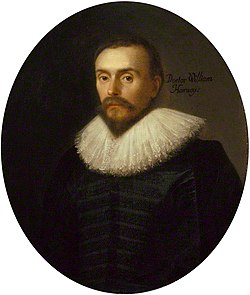
In 1628, English physician William Harvey observed circulating blood through dissections of his father's and sister's bodies, publishing De motu cordis and overturning Galen's ebb-and-flow model of blood movement.
Image source: William Harvey
1690 - 1699
% complete
By the end of the 17th century, Gaetano Zumbo developed anatomical wax modeling techniques, allowing detailed anatomical structures to be preserved and studied without fresh specimens. In the 17th century, many anatomical specimens had previously been dried and stored in cabinets.
Image source: Gaetano Giulio Zumbo
1700 - 1749
% complete
Until the middle of the 18th century, there was a quota of ten cadavers each for the Royal College of Physicians and the Company of Barber Surgeons, the only two groups permitted to perform dissections. During the first half of the 18th century, William Cheselden challenged the Company of Barber Surgeon's exclusive rights on dissections.
Image source: William Cheselden
1752
% complete
In 1752, growth in demand led to the passage of the Murder Act, which allowed medical schools in England to legally dissect bodies of executed murderers for anatomical education and research. By the end of the 18th century, many European countries passed similar legislation to meet demand for fresh cadavers and reduce crime.
Image source: Murder Act 1751
1790 - 1799
% complete
By the late 18th century, Thomas Pole published The Anatomic Instructor, which detailed how to dry and preserve specimens and soft tissue, improving methods of maintaining anatomical collections.
1794
% complete
The new hospital medicine in France during the late 18th century was brought about in part by the Law of 1794 which made physicians and surgeons equals in the world of medical care, integrating surgical and anatomical training.
1800 - 1899
% complete
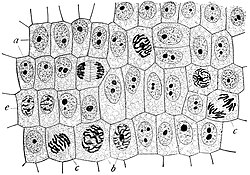
During the 19th century, anatomical research was extended with histology and developmental biology of both humans and animals, deepening understanding of tissues and embryological development.
Image source: Histology
1800 - 1899
% complete
The 19th century marked a significant expansion in anatomical education, fueled by the rapid growth of medical schools. The century also saw a move from anatomical theatres to classrooms, reducing the number of people who could benefit from each cadaver.
1816
% complete
With the invention of the Stethoscope in 1816, R.T.H. Laennec advanced clinical examination, connecting anatomical knowledge with bedside diagnosis of disease.
Image source: Stethoscope
1822
% complete
From 1822 the Royal College of Surgeons forced unregulated schools to close, consolidating anatomical education under regulated institutions.
Image source: Royal College of Surgeons of England
1832
% complete
The British Parliament passed the Anatomy Act 1832, which finally provided for an adequate and legitimate supply of corpses by allowing legal dissection of executed murderers, ending reliance on body snatching.
Image source: Anatomy Act 1832
1870 - 1920
% complete
Reforms and innovations in anatomical education emerged during the late 19th and early 20th centuries, modernizing curricula and teaching methods in response to scientific advances.
1900 - 1999
% complete
By the 20th century, anatomy departments began evolving, often merging with disciplines like cell biology to reflect broader scientific advancements in molecular and cellular research.
Image source: Cell (biology)
2004
% complete
In Britain, the Human Tissue Act 2004 has tightened up the availability of resources to anatomy departments, regulating the use of human tissue for education and research.
Image source: Human Tissue Act 2004
Or browse the full history timeline directory, with more than 2,000 topics.
This History of Anatomy timeline was generated with the help of AI, using information found on the internet.
We work hard to keep these timelines accurate, but mistakes do get through. If you spot one, email us at [email protected] and we'll fix it for future visitors.
Generate yours with AI or build it from scratch, for free.
Export your timeline, add your own events, edit or remove AI-generated events, and much more
No credit card required.
Cancel anytime.
Cancel anytime.
You can create an unlimited number of timelines with up to 10 events on each one, customize how they look, export them to PDF, PNG, PowerPoint, CSV, and Excel, and share them with a link. Paid plans raise the event limit and add features like spreadsheet imports and collaborators.
Yes. You can cancel your subscription from your account page at any time, and you will not be charged again. Your subscription stays active for the rest of the period you already paid for.
Yes. We will email you a reminder before the annual renewal, and we will also email you a receipt.
Yes. You can email us within 15 days of any payment, and we will issue you a full refund.
Check out our pricing docs or send us an email anytime: [email protected].