-
Use Cases
-
Resources
-
Pricing
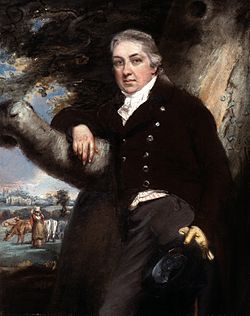
Edward Jenner (1749–1823) was an English physician and scientist known as the father of immunology. His development of the smallpox vaccine in 1796, using cowpox material to confer immunity, marked the birth of vaccination and laid the foundation for modern preventive medicine, ultimately leading to the global eradication of smallpox in 1980. More Less
1721
% complete
Lady Mary Wortley Montagu had imported variolation to Britain after having observed it in Constantinople, introducing an early method of smallpox immunization to England decades before Jenner's work.
Image source: Edward Jenner
1766
% complete
In 1766, Daniel Bernoulli analyzed smallpox morbidity and mortality data to demonstrate the efficacy of inoculation.
1768
% complete
By 1768, the English physician John Fewster had realised that prior infection with cowpox rendered a person immune to smallpox, a key observation preceding Jenner's vaccine.
1774
% complete
The Dorset farmer Benjamin Jesty successfully vaccinated with cowpox and presumably induced immunity in his wife and two children during the 1774 smallpox epidemic, though it was not until Jenner's work that the procedure became widely understood.
1780
% complete
In 1780, Jacques Antoine Rabaut-Pommier made similar observations in France regarding the protective effect of cowpox against smallpox.
May 14, 1796
% complete
On 14 May 1796, Jenner tested his hypothesis that cowpox could protect against smallpox by inoculating James Phipps, the eight-year-old son of Jenner's gardener — the world's first vaccination.
Jul 1, 1796
% complete
On 1 July 1796, Jenner injected Phipps with variolous material, the routine method of immunisation at that time, and again no disease followed, demonstrating the protective effect of cowpox.
1798
% complete
In 1798, Jenner used the term 'vaccination' in the title of his Inquiry into the Variolae vaccinae known as the Cow Pox, in which he described the protective effect of cowpox against smallpox.
1800
% complete
In 1800, Jenner published A Continuation of Facts and Observations relative to the Variolæ Vaccinæ, a 40-page work further documenting the success of his vaccine.
1803
% complete
In 1803, Jenner became president of the Jennerian Society in London, concerned with promoting vaccination to eradicate smallpox. The society ceased operations in 1809.
1803 - 1806
% complete
The success of Jenner's discovery soon spread around Europe and was used en masse in the Spanish Balmis Expedition (1803–1806), a three-year-long mission to the Americas, the Philippines, Macao and China led by Francisco Javier de Balmis with the aim of giving the smallpox vaccine to thousands.
Image source: Balmis Expedition
1808
% complete
In 1808, with government aid, the National Vaccine Establishment was founded, but Jenner felt dishonoured by the men selected to run it and resigned his directorship.
1811
% complete
Returning to London in 1811, Jenner observed a significant number of cases of smallpox after vaccination, prompting further investigation into the vaccine's effectiveness.
May 17, 1749
% complete
Edward Jenner was born on 17 May 1749 in Berkeley, Gloucestershire, England, as the eighth of nine children. He would grow up to become an English physician and scientist who pioneered the concept of vaccines.
1770
% complete
In 1770, at age 21, Jenner became apprenticed in surgery and anatomy under the surgeon John Hunter and others at St George's Hospital, London.
1773
% complete
Returning to his native countryside by 1773, Jenner became a successful family doctor and surgeon, practising on dedicated premises at Berkeley.
1788
% complete
Jenner's findings on the previously misunderstood life of the nested cuckoo were published in Philosophical Transactions of the Royal Society in 1788. The careful study combined observation, experiment and dissection.
1788
% complete
Jenner was elected a fellow of the Royal Society in 1788, following his publication of a careful study of the previously misunderstood life of the nested cuckoo.
Mar 1788
% complete
Jenner married Catherine Kingscote in March 1788; she died of tuberculosis in 1815. They had three children together: Edward Robert (1789–1810), Catherine Fitzhardinge (1794–1833), and Robert Fitzhardinge (1797–1854).
1792
% complete
With twenty years' experience of general practice and surgery, Jenner obtained the degree of MD from the University of St Andrews in 1792.
1800
% complete
A group of villages in Somerset County, Pennsylvania, United States, was named in Jenner's honour by early 19th-century English settlers, including Jenners, Jenner Township, Jenner Crossroads and Jennerstown, Pennsylvania.
Image source: Jenner Township, Pennsylvania
1840
% complete
Eventually, vaccination was accepted, and in 1840, the British government banned variolation – the use of smallpox to induce immunity – and provided vaccination using cowpox free of charge under the Vaccination Act.
1896
% complete
A statue of Jenner was erected at the Tokyo National Museum in 1896 to commemorate the centenary of Jenner's discovery of vaccination.
1926
% complete
Twenty-three names of public health and tropical medicine pioneers, including Jenner, were chosen to feature on the Keppel Street building when it was constructed in 1926.
Image source: London School of Hygiene and Tropical Medicine
1980
% complete
In 1980, the World Health Organization declared smallpox an eradicated disease, fulfilling the ultimate promise of the vaccination concept pioneered by Jenner.
Image source: Smallpox
1986
% complete
The minor planet 5168 Jenner is named in honour of Edward Jenner, extending his legacy beyond Earth.
Image source: Edward Jenner
1999
% complete
Commemorated on postage stamps issued by the Royal Mail, Jenner featured in their World Changers issue along with Charles Darwin, Michael Faraday and Alan Turing in 1999.
2002
% complete
In 2002, Jenner was named in the BBC's list of the 100 Greatest Britons following a UK-wide vote.
Image source: 100 Greatest Britons
2025
% complete
POX, a play by Janet Bolam, was performed by the Cotswold Players in the garden of Jenner's House in 2025.
1802
% complete
Supported by his colleagues and King George III in petitioning Parliament, Jenner was granted £10,000 in 1802 for his work on vaccination.
1802
% complete
Jenner was elected a foreign honorary member of the American Academy of Arts and Sciences in 1802, one of several international honors recognizing his achievements.
Dec 30, 1802
% complete
Jenner became a master mason on 30 December 1802, in Lodge of Faith and Friendship #449. From 1812 to 1813 he served as worshipful master of Royal Berkeley Lodge of Faith and Friendship.
1804
% complete
Jenner was elected a member of the American Philosophical Society in 1804, adding to his growing international recognition.
1805
% complete
Jenner became a member of the Medical and Chirurgical Society on its founding in 1805 (now the Royal Society of Medicine) and presented several papers there.
Image source: Medical and Chirurgical Society of London
1806
% complete
Jenner was elected a foreign member of the Royal Swedish Academy of Sciences in 1806.
1821
% complete
In 1821, Jenner was appointed physician extraordinary to King George IV and was also made mayor of Berkeley and magistrate (justice of the peace).
Jan 25, 1823 - Jan 26, 1823
% complete
Jenner was found in a state of apoplexy on 25 January 1823, with his right side paralysed, and died the next day, 26 January 1823. In his last year he had presented his 'Observations on the Migration of Birds' to the Royal Society.
Or browse the full history timeline directory, with more than 2,000 topics.
This Edward Jenner timeline was generated with the help of AI, using information found on the internet.
We work hard to keep these timelines accurate, but mistakes do get through. If you spot one, email us at [email protected] and we'll fix it for future visitors.
Generate yours with AI or build it from scratch, for free.
Export your timeline, add your own events, edit or remove AI-generated events, and much more
No credit card required.
Cancel anytime.
Cancel anytime.
You can create an unlimited number of timelines with up to 10 events on each one, customize how they look, export them to PDF, PNG, PowerPoint, CSV, and Excel, and share them with a link. Paid plans raise the event limit and add features like spreadsheet imports and collaborators.
Yes. You can cancel your subscription from your account page at any time, and you will not be charged again. Your subscription stays active for the rest of the period you already paid for.
Yes. We will email you a reminder before the annual renewal, and we will also email you a receipt.
Yes. You can email us within 15 days of any payment, and we will issue you a full refund.
Check out our pricing docs or send us an email anytime: [email protected].