-
Use Cases
-
Resources
-
Pricing
Jun 17, 1239
% complete
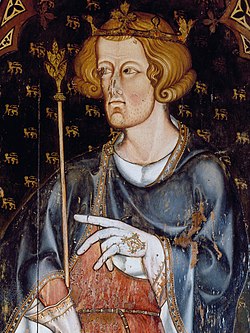
Edward was born at the Palace of Westminster, the eldest son of King Henry III of England and Eleanor of Provence. He was named after his father's favorite saint, Edward the Confessor, and was the first English king since the Norman Conquest to bear an Anglo-Saxon name.
Image source: Edward I of England
May 1258 - Apr 1264
% complete
A coalition of barons led by Simon de Montfort rebelled against Henry III's misgovernment, forcing the king to accept the Provisions of Oxford. The young Edward initially sided with the barons before switching loyalty to his father as civil war loomed.
Image source: Second Barons' War
May 14, 1264
% complete
Edward commanded the royalist cavalry at Lewes but broke ranks pursuing fleeing Londoners, allowing de Montfort's forces to capture both Henry III and himself. The defeat left Simon de Montfort in effective control of England.
Image source: Battle of Lewes
May 28, 1265
% complete
Held prisoner by de Montfort after Lewes, Edward escaped from Hereford custody by tricking his guards into a horse-race test. He rallied royalist forces and marched against de Montfort, turning the tide of the Barons' War.
Aug 4, 1265
% complete
Edward crushed Simon de Montfort's army at Evesham in a battle described as 'murderous.' De Montfort was killed and his body mutilated, effectively ending baronial hopes of reforming the monarchy and restoring Henry III to power.
Image source: Battle of Evesham
Aug 1270
% complete
Edward departed England to join the Eighth Crusade, reaching Acre in 1271. His campaign achieved little militarily, but his presence helped negotiate a ten-year truce between the Crusader states and the Mamluk Sultan Baibars.
Image source: Lord Edward's crusade
Jun 1272
% complete
An Assassin posing as a convert to Christianity stabbed Edward with a poisoned dagger. Edward killed his attacker, and legend claims Eleanor sucked the poison from the wound, though surgeons likely saved his life by cutting away tainted flesh.
Nov 16, 1272
% complete
Henry III died at Westminster while Edward was still returning from the Crusade. Edward learned of his father's death in Sicily but traveled home slowly, arriving in August 1274. He was crowned at Westminster Abbey on August 19, 1274.
Image source: Henry III of England
Aug 19, 1274
% complete
Edward was crowned King of England in a lavish ceremony at Westminster Abbey. His accession marked the beginning of one of medieval England's most formidable reigns, earning him later fame as 'Hammer of the Scots.'
Image source: Coronation of the British monarch
Nov 1, 1254
% complete
At age fifteen, Edward married thirteen-year-old Eleanor, half-sister of King Alfonso X of Castile, as part of a diplomatic agreement. The marriage proved deeply affectionate and produced at least sixteen children; Eleanor accompanied Edward on many of his campaigns.
Image source: Eleanor of Castile
Apr 25, 1284
% complete
Edward's fourth son, also named Edward, was born at Caernarfon Castle, recently built in Wales. His birth in this fortress allowed Edward I to present him as a native-born prince of Wales, tying the new dynasty to its conquered territory.
Image source: Edward II of England
Nov 28, 1290
% complete
Queen Eleanor died near Lincoln while accompanying Edward northward. Devastated, Edward ordered memorial crosses erected at each resting place of her funeral procession, with the final cross at Charing, now Charing Cross in London.
Image source: Eleanor cross
Jul 3, 1306 - Jul 7, 1307
% complete
Despite failing health, Edward led one last army toward Scotland but died at Burgh by Sands near Carlisle on July 7, 1307, aged 68. His dying wish to have his bones carried into battle against Bruce went unfulfilled; he was buried at Westminster Abbey.
Image source: Burgh by Sands
Apr 1275
% complete
Edward issued a sweeping codification of existing law covering land tenure, debt, and justice. It formed part of his broader legal reform program alongside the Statute of Mortmain (1279) and reflected his commitment to restoring order after civil war.
Image source: Statute of Westminster 1275
Oct 18, 1290
% complete
Edward ordered all Jews expelled from England, the first national expulsion in Europe. Around 2,000 Jews were forced to leave, having already been impoverished by heavy taxation and restrictions imposed earlier in the reign.
Image source: Edict of Expulsion
1294 - 1297
% complete
Costly wars in France, Wales, and Scotland forced Edward into unprecedented taxation. In 1297 magnates led by Roger Bigod and Humphrey de Bohun resisted, compelling Edward to confirm Magna Carta and additional charters in exchange for grants.
Image source: Magna Carta
Nov 1276 - Jul 1277
% complete
Edward launched a massive campaign against Welsh Prince Llywelyn ap Gruffudd, who had refused homage. With overwhelming force and blockades, Edward forced Llywelyn's surrender by the Treaty of Aberconwy, stripping him of most of his lands.
Mar 1282 - Dec 11, 1282
% complete
Dafydd ap Gruffudd attacked Hawarden Castle, sparking a Welsh uprising joined by his brother Llywelyn. Llywelyn was killed near Builth Wells in December 1282, and Dafydd was captured and executed in 1283, ending independent Welsh rule.
Image source: Llywelyn ap Gruffudd
1283
% complete
After completing his conquest of Wales, Edward built an unprecedented chain of fortifications including Conwy, Caernarfon, Harlech, and Beaumaris. Master builder James of Saint George designed these concentric castles, symbols of enduring English control.
Image source: Castles and Town Walls of King Edward in Gwynedd
Sep 26, 1290
% complete
The seven-year-old queen of Scotland died en route from Norway to Scotland, leaving no clear heir and triggering a succession crisis among thirteen competitors that would draw Edward directly into Scottish affairs.
Image source: Margaret, Maid of Norway
1291 - Nov 17, 1292
% complete
Invited to arbitrate the Scottish succession, Edward extracted oaths of fealty from claimants before choosing John Balliol as king. Balliol's subsequent defiance of English demands led to war and Edward's dominance over Scotland.
Image source: Competitors for the Crown of Scotland
May 1294 - May 19, 1303
% complete
Philip IV of France confiscated Gascony, triggering a costly war. Edward allied with Flanders and other continental powers, but financial strain and domestic resistance limited gains until the Treaty of Paris in 1303 restored the duchy through marriage arrangements.
Image source: Gascon War
Mar 30, 1296
% complete
Beginning the First War of Scottish Independence, Edward stormed Scotland's richest burgh and massacred thousands of inhabitants over several days. Berwick remained an English possession for centuries afterward.
Image source: Sack of Berwick (1296)
Apr 27, 1296
% complete
Edward routed the Scottish army under John Comyn at Dunbar, breaking organized Scottish resistance. He then marched through Scotland unopposed, forced Balliol's abdication at Stracathro, and carried the Stone of Scone to Westminster.
Aug 1296
% complete
Edward seized the ancient coronation stone of Scottish kings and transported it to Westminster Abbey, where it was fitted into a chair used for English coronations. The symbolic theft proclaimed Scotland's subjugation to England.
Image source: Stone of Scone
May 1297
% complete
William Wallace killed the English sheriff of Lanark and ignited a nationwide Scottish revolt. Together with Andrew Moray, he gathered forces that would challenge English occupation and inspire generations of Scottish resistance.
Image source: William Wallace
Sep 11, 1297
% complete
Wallace and Moray annihilated an English army crossing the narrow bridge at Stirling, killing the Earl of Surrey's treasurer Hugh Cressingham. The shocking defeat humiliated Edward and briefly made Wallace Guardian of Scotland.
Image source: Battle of Stirling Bridge
Jul 22, 1298
% complete
Returning from France, Edward personally led an army against Wallace. English longbowmen shattered the Scottish schiltrons at Falkirk, though Wallace escaped. The victory restored English military dominance but not full control of Scotland.
Image source: Battle of Falkirk
Aug 23, 1305
% complete
Captured near Glasgow after years of resistance, Wallace was tried for treason in London and executed by hanging, drawing, and quartering at Smithfield. His brutal death made him a martyr and fueled continued Scottish defiance.
Image source: William Wallace
Mar 25, 1306
% complete
Robert Bruce murdered John Comyn in Dumfries church and had himself crowned King of Scotland at Scone, reviving Scottish independence. An enraged Edward, now elderly and ill, vowed harsh vengeance and launched a final campaign.
Image source: Robert the Bruce
Or browse the full history timeline directory, with more than 2,000 topics.
This Edward I of England timeline was generated with the help of AI, using information found on the internet.
We work hard to keep these timelines accurate, but mistakes do get through. If you spot one, email us at [email protected] and we'll fix it for future visitors.
Generate yours with AI or build it from scratch, for free.
Export your timeline, add your own events, edit or remove AI-generated events, and much more
No credit card required.
Cancel anytime.
Cancel anytime.
You can create an unlimited number of timelines with up to 10 events on each one, customize how they look, export them to PDF, PNG, PowerPoint, CSV, and Excel, and share them with a link. Paid plans raise the event limit and add features like spreadsheet imports and collaborators.
Yes. You can cancel your subscription from your account page at any time, and you will not be charged again. Your subscription stays active for the rest of the period you already paid for.
Yes. We will email you a reminder before the annual renewal, and we will also email you a receipt.
Yes. You can email us within 15 days of any payment, and we will issue you a full refund.
Check out our pricing docs or send us an email anytime: [email protected].