-
Use Cases
-
Resources
-
Pricing
Edward VIII was King of the United Kingdom and the Dominions of the British Empire, and Emperor of India, from January 20, 1936 until his abdication on December 11, 1936. His reign is the shortest of any modern British monarch, ending when he chose to marry American divorcée Wallis Simpson, an act deemed unacceptable by the government and the Church of England. After abdicating, he was given the title Duke of Windsor. More Less
Jun 23, 1894
% complete
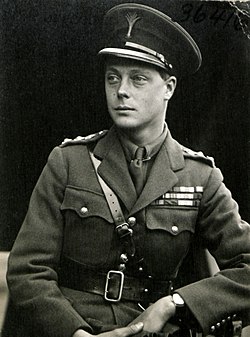
Edward Albert Christian George Andrew Patrick David was born at 10:00 pm on 23 June 1894 at White Lodge, Richmond Park, on the outskirts of London, during the reign of his great-grandmother, Queen Victoria.
Image source: Edward VIII
1901
% complete
When his parents travelled the British Empire for almost nine months following the death of Queen Victoria in 1901, Edward and his siblings remained in Britain with their grandparents, Queen Alexandra and King Edward VII.
1907
% complete
Edward took the examination for entry to the Royal Naval College, Osborne, and began there in 1907.
May 6, 1910
% complete
Edward automatically became Duke of Cornwall and Duke of Rothesay on 6 May 1910 upon his father's accession to the throne as George V.
Image source: Duke of Cornwall
Jun 23, 1910
% complete
He was created, by letters patent, Prince of Wales and Earl of Chester a month later, on 23 June 1910, his 16th birthday.
Image source: Prince of Wales
Jul 13, 1911
% complete
Edward was officially invested as Prince of Wales in a special ceremony at Caernarfon Castle on 13 July 1911.
Image source: Investiture of the prince of Wales
Jun 1914
% complete
When the First World War broke out in 1914, Edward had reached the minimum age for active service. He had joined the Grenadier Guards in June 1914, and although willing to serve on the front lines, Lord Kitchener refused to allow it, citing the harm if the heir apparent were captured.
Image source: Grenadier Guards
1916
% complete
Edward visited frontline trenches several times during the First World War, for which he was awarded the Military Cross in 1916.
Image source: Military Cross
1918
% complete
Edward undertook his first military flight in 1918 and later gained a pilot's licence.
1919
% complete
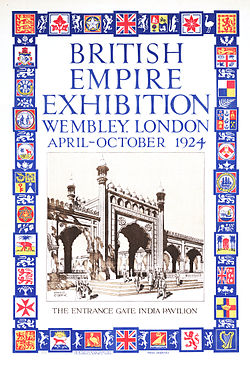
In 1919, Edward agreed to serve as president of the organising committee for the proposed British Empire Exhibition at Wembley Park, Middlesex.
Image source: British Empire Exhibition
1919 - 1962
% complete
On a tour of Canada in 1919, he acquired the Bedingfield ranch near Pekisko, Alberta, which he owned until 1962. Between 1919 and 1935 he also undertook sixteen tours across the Empire.
Image source: Pekisko, Alberta
Jan 18, 1919
% complete
Edward's youngest brother, Prince John, died on 18 January 1919, aged 13, after a severe epileptic seizure.
Image source: Prince John of the United Kingdom
Nov 1921
% complete
Edward's November 1921 visit to India came during the non-cooperation movement protests for Indian self-rule and was marked by riots in Bombay.
Image source: Non-cooperation movement (1919–1922)
1929
% complete
In 1929, Sir Alexander Leith persuaded Edward to make a three-day visit to the County Durham and Northumberland coalfields, where there was widespread unemployment.
1930
% complete
In 1930, King George V gave Edward the lease of Fort Belvedere in Windsor Great Park, which became his country home.
Image source: Belvedere (fort)
Jan 1931 - Apr 1931
% complete
From January to April 1931, Edward and his brother Prince George travelled 18,000 miles on a tour of South America, steaming out on the ocean liner Oropesa and returning via Paris and an Imperial Airways flight that landed in Windsor Great Park.
1934
% complete
In 1934, Adolf Hitler sought to forge a link between the British and German royal houses by asking Victoria Louise to arrange a marriage between the 40-year-old Edward and her 17-year-old daughter, Frederica of Hanover.
Image source: Frederica of Hanover
Jan 20, 1936
% complete
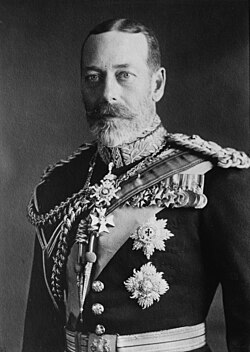
George V died on 20 January 1936, and Edward ascended the throne as Edward VIII, becoming the second monarch of the House of Windsor and Emperor of India.
Image source: George V
Jul 16, 1936
% complete
On 16 July 1936, George Andrew McMahon produced a loaded revolver as Edward rode on horseback at Constitution Hill, near Buckingham Palace.
Nov 16, 1936
% complete
On 16 November 1936, Edward invited Prime Minister Stanley Baldwin to Buckingham Palace and expressed his desire to marry Simpson when she became free to remarry, triggering the constitutional crisis.
Image source: Abdication of Edward VIII
Dec 10, 1936
% complete
Edward signed the instruments of abdication at Fort Belvedere on 10 December 1936 in the presence of his younger brothers: Prince Albert, Duke of York; Prince Henry, Duke of Gloucester; and Prince George, Duke of Kent.
Image source: Abdication of Edward VIII
Dec 11, 1936
% complete
The next day, the last act of his reign was the royal assent to His Majesty's Declaration of Abdication Act 1936.
Image source: His Majesty's Declaration of Abdication Act 1936
Dec 11, 1936
% complete
On the night of 11 December 1936, Edward, now reverted to the title of prince, explained his decision to abdicate in a worldwide BBC radio broadcast.
Dec 12, 1936
% complete
On 12 December 1936, at the accession meeting of the British Privy Council, George VI announced his intention to make his brother the 'Duke of Windsor' with the style of Royal Highness.
Image source: Duke of Windsor
May 27, 1937
% complete
Letters Patent dated 27 May 1937 re-conferred the title, style, or attribute of Royal Highness upon Edward, but specifically stated that his wife and descendants, if any, shall not hold said title or attribute.
Jun 3, 1937
% complete
Edward married Wallis Warfield, formerly Wallis Simpson, in a private ceremony on 3 June 1937 at Château de Candé, near Tours, France; they had no children.
Image source: Wedding of Prince Edward and Wallis Simpson
Oct 1937
% complete
In October 1937, Edward and Wallis visited Nazi Germany against the advice of the British government and met Adolf Hitler at his Berghof retreat in Bavaria.
Image source: Berghof (residence)
1938
% complete
Edward and Wallis settled in Paris, leasing a mansion in Boulevard Suchet from late 1938. After the war, Edward stayed in France until his death in 1972.
May 1939
% complete
In May 1939, Edward was commissioned by NBC to give a radio broadcast, his first since abdicating, during a visit to the First World War battlefields of Verdun.
Image source: Verdun
Sep 1939
% complete
On the outbreak of the Second World War in September 1939, Edward and Wallis were brought back to Britain aboard HMS Kelly, and Edward was made a major-general attached to the British Military Mission in France.
Image source: HMS Kelly
Jul 1940 - Mar 16, 1945
% complete
In July 1940, Edward was appointed governor of the Bahamas after fleeing south when Germany invaded northern France. He resigned from the post on 16 March 1945, having dealt with civil unrest over wages in Nassau in 1942 and the murder of Sir Harry Oakes on 8 July 1943.
Image source: The Bahamas
Mar 22, 1941
% complete
An interview given in December 1940 to Fulton Oursler of Liberty magazine was published on 22 March 1941, reporting Edward as saying Hitler was the right and logical leader of the German people. Roosevelt ordered covert surveillance of the Windsors in April 1941 due to German plots revolving around them.
Image source: Liberty (general interest magazine)
May 1945
% complete
Documents recovered by US troops in Marburg, Germany, in May 1945, since titled the Marburg Files, include key material relating directly to theories of Edward's Nazi sympathies. In March 1945 Owen Morshead and Anthony Blunt had been sent to Friedrichshof to secure related papers.
Image source: Marburg Files
1951
% complete
In 1951, Edward produced a memoir, A King's Story, ghost-written by Charles Murphy, in which he expressed disagreement with liberal politics. In 1952 the couple bought Le Moulin de la Tuilerie at Gif-sur-Yvette, their only owned property.
Image source: A King's Story
1952
% complete
Edward sometimes met his mother and his brother, George VI, and attended George's funeral in 1952.
Image source: Death and state funeral of George VI
Jun 1953
% complete
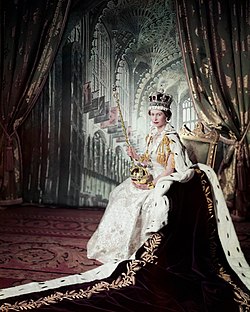
In June 1953, instead of attending the coronation of Queen Elizabeth II in London, Edward and Wallis watched the ceremony on television in Paris. He was paid to write articles on the ceremony for the Sunday Express and Woman's Home Companion.
Image source: Coronation of Elizabeth II
1956
% complete
Edward appeared on Edward R. Murrow's television-interview show Person to Person in 1956, and later in a 50-minute BBC television interview in 1970 and a ZDF interview with Georg Stefan Troller in 1966.
Image source: Person to Person (film)
1965
% complete
In 1965, Edward and Wallis returned to London. Until a 1965 agreement with the Queen, they had planned burial at Green Mount Cemetery in Baltimore, where Wallis's father was interred.
1967
% complete
In 1967, Edward and Wallis joined the royal family for the centenary of Queen Mary's birth.
Image source: Mary of Teck
1968
% complete
The last royal ceremony Edward attended was the funeral of Princess Marina in 1968. He declined an invitation to attend the investiture of Charles, Prince of Wales, in 1969.
Image source: Princess Marina of Greece and Denmark
Oct 4, 1970
% complete
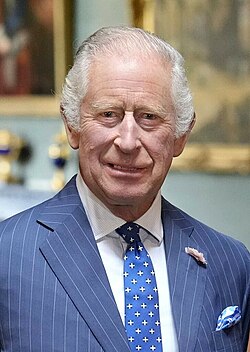
Charles briefly visited Edward at his Parisian residence on 4 October 1970.
Image source: Charles III
1971
% complete
In late 1971, Edward, who had been a smoker from an early age, was diagnosed with throat cancer and underwent cobalt therapy. Earlier surgeries included one by Michael DeBakey in Houston in December 1964 and treatment of a detached retina in February 1965.
Image source: Head and neck cancer
Sep 1971
% complete
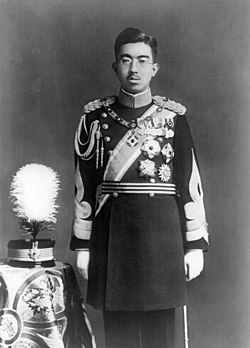
In September 1971, Edward hosted Emperor Hirohito and Empress Nagako of Japan at his Parisian residence.
Image source: Hirohito
May 18, 1972
% complete
On 18 May 1972, Queen Elizabeth II visited Edward and Wallis while on a state visit to France; she met Edward alone for 15 minutes, but only Wallis appeared with the royal party for a photocall, as Edward was too ill.
Image source: State visit
May 28, 1972
% complete
Edward died at his home in Paris on 28 May 1972, aged 77, ten days after Elizabeth's visit. His widow Wallis, suffering increasingly from dementia, died in 1986 and was buried alongside him at Frogmore.
Image source: Death and funeral of Prince Edward, Duke of Windsor
Or browse the full history timeline directory, with more than 2,000 topics.
This Edward VIII timeline was generated with the help of AI, using information found on the internet.
We work hard to keep these timelines accurate, but mistakes do get through. If you spot one, email us at [email protected] and we'll fix it for future visitors.
Generate yours with AI or build it from scratch, for free.
Export your timeline, add your own events, edit or remove AI-generated events, and much more
No credit card required.
Cancel anytime.
Cancel anytime.
You can create an unlimited number of timelines with up to 10 events on each one, customize how they look, export them to PDF, PNG, PowerPoint, CSV, and Excel, and share them with a link. Paid plans raise the event limit and add features like spreadsheet imports and collaborators.
Yes. You can cancel your subscription from your account page at any time, and you will not be charged again. Your subscription stays active for the rest of the period you already paid for.
Yes. We will email you a reminder before the annual renewal, and we will also email you a receipt.
Yes. You can email us within 15 days of any payment, and we will issue you a full refund.
Check out our pricing docs or send us an email anytime: [email protected].