-
Use Cases
-
Resources
-
Pricing
The History of Medicine traces humanity's evolving efforts to understand and treat disease, spanning ancient herbal remedies and early surgical practices in Egypt, Greece, and China; the foundational theories of Hippocrates and Galen; the scientific revolution of anatomy and physiology during the Renaissance; germ theory and antisepsis in the 19th century; and 20th-century advances such as antibiotics, vaccines, medical imaging, and genetics that transformed healthcare into a modern science. More Less
400 BC
% complete
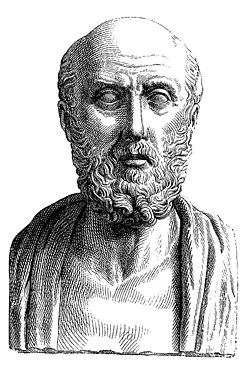
Hippocrates of Kos, often called the Father of Medicine, rejected supernatural explanations for disease and emphasized observation, diagnosis, and prognosis. The Hippocratic Corpus and the Hippocratic Oath established enduring ethical standards for medical practice.
Image source: Hippocrates
150
% complete
Galen of Pergamon produced influential works on anatomy, physiology, and therapeutics based on dissections of animals. His theories dominated European and Islamic medicine for over 1,300 years despite containing significant errors.
Image source: Galen
900
% complete
Persian physician Al-Razi (Rhazes) authored the Kitab al-Hawi, a vast medical encyclopedia, and wrote the first clinical account distinguishing smallpox from measles, greatly advancing diagnostic medicine in the Islamic Golden Age.
Image source: Abu Bakr al-Razi
1025
% complete
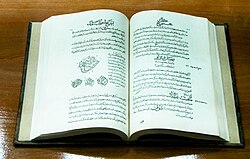
Avicenna's Canon of Medicine synthesized Greco-Arabic medical knowledge into a systematic text covering diseases, drugs, and hygiene. It became a standard reference at European universities for centuries.
Image source: The Canon of Medicine
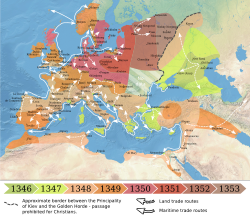
1347 - 1351
% complete
The bubonic plague pandemic killed an estimated one-third to one-half of Europe's population. In response, cities such as Venice instituted quarantines, marking early organized public health interventions.
Image source: Black Death
1489 - 1513
% complete
Leonardo da Vinci dissected human cadavers and created hundreds of remarkably accurate anatomical sketches, including studies of the heart, skeleton, and musculature, advancing the visual understanding of human anatomy.
Image source: Leonardo da Vinci
1543
% complete
Vesalius's groundbreaking anatomical atlas corrected many of Galen's errors through direct human dissection. Its detailed illustrations revolutionized anatomy and founded modern observational anatomy.
Image source: De Humani Corporis Fabrica Libri Septem
1545
% complete
French barber-surgeon Ambroise Paré abandoned cauterization with boiling oil in favor of gentler dressings and ligatures for bleeding vessels, dramatically improving surgical outcomes and elevating surgery as a profession.
Image source: Ambroise Paré
1628
% complete
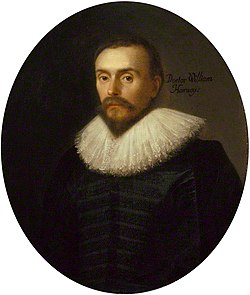
Harvey's work Exercitatio Anatomica de Motu Cordis et Sanguinis demonstrated that blood circulates continuously through the body pumped by the heart, overturning Galenic physiology and founding modern cardiovascular science.
Image source: William Harvey
1676
% complete
Using his handcrafted microscopes, Leeuwenhoek became the first to observe bacteria and other 'animalcules,' opening the microscopic world and laying groundwork for microbiology.
Image source: Antonie van Leeuwenhoek
May 14, 1796
% complete
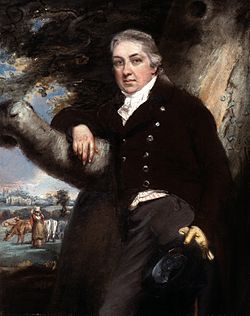
Jenner inoculated eight-year-old James Phipps with cowpox material, demonstrating immunity to smallpox. His work launched immunology and the practice of vaccination, eventually leading to smallpox eradication.
Image source: Edward Jenner
1816
% complete
Laennec devised the stethoscope to listen to heart and lung sounds, transforming physical diagnosis and enabling physicians to correlate clinical signs with internal pathology.
Image source: René Laennec
Oct 16, 1846
% complete
William T. G. Morton publicly demonstrated ether anesthesia at Massachusetts General Hospital during a tumor removal by surgeon John Collins Warren, freeing patients from surgical pain and revolutionizing surgery.
Image source: Anesthesia
1847
% complete
Semmelweis showed that physicians' hand disinfection with chlorinated lime drastically reduced mortality from puerperal fever in Vienna maternity wards, an early triumph of antiseptic practice despite initial rejection.
Image source: Ignaz Semmelweis
1854
% complete
By mapping cholera deaths in London, Snow identified contaminated water as the transmission source, founding modern epidemiology and supporting the waterborne theory of disease.
Image source: 1854 Broad Street cholera outbreak
1861 - 1864
% complete
Pasteur's experiments disproving spontaneous generation established that microorganisms cause fermentation and disease, providing the theoretical foundation for antisepsis, vaccination, and microbiology.
Image source: Germ theory of disease
1867
% complete
Applying Pasteur's germ theory, Lister used carbolic acid to sterilize wounds and instruments, slashing postoperative infections and transforming surgery into a far safer practice.
Image source: Joseph Lister
1882
% complete
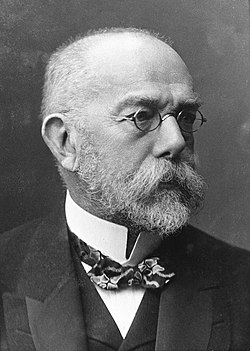
Koch isolated Mycobacterium tuberculosis and Vibrio cholerae and formulated Koch's postulates linking specific microbes to specific diseases, cementing bacteriology as a discipline.
Image source: Robert Koch
Nov 8, 1895
% complete
Röntgen's discovery of X-rays enabled noninvasive visualization of bones and internal structures, launching the field of radiology and earning him the first Nobel Prize in Physics.
Image source: X-ray
1901
% complete
Landsteiner identified the ABO blood group system, explaining transfusion reactions and making safe blood transfusion possible, a discovery recognized with the 1930 Nobel Prize.
Image source: Karl Landsteiner
Sep 3, 1928
% complete
Fleming observed that Penicillium mold inhibited bacterial growth, discovering penicillin. Later developed by Florey and Chain, it became the first widely used antibiotic and saved countless lives.
Image source: Penicillin
Apr 25, 1953
% complete
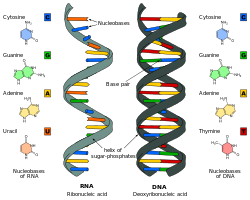
James Watson and Francis Crick, building on Rosalind Franklin's X-ray data, described DNA's double-helical structure, unlocking the molecular basis of heredity and enabling modern genetics and biomedicine.
Image source: Nucleic acid
Dec 23, 1954
% complete
Surgeon Joseph Murray led the team that transplanted a kidney between identical twins Richard and Ronald Herrick at Brigham Hospital, proving organ transplantation feasible and opening the era of transplant medicine.
Image source: Kidney transplantation
Apr 12, 1955
% complete
Following massive field trials involving nearly two million children, Salk's inactivated polio vaccine was announced as safe and effective, beginning the campaign that would nearly eradicate poliomyelitis worldwide.
Image source: Polio vaccine
Dec 3, 1967
% complete
In Cape Town, South Africa, Barnard transplanted a human heart into Louis Washkansky, demonstrating cardiac transplantation was surgically possible and inspiring worldwide transplant programs.
Image source: Christiaan Barnard
Jul 25, 1978
% complete
Louise Brown's birth in England followed pioneering in vitro fertilization work by Robert Edwards and Patrick Steptoe, revolutionizing fertility treatment and leading to millions of IVF births.
May 8, 1980
% complete
The WHO officially declared smallpox eradicated following a decades-long global vaccination campaign, marking the first time humanity eliminated a major infectious disease.
Image source: Smallpox
Apr 2003
% complete
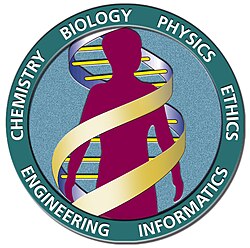
An international consortium sequenced and mapped all human genes, providing a foundational reference for genetics, personalized medicine, and research into genetic diseases.
Image source: Human Genome Project
2012
% complete
Jennifer Doudna and Emmanuelle Charpentier showed CRISPR-Cas9 could precisely edit genomes, creating a transformative tool for treating genetic diseases and earning them the 2020 Nobel Prize in Chemistry.
Image source: CRISPR gene editing
Dec 11, 2020
% complete
The FDA granted emergency authorization to Pfizer-BioNTech's mRNA vaccine, followed by Moderna's, achieving vaccine development in under a year and marking a historic milestone in immunization technology.
Image source: COVID-19 vaccine
Or browse the full history timeline directory, with more than 2,000 topics.
This History of Medicine timeline was generated with the help of AI, using information found on the internet.
We work hard to keep these timelines accurate, but mistakes do get through. If you spot one, email us at [email protected] and we'll fix it for future visitors.
Generate yours with AI or build it from scratch, for free.
Export your timeline, add your own events, edit or remove AI-generated events, and much more
No credit card required.
Cancel anytime.
Cancel anytime.
You can create an unlimited number of timelines with up to 10 events on each one, customize how they look, export them to PDF, PNG, PowerPoint, CSV, and Excel, and share them with a link. Paid plans raise the event limit and add features like spreadsheet imports and collaborators.
Yes. You can cancel your subscription from your account page at any time, and you will not be charged again. Your subscription stays active for the rest of the period you already paid for.
Yes. We will email you a reminder before the annual renewal, and we will also email you a receipt.
Yes. You can email us within 15 days of any payment, and we will issue you a full refund.
Check out our pricing docs or send us an email anytime: [email protected].