-
Use Cases
-
Resources
-
Pricing
The history of pharmacy spans thousands of years, beginning with ancient civilizations that used plants and minerals for healing. It evolved through the Middle Ages with apothecaries and monastic medicine, advanced during the Renaissance and Industrial Revolution with the isolation of active compounds, and transformed in the 20th century with synthetic drugs, antibiotics, and modern pharmaceutical regulation. More Less
1550 BC
% complete
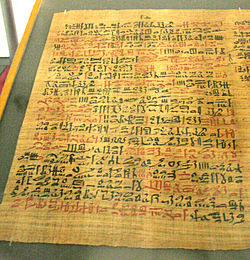
The Ebers Papyrus of 1550 BC is one of the most important ancient Egyptian medical papyri, recording extensive pharmacological knowledge including remedies, recipes, and treatments for a wide range of ailments.
Image source: Ebers Papyrus
1500 BC
% complete
Ancient Egyptian pharmacological knowledge was recorded in various papyri, including the Edwin Smith Papyrus of the 16th century BC. These documents preserved early medical and pharmaceutical practices, forming some of the oldest known written records of medicinal knowledge in human history.
Image source: Edwin Smith Papyrus
400 BC
% complete
Probably the most important representative of the rhizotomoi, the ancient Greek root-gatherers who collected medicinal plants, was Diocles of Carystus in the 4th century BC. He helped lay foundations for the systematic study of medicinal herbs in the Greek world.
100
% complete
The earliest known Chinese manual on materia medica is the Shennong Ben Cao Jing (The Divine Farmer's Herb-Root Classic), dating back to the first century AD. It catalogued hundreds of medicinal substances and became a foundational text of Chinese pharmacy.
300
% complete
The earliest known compilation of medicinal substances in Indian traditional medicine dates to the third or fourth century AD, attributed to Sushruta, who is recorded as a physician of the sixth century BC. This work preserved Ayurvedic pharmaceutical knowledge for later generations.
Image source: Sushruta Samhita
800 - 1868
% complete
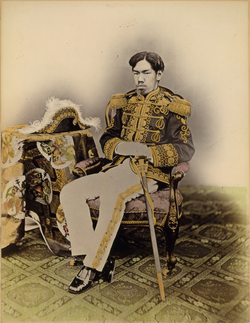
Ranked positions in the pre-Heian Imperial court were established, creating an organizational structure for court pharmacy that remained largely intact until the Meiji Restoration of 1868.
Image source: Meiji Restoration
850
% complete
By the ninth century, these pharmacies were state-regulated, marking an early example of governmental oversight of pharmaceutical practice and standards.
Image source: History of pharmacy
476
% complete
After the fifth century fall of the Western Roman Empire, medicinal knowledge in Europe suffered due to the loss of Greek medicinal texts and a strict adherence to tradition. However, an area of Southern Italy near Salerno remained under Byzantine control and developed a hospital and medical school that became famous by the 11th century.
Image source: Fall of the Western Roman Empire

1010
% complete
In the early 11th century, Salerno scholar Constantinos Africanus translated many Arabic books into Latin, driving a shift from Hippocratic medicine towards a pharmaceutical-driven approach advocated by Galen.
Image source: Constantine the African
1100 - 1199
% complete
In Europe pharmacy-like shops began to appear during the 12th century, marking the emergence of dedicated commercial establishments for the preparation and sale of medicines.
Image source: Apothecary
1221
% complete
The oldest pharmacy is claimed to be set up in 1221 in the Church of Santa Maria Novella in Florence, Italy, which now houses a perfume museum.
Image source: Officina Profumo-Farmaceutica di Santa Maria Novella
1240
% complete
In 1240 emperor Frederic II issued a decree by which the physician's and the apothecary's professions were separated, a landmark step in establishing pharmacy as a distinct profession with its own regulations.
Image source: Frederick II, Holy Roman Emperor
1250 - 1316
% complete
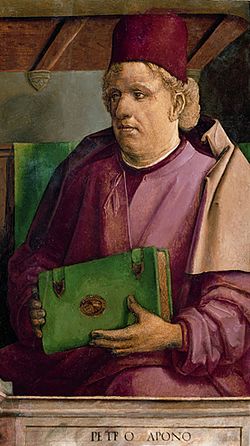
Peter of Abano (1250–1316) translated and added a supplement to the work of al-Maridini under the title De Veneris, helping transmit Islamic pharmaceutical knowledge to medieval Europe.
Image source: Pietro d'Abano
1317
% complete
Old pharmacies continue to operate in Dubrovnik, Croatia located inside the Franciscan monastery, opened in 1317, making it one of the longest-running pharmacies in Europe.
Image source: Franciscan friary, Dubrovnik
1400 - 1499
% complete
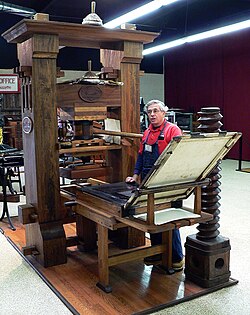
In the 15th century, the printing press spread medicinal textbooks and formularies; the Antidotarium was the first printed drug formulary, greatly expanding access to standardized pharmaceutical knowledge across Europe.
Image source: Printing press
1422
% complete
The Town Hall Pharmacy in Tallinn, Estonia, which dates back to at least 1422, is the oldest continuously run pharmacy in the world still operating in its original premises.
Image source: Raeapteek
1441
% complete
The Royal College of Apothecaries of the City and Kingdom of Valencia was founded in 1441, considered the oldest in the world, with full administrative and legislative powers over the apothecary profession.
Image source: Valencia
900 - 999
% complete
Living in the tenth century, this author wrote The Foundations of the True Properties of Remedies, amongst others describing arsenious oxide, and being acquainted with silicic acid, contributing valuable chemical knowledge to pharmacy.
936 - 1013
% complete
Abu al-Qasim al-Zahrawi (Abulcasis) (936–1013) pioneered the preparation of medicines by sublimation and distillation, advancing pharmaceutical techniques during the Islamic Golden Age.
Image source: Al-Zahrawi
973 - 1050
% complete
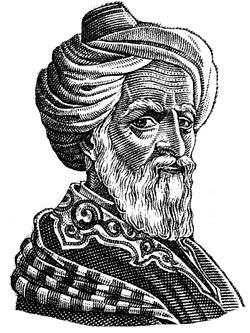
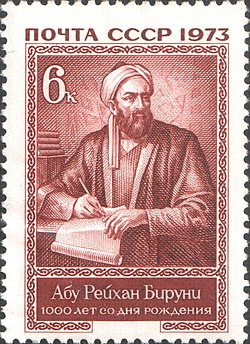
Al-Biruni (973–1050) wrote one of the most valuable Islamic works on pharmacology entitled Kitab al-Saydalah (The Book of Drugs), where he gave detailed knowledge of the properties of drugs and outlined the role of pharmacy and the functions and duties of the pharmacist.
Image source: Al-Biruni
1008 - 1074
% complete
Of great impact were also the works by al-Maridini of Baghdad and Cairo, and Ibn al-Wafid (1008–1074), both of which were printed in Latin more than fifty times, appearing as De Medicinis universalibus et particularibus by 'Mesue' the younger, and the Medicamentis Simplicibus by 'Abenguefit'.
Image source: Ibn al-Wafid
1200 - 1399
% complete
Middle Eastern pharmaceutical practitioners experienced an upheaval of their craft at the beginning of the 13th and 14th centuries as pharmacists realigned their interests from developing medicinal theories to establishing practical and therapeutic applications of pharmaceuticals.
1260
% complete
In 1260 CE an Egyptian Jewish physician and pharmacist named Abu 'I-Munā al-Kuhín al-'Attār published a 25-chapter manual, the Minhāj al-dukkān (How to run a pharmacy), documenting titles of drugs, their ingredients and quantities, preparation methods, and dosages. After 1260 CE, interests lessened in discussing the culture surrounding pharmacy and grew toward developing archives of pharmacy knowledge for the public.
1300 - 1399
% complete
It is also during the 13th and 14th centuries that Middle Eastern pharmacopoeias begin to resemble cookbooks more than medical encyclopedias, which Thomas Allsen attributes to the extensive cultural exchange between China, Iran, and the greater Mongol Empire.
Image source: Pharmacopoeia
1800 - 1833
% complete
The history of pharmacy as a modern and independent science dates back to the first third of the 19th century, when it separated from medicine and chemistry to become a distinct scientific discipline.
1847
% complete
Chloroform was first used as an anesthetic in 1847, revolutionizing surgery and pain management and marking a major milestone in modern pharmacology.
1852
% complete
The United States formed the American Pharmaceutical Association in 1852 with its main purpose to advance pharmacists' roles in patient care, assist in furthering career development, spread information about tools and resources, and raise awareness about the roles of pharmacists and their contribution to patient care.
Image source: American Pharmacists Association
1869
% complete
Chloral hydrate was introduced as a sleeping aid and sedative in 1869, becoming one of the first widely used synthetic hypnotic drugs.
Image source: Chloral hydrate
1876
% complete
Derivatives of phenothiazines had an important impact on various aspects of medicine, beginning with methylene blue which was originally used as a dye after its synthesis from aniline in 1876. Phenothiazines were later used as antimalarials, antiseptics, and antihelminthics up to 1940.
Image source: Methylene blue
1904 - 1905
% complete
This led to creating the Medical Ordinance in 1904 and Poisons Ordinance in 1905 to create standards for qualified chemists and druggists to handle these substances. Throughout the twentieth century, the government amended its ordinances for education and licensing.
1921
% complete
Frederick Banting and Charles Best found the hormone insulin to lower blood sugar of dogs in 1921, a discovery that transformed diabetes from a fatal disease into a manageable condition.
Image source: Insulin
1928
% complete
In 1928 Alexander Fleming developed the first antibiotic, penicillin, after discovering a fungus that was able to kill off bacteria, launching the antibiotic era of medicine.
Image source: Penicillin
1935
% complete
King Edward VII College of Medicine admitted its first pharmacy students in 1935, formalizing professional pharmaceutical education in the region.
Image source: King Edward VII College of Medicine
1950
% complete
The 'psychopharmacological revolution' began in 1950 when Chlorpromazine was discovered, transforming the treatment of mental illness and opening a new era of psychiatric medications.
Image source: Chlorpromazine
Or browse the full history timeline directory, with more than 2,000 topics.
This History of Pharmacy timeline was generated with the help of AI, using information found on the internet.
We work hard to keep these timelines accurate, but mistakes do get through. If you spot one, email us at [email protected] and we'll fix it for future visitors.
Generate yours with AI or build it from scratch, for free.
Export your timeline, add your own events, edit or remove AI-generated events, and much more
No credit card required.
Cancel anytime.
Cancel anytime.
You can create an unlimited number of timelines with up to 10 events on each one, customize how they look, export them to PDF, PNG, PowerPoint, CSV, and Excel, and share them with a link. Paid plans raise the event limit and add features like spreadsheet imports and collaborators.
Yes. You can cancel your subscription from your account page at any time, and you will not be charged again. Your subscription stays active for the rest of the period you already paid for.
Yes. We will email you a reminder before the annual renewal, and we will also email you a receipt.
Yes. You can email us within 15 days of any payment, and we will issue you a full refund.
Check out our pricing docs or send us an email anytime: [email protected].