-
Use Cases
-
Resources
-
Pricing
The history of tuberculosis (TB) traces a disease that has afflicted humans for thousands of years. Evidence of TB appears in ancient Egyptian mummies, spinal remains, and classical medical writings by Hippocrates and Galen, who called it 'phthisis' or consumption. In the 19th century, TB became known as the 'White Plague,' killing large portions of Europe's population and inspiring sanatorium movements focused on rest, fresh air, and nutrition. A turning point came in 1882 when Robert Koch identified Mycobacterium tuberculosis as the causative bacterium. The 20th century brought major advances: Albert Calmette and Camille Guérin developed the BCG vaccine (first used in 1921), streptomycin—the first effective antibiotic against TB—was discovered in 1943–1944, and combination drug therapies emerged in subsequent decades. Despite these breakthroughs, TB remains a global health challenge today, worsened by HIV co-infection and multidrug-resistant strains, making it one of the world's deadliest infectious diseases. More Less
2300 BC
Ancient Vedic texts in India referred to consumption (yakshma), and Chinese medical texts also described a wasting disease consistent with tuberculosis, demonstrating that early civilizations recognized the symptoms of the illness long before its microbial cause was understood.
Image source: History of tuberculosis

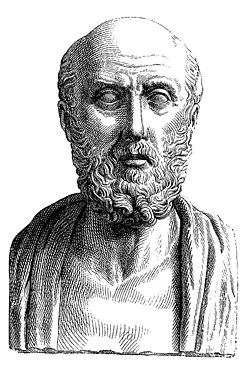
460 BC
The Greek physician Hippocrates identified phthisis, or consumption, as the most common disease of his era. He accurately described its symptoms, including fever, night sweats, and coughing up blood, but believed it was hereditary rather than contagious.
Image source: Hippocrates
150
The Roman physician Galen suggested that phthisis could be transmitted through close contact with infected individuals, an early recognition of the contagious nature of tuberculosis that would not be confirmed scientifically for many centuries.
Image source: Galen

1600 - 1800
During the 17th through 19th centuries, tuberculosis became rampant across Europe, killing large portions of the population. Often called the 'White Plague' or 'consumption,' it became so pervasive that it was romanticized in literature and art despite being one of history's deadliest diseases.
1689
English physician Richard Morton published 'Phthisiologia: Or a Treatise of Consumptions,' providing one of the most comprehensive clinical descriptions of tuberculosis to date and firmly establishing it as a single disease entity.
Image source: Richard Morton (physician)

1714
For centuries, European monarchs claimed the ability to cure scrofula (tuberculous lymphadenitis of the neck) through the 'Royal Touch.' The practice declined in the early 18th century as scientific skepticism about divine healing grew and physicians sought medical explanations for the disease.
Image source: Royal touch

1779
London surgeon Percivall Pott published his observations on a form of tuberculosis affecting the spine, which causes vertebral collapse and neurological impairment. The condition became known as Pott's disease in his honor.
Image source: Pott's disease

1761
Austrian physician Leopold Auenbrugger introduced percussion, tapping the chest to detect underlying pathology, as a diagnostic technique. This method proved invaluable for detecting tubercular cavities and fluid in the lungs.
Image source: Leopold Auenbrugger

1816
French physician René Laennec invented the stethoscope, revolutionizing the diagnosis of tuberculosis by allowing physicians to hear lung sounds associated with the disease. His work 'De l'Auscultation Médiate' advanced understanding of pulmonary pathology significantly.
Image source: René Laennec

1865
French military physician Jean-Antoine Villemin demonstrated experimentally that tuberculosis could be transmitted from infected animals to healthy ones, proving the disease was infectious. This challenged prevailing beliefs that TB was purely hereditary.
Image source: Jean-Antoine Villemin

This History of Tuberculosis timeline was generated with the help of AI, using information found on the internet.
We work hard to keep these timelines accurate, but mistakes do get through. If you spot one, email us at [email protected] and we'll fix it for future visitors.
Generate yours with AI or build it from scratch, for free.