
-
Use Cases
-
Resources
-
Pricing
The history of psychiatry spans thousands of years, evolving from supernatural explanations of mental illness to a scientific medical discipline. It encompasses the rise and fall of asylums, moral treatment reforms, psychoanalysis pioneered by Freud, the revolution of psychotropic medications in the 20th century, and today's emphasis on evidence-based treatments, neuroscience, and deinstitutionalization. More Less
500 BCE
% complete
During the 5th century BCE, mental disorders, especially those with psychotic traits, were considered supernatural in origin, a view that existed throughout ancient Greece and Rome.
Image source: History of psychiatry
400 BCE
% complete
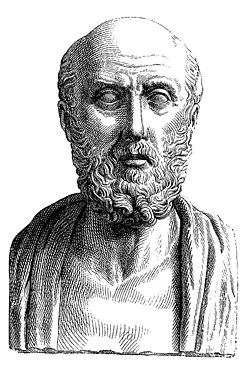
In the 4th century BCE, Hippocrates theorized that physiological abnormalities may be the root of mental disorders, offering a naturalistic alternative to supernatural explanations.
Image source: Hippocrates
400 BCE
% complete
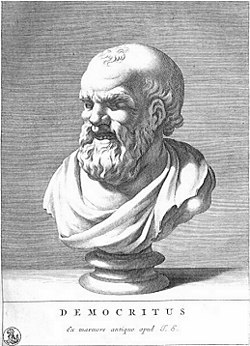
In 4th- to 5th-century BCE Greece, Hippocrates wrote that he visited Democritus and found him in his garden cutting open animals.
Image source: Democritus
300 BCE
% complete
Some of the first hospitals dedicated to curing mental illness were established during the 3rd century BCE, marking an early institutional approach to the care of people with mental disorders.
Image source: Lunatic asylum
805
% complete
A number of hospitals known as bimaristans were built throughout Arab countries beginning around the early 9th century, with the first in Baghdad, providing care for the mentally ill.
Image source: Bimaristan
1200
% complete
Specialist hospitals were built in medieval Europe from the 13th century onward to treat mental disorders, but they were utilized only as custodial institutions and did not provide any type of treatment.
1212
% complete
From the 13th century onwards, sick and poor people were kept in newly founded ecclesiastical hospitals, such as the 'Spittal sente Jorgen' erected in 1212 in Leipzig, in Saxony, Germany.
1247
% complete
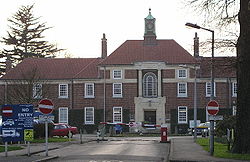
Also founded in the 13th century, Bethlem Royal Hospital in London became one of the oldest lunatic asylums, later infamous for its poor conditions.
Image source: Bethlem Royal Hospital
1621
% complete
Oxford University mathematician, astrologer, and scholar Robert Burton published one of the earliest treatises on mental illness, The Anatomy of Melancholy, What it is: With all the Kinds, Causes, Symptomes, Prognostickes, and Several Cures of it.
Image source: The Anatomy of Melancholy
1632
% complete
Already in 1632 it was recorded that Bethlem Royal Hospital had 'below stairs a parlor, a kitchen, two larders, a long entry throughout the house, and 21 rooms wherein the poor distracted people lie, and above the stairs eight rooms more for servants and the poor to lie in'.
1656
% complete
In 1656, Louis XIV of France created a public system of hospitals for those with mental disorders, but as in England, no real treatment was applied.
1676
% complete
In 1676, Bethlem expanded into newly built premises at Moorfields with a capacity for 100 inmates.
1680
% complete
In the late 17th century, privately run asylums for the insane began to proliferate and expand in size across England and Europe.
1700
% complete
At the beginning of the 18th century, Saxony implemented a social policy in which criminals, prostitutes, vagrants, orphans, and the mentally ill were incarcerated and re-educated in the concepts of the Enlightenment.
1713
% complete
In 1713, the Bethel Hospital Norwich was opened, the first purpose-built asylum in England, founded by Mary Chapman.
Image source: Bethel Hospital, Norwich
1716
% complete
As a result of Saxony's new policy, a variety of jails, approved schools, and insane asylums were constructed, including the hospital 'Chur-Sachisches Zucht-Waysen und Armen-Haus' in Waldheim in 1716, the first governmental institution dedicated to the care of the mentally ill on German territory.
Image source: Kurt Waldheim
1750 - 1800
% complete
Scotland's Edinburgh medical school of the eighteenth century developed an interest in mental illness, with influential teachers including William Cullen (1710–1790) and Robert Whytt (1714–1766) emphasising the clinical importance of psychiatric disorders.
1758
% complete
In 1758, English physician William Battie wrote his Treatise on Madness on the management of mental disorder, advocating humane approaches over restraint.
Image source: William Battie
1789
% complete
Following King George III's remission in 1789, mental illness came to be seen as something which could be treated and cured, boosting optimism about recovery.
Image source: George III
1790
% complete
William Tuke led the development of a radical new type of institution in northern England following the death of a fellow Quaker in a local asylum in 1790.
Image source: William Tuke
1792
% complete
In 1792, Philippe Pinel became the chief physician at the Bicêtre Hospital, where he would champion humane treatment of the mentally ill.
Image source: Philippe Pinel
1796
% complete
In 1796, with the help of fellow Quakers and others, William Tuke founded the York Retreat, where eventually about 30 patients lived as part of a small community in a quiet country house and engaged in a combination of rest, talk, and manual work.
Image source: The Retreat
1797
% complete
In 1797, Jean-Baptiste Pussin first freed patients of their chains and banned physical punishment, although straitjackets could be used instead.
1800 - 1840
% complete
Pinel's student and successor, Jean Esquirol (1772–1840), helped establish 10 new mental hospitals that operated on the same humane principles.
Image source: Jean-Étienne Dominique Esquirol
1813
% complete
William Tuke's grandson, Samuel Tuke, published an influential work in the early 19th century on the methods of the retreat; with Pinel's Treatise On Insanity by then published, Samuel Tuke translated his term as 'moral treatment'.
Image source: Samuel Tuke (reformer)
1816
% complete
In 1816, phrenologist Johann Spurzheim visited Edinburgh and lectured on his craniological and phrenological concepts; central ideas included that the brain is the organ of the mind and that human behaviour can be understood in neurological rather than philosophical or religious terms.
Image source: Johann Spurzheim
1820
% complete
George Combe and his associates founded the Edinburgh Phrenological Society in 1820, promoting the materialist conception of the nervous system and mental disorder.
Image source: Edinburgh Phrenological Society
1831
% complete
George Combe became an unrivaled exponent of phrenological thinking, and his brother Andrew Combe (1797–1847), later appointed a physician to Queen Victoria, wrote a phrenological treatise entitled Observations on Mental Derangement (1831).
Image source: Andrew Combe
1808
% complete
The term psychiatry, from the Greek psychē ('soul or mind') and iatros ('healer'), was coined by Johann Christian Reil in 1808; the beginning of psychiatry as a medical specialty is dated to the middle of the nineteenth century, though its germination traces to the late eighteenth century.
Image source: Johann Christian Reil
1808
% complete
Public mental asylums were established in Britain after the passing of the 1808 County Asylums Act, marking a large state-led effort to provide care for the mentally ill.
Image source: County Asylums Act 1808
1812
% complete
Nine counties first applied under the County Asylums Act, and the first public asylum opened in 1812 in Nottinghamshire.
1828
% complete
It was not until 1828 that the newly appointed Commissioners in Lunacy were empowered to license and supervise private asylums.
1838
% complete
In 1838, France enacted a law to regulate both the admissions into asylums and asylum services across the country.
Image source: French company law
1838
% complete
At the Lincoln Asylum in England, Robert Gardiner Hill, with the support of Edward Parker Charlesworth, pioneered a mode of treatment suited to all types of patients, so that mechanical restraints and coercion could be dispensed with — finally achieved in 1838.
Image source: Robert Gardiner Hill
1839
% complete
Édouard Séguin developed a systematic approach for training individuals with mental deficiencies, and in 1839 he opened the first school for the severely 'retarded'.
Image source: Édouard Séguin
Sep 1839
% complete
By September 1839, mechanical restraint was no longer required for any patient, following Sergeant John Adams and Dr. Robert Gardiner Hill's reforms.
1842
% complete
In the United States, the erection of state asylums began with the first law for the creation of one in New York, passed in 1842.
Image source: Utica Psychiatric Center
1845
% complete
The Lunacy Act 1845 was an important landmark in the treatment of the mentally ill, as it explicitly changed the status of mentally ill people to patients who required treatment.
Image source: Lunacy Act 1845
1850
% complete
The Utica State Hospital was opened approximately in 1850, becoming one of the first state-run asylums in the United States.
1866
% complete
A national body for asylum superintendents — the Medico-Psychological Association — was established in 1866 under the Presidency of William A. Browne, although the body appeared in an earlier form in 1841.
1870
% complete
In 1870, Louis Mayer, a gynecologist in Germany, cured a woman's 'melancholia' using a pessary: it relieved her physical problems and many severe disorders of mood.
1900
% complete
The 20th century introduced a new psychiatry into the world, transforming approaches to diagnosis, treatment, and the understanding of mental illness.
1948
% complete
Lithium carbonate's ability to stabilize mood highs and lows in bipolar disorder was demonstrated in 1948, revolutionizing the long-term management of the condition.
Image source: Lithium (medication)
1952
% complete
The discovery of chlorpromazine's effectiveness in treating schizophrenia in 1952 revolutionized treatment of the disorder, ushering in the era of antipsychotic medication.
Image source: Chlorpromazine
1961
% complete
Asylums: Essays on the Social Situation of Mental Patients and Other Inmates (1961), written by sociologist Erving Goffman, examined the social situation of mental patients in the hospital.
Image source: Asylums (book)
1961
% complete
Academic psychiatrist and psychoanalyst Thomas Szasz began publishing articles and books highly critical of psychiatry and involuntary treatment, including his best-known work The Myth of Mental Illness in 1961.
Image source: The Myth of Mental Illness
1963
% complete
In 1963, US president John F. Kennedy advanced legislation shifting care from large institutions toward community-based mental health services.
Image source: Community Mental Health Act
1973
% complete
In 1973, psychologist David Rosenhan published the Rosenhan experiment, a study whose results led to serious questions about the validity and reliability of psychiatric diagnoses.
Image source: Rosenhan experiment
Or browse the full history timeline directory, with more than 2,000 topics.
This History of Psychiatry timeline was generated with the help of AI, using information found on the internet.
We work hard to keep these timelines accurate, but mistakes do get through. If you spot one, email us at [email protected] and we'll fix it for future visitors.
Generate yours with AI or build it from scratch, for free.
Export your timeline, add your own events, edit or remove AI-generated events, and much more
No credit card required.
Cancel anytime.
Cancel anytime.
You can create an unlimited number of timelines with up to 10 events on each one, customize how they look, export them to PDF, PNG, PowerPoint, CSV, and Excel, and share them with a link. Paid plans raise the event limit and add features like spreadsheet imports and collaborators.
Yes. You can cancel your subscription from your account page at any time, and you will not be charged again. Your subscription stays active for the rest of the period you already paid for.
Yes. We will email you a reminder before the annual renewal, and we will also email you a receipt.
Yes. You can email us within 15 days of any payment, and we will issue you a full refund.
Check out our pricing docs or send us an email anytime: [email protected].