-
Use Cases
-
Resources
-
Pricing
The history of nursing traces the evolution of caregiving from ancient and religious traditions to a modern, science-based profession. Key turning points include Florence Nightingale's reforms during the Crimean War, the establishment of formal nursing schools, the professionalization of nursing through licensure and organizations, and the expansion of advanced practice roles in contemporary healthcare. More Less
805
% complete
Under Harun al-Rashid, the first bimaristan (hospital) was established in Baghdad. These institutions employed trained staff, including nurses, and became models for systematic patient care throughout the Islamic world.
Image source: Bimaristan
1099
% complete
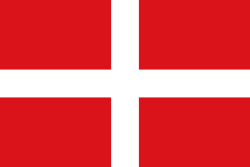
Following the First Crusade, the Knights Hospitaller established hospitals in Jerusalem to care for sick pilgrims, with brothers and sisters performing nursing duties that blended military discipline with compassionate care.
Image source: Knights Hospitaller
1348
% complete
During the Black Death, Catherine of Siena famously tended to victims of plague and other illnesses, exemplifying religious devotion in nursing when fear of contagion drove many others away.
Image source: Catherine of Siena

1584
% complete
Camillus de Lellis established the Order of the Ministers of the Sick, whose members took a fourth vow to care for the sick even at risk of their own lives, pioneering standards of hygiene and humane treatment in hospitals.
Image source: Camillus de Lellis
1633
% complete
Vincent de Paul and Louise de Marillac founded the Daughters of Charity, one of the first unenclosed orders of women devoted to serving the poor and sick outside convent walls, greatly expanding community nursing.
Image source: Daughters of Charity of Saint Vincent de Paul
55
% complete
Phoebe, a deaconess mentioned by Paul in the Epistle to the Romans, is often cited as one of the earliest recorded figures to care for the sick and needy, embodying the charitable roots of nursing.
Image source: Phoebe (biblical figure)
1836
% complete
Pastor Theodor Fliedner founded the Deaconess Institute at Kaiserwerth, Germany, providing structured training for women in nursing. Florence Nightingale later trained there, drawing inspiration for her own reforms.
Image source: Deaconess
Oct 21, 1854 - 1856
% complete
Nightingale led a team of nurses to Scutari during the Crimean War, where her emphasis on sanitation dramatically reduced mortality rates and earned her the nickname 'the Lady with the Lamp.'
Image source: Florence Nightingale
Dec 1859
% complete
Florence Nightingale published 'Notes on Nursing: What It Is, and What It Is Not,' a foundational text that defined nursing as both a science and an art and became one of the most influential books in healthcare history.
Jul 9, 1860
% complete
Funded by the Nightingale Fund, the world's first secular school for training nurses opened at St Thomas' Hospital in London, establishing a professional model of nurse education emulated worldwide.
Image source: Florence Nightingale Faculty of Nursing, Midwifery and Palliative Care
1862 - 1865
% complete
Known as the 'Angel of the Battlefield,' Clara Barton delivered supplies and nursed wounded soldiers during the American Civil War, later founding the American Red Cross in 1881.
Image source: Clara Barton
1879
% complete
Mary Eliza Mahoney graduated from the New England Hospital for Women and Children's nursing program, becoming the first African American licensed nurse in the United States and an advocate for equality in nursing.
Image source: Mary Eliza Mahoney
May 21, 1881
% complete
Clara Barton established the American Red Cross after years of advocating for the United States to join the Geneva Convention, creating a major organization for disaster relief and wartime nursing.
Image source: American Red Cross
1887
% complete
Founded under the presidency of Princess Christian, the British Nurses' Association sought to establish a register of qualified nurses, advancing the campaign for professional recognition and regulation.
Image source: Royal College of Nursing
1893
% complete
Lillian Wald, founder of the Henry Street Settlement in New York City, pioneered visiting nursing services for the urban poor and coined the term 'public health nurse,' shaping community-based healthcare.
Image source: Lillian Wald
Feb 2, 1901
% complete
The US Congress established the Army Nurse Corps as a permanent corps of the Army Medical Department, giving military nurses formal status, pay, and career structure.
Image source: United States Army Nurse Corps
1903
% complete
North Carolina passed the first law in the United States requiring registration of nurses, beginning the era of state licensure that standardized qualifications and protected the public.
Image source: Nurse Licensure Compact
May 13, 1908
% complete
Congress formally established the Navy Nurse Corps, allowing women to serve as nurses in the US Navy and expanding opportunities for military nursing careers.
Image source: United States Navy Nurse Corps
1923
% complete
With funding from the Rockefeller Foundation, Yale University established the first university-based school of nursing in the United States, elevating nursing education into higher academia.
Image source: Yale School of Nursing
1923
% complete
The Goldmark Report, funded by the Rockefeller Foundation, criticized hospital-based diploma programs and recommended moving nursing education into universities, influencing decades of reform.
Image source: Nurse education
Jul 1, 1943 - 1948
% complete
The Bolton Act established the Cadet Nurse Corps, which subsidized the education of over 100,000 student nurses during World War II and helped integrate nursing schools by admitting minority students.
Image source: Cadet Nurse Corps
1899
% complete
Nursing leaders from several countries founded the International Council of Nurses, the world's first international organization for health professionals, promoting collaboration and standards across national borders.
Image source: International Council of Nurses
Jul 28, 1914 - Nov 11, 1918
% complete
During World War I, tens of thousands of nurses served near front lines and in field hospitals across Europe, gaining unprecedented experience in trauma care and cementing nursing's vital role in modern warfare.
Image source: List of nurses who died in World War I
Oct 16, 1916
% complete
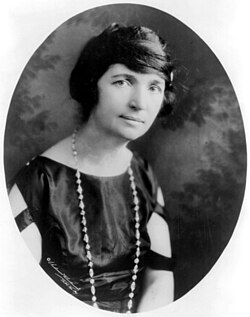
Nurse Margaret Sanger opened the nation's first birth control clinic in Brooklyn, New York, launching a movement for reproductive health access that would eventually lead to the founding of Planned Parenthood.
Image source: Margaret Sanger
Sep 1, 1939 - Sep 2, 1945
% complete
World War II created enormous demand for nurses on all fronts. Flight nurses, combat zone nurses, and cadet nurses in training filled critical shortages, and postwar legislation like the GI Bill expanded nursing education.
Jan 1, 2020 - Dec 31, 2020
% complete
The World Health Organization declared 2020 the International Year of the Nurse and the Midwife, honoring the bicentennial of Florence Nightingale's birth and recognizing nursing's essential contribution to global health.
Image source: Call the Midwife
Mar 11, 2020 - May 5, 2023
% complete
During the COVID-19 pandemic, nurses served on the front lines of an unprecedented global health crisis, facing severe shortages, burnout, and personal risk while demonstrating the profession's indispensable role in public health.
Image source: List of deaths due to the COVID-19 pandemic
1950
% complete
The American Nurses Association formally adopted its first code of ethics, articulating the profession's moral obligations to patients, colleagues, and society and guiding ethical practice ever since.
1952
% complete
Following the polio epidemic in Copenhagen, where positive-pressure ventilation was pioneered, dedicated intensive care units spread worldwide, creating the specialty of critical care nursing.
Image source: Intensive care unit
1955
% complete
Virginia Henderson published her Need Theory, defining nursing as assisting individuals to perform activities contributing to health or recovery that they would do unaided if able, becoming a cornerstone of nursing theory.
Image source: Virginia Henderson
1965
% complete
Loretta Ford and Henry Silver established the first nurse practitioner program, preparing nurses to provide primary care independently and opening advanced practice roles that reshaped healthcare delivery.
Image source: Nurse practitioner
Jul 30, 1965
% complete
The creation of Medicare and Medicaid in the United States vastly increased demand for hospital and long-term care services, fueling growth in nursing jobs and the development of new care settings.
Image source: Medicare (United States)
Or browse the full history timeline directory, with more than 2,000 topics.
This History of Nursing timeline was generated with the help of AI, using information found on the internet.
We work hard to keep these timelines accurate, but mistakes do get through. If you spot one, email us at [email protected] and we'll fix it for future visitors.
Generate yours with AI or build it from scratch, for free.
Export your timeline, add your own events, edit or remove AI-generated events, and much more
No credit card required.
Cancel anytime.
Cancel anytime.
You can create an unlimited number of timelines with up to 10 events on each one, customize how they look, export them to PDF, PNG, PowerPoint, CSV, and Excel, and share them with a link. Paid plans raise the event limit and add features like spreadsheet imports and collaborators.
Yes. You can cancel your subscription from your account page at any time, and you will not be charged again. Your subscription stays active for the rest of the period you already paid for.
Yes. We will email you a reminder before the annual renewal, and we will also email you a receipt.
Yes. You can email us within 15 days of any payment, and we will issue you a full refund.
Check out our pricing docs or send us an email anytime: [email protected].