
-
Use Cases
-
Resources
-
Pricing
The history of ultrasound traces the development of sound-wave science from early experiments and sonar to its widespread use in medical diagnosis, treatment, and research. More Less
Build a timeline like this one in minutes, for free. Start Yours →
600 BC - 501 BC
Acoustics, the science of sound, reaches back to Pythagoras in the 6th century BC. He wrote about the mathematical properties of stringed instruments, establishing an early connection between numerical relationships and musical sound.
Image source: Pythagoras

600 BC - 501 BC
Pythagoras's work on stringed instruments represents one of the earliest documented attempts to explain sound through mathematics, forming part of the intellectual foundations of acoustics.
Image source: Acoustics

600 BC - 501 BC
The history of acoustics can be traced to the 6th century BC, when investigations of musical instruments began treating sound as a phenomenon that could be measured and described systematically.
1794
Spallanzani's experiments showed that bats could navigate using sounds inaudible to humans, providing an early indication that sound beyond the human hearing range could carry useful information.
Image source: Animal echolocation

1794
In 1794, Lazzaro Spallanzani investigated how bats hunted and navigated, helping establish that their abilities did not depend on vision alone.
Image source: Lazzaro Spallanzani

1794
Lazzaro Spallanzani demonstrated in 1794 that bats used inaudible sound to hunt and navigate. This discovery became an important early observation related to echolocation and ultrasonic sound.
1893
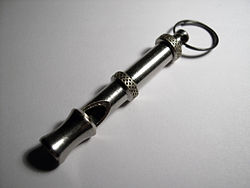
Galton also used the whistle to investigate animals and found that many could hear sounds above the human hearing range, helping distinguish ultrasonic perception from human hearing.
Image source: Dog whistle
1893
Francis Galton invented the Galton whistle in 1893. Its adjustable design allowed it to produce ultrasonic frequencies for experiments involving human and animal hearing.
1893
The Galton whistle was an adjustable whistle capable of producing ultrasound, making it a practical instrument for studying sound above the ordinary range of human hearing.
1893
Francis Galton used his whistle to measure the hearing range of humans, contributing to the experimental study of the upper limits of human auditory perception.
Build a timeline like this one in minutes, for free. Start Yours →
This History of Ultrasound timeline was generated with the help of AI, using information found on the internet.
We work hard to keep these timelines accurate, but mistakes do get through. If you spot one, email us at [email protected] and we'll fix it for future visitors.
Generate yours with AI or build it from scratch, for free.