
-
Use Cases
-
Resources
-
Pricing
The history of epidemiology traces the evolution of the study of disease distribution and determinants in populations, beginning with ancient Greek physicians like Hippocrates, advancing through landmark investigations such as John Snow's 1854 cholera outbreak analysis, and developing into a modern scientific discipline that informs public health policy, vaccination programs, and responses to global pandemics. More Less
1543
% complete
In 1543 Fracastoro wrote De contagione et contagiosis morbis, in which he was the first to promote personal and environmental hygiene to prevent disease, pioneering ideas about contagion and hygiene practices.
Image source: Girolamo Fracastoro
1546
% complete
In the middle of the 16th century, a doctor from Verona named Girolamo Fracastoro was the first to propose a theory that the very small, unseeable particles that cause disease were alive, an early form of germ theory centuries before it was widely accepted.
1641 - 1644
% complete
During the Ming dynasty, Wu Youke (1582–1652) developed the idea that some diseases were caused by transmissible agents, which he called Li Qi (戾气 or pestilential factors), when he observed various epidemics rage around him between 1641 and 1644.
Image source: Epidemiology
1675
% complete
The development of a sufficiently powerful microscope by Antonie van Leeuwenhoek in 1675 provided visual evidence of living particles consistent with a germ theory of disease, allowing scientists to observe microorganisms for the first time.
Image source: Antonie van Leeuwenhoek
1661 - 1689
% complete
Another pioneer, Thomas Sydenham (1624–1689), was the first to distinguish the fevers of Londoners in the later 1600s, carefully classifying diseases based on clinical observation and earning recognition as a founder of clinical epidemiology.
Image source: Thomas Sydenham

1662
% complete
In 1662, John Graunt conducted a landmark statistical analysis upon the Bills of Mortality in London, using records of deaths to draw conclusions about disease patterns and mortality—one of the earliest uses of data to study population health.
Image source: John Graunt
1802
% complete
The term 'epidemiology' appears to have first been used to describe the study of epidemics in 1802 by the Spanish physician Joaquín de Villalba in his work Epidemiología Española, giving the emerging discipline its formal name.
1847
% complete
Hungarian physician Ignaz Semmelweis brought down infant mortality at a Vienna hospital in 1847 by instituting a disinfection procedure, demonstrating that handwashing could dramatically reduce the transmission of deadly childbed fever.
Image source: Ignaz Semmelweis
1849
% complete
Danish physician Peter Anton Schleisner related his work on the prevention of the epidemic of neonatal tetanus on the Vestmanna Islands in Iceland in 1849, making him another important pioneer of epidemiological intervention.
1849 - 1854
% complete
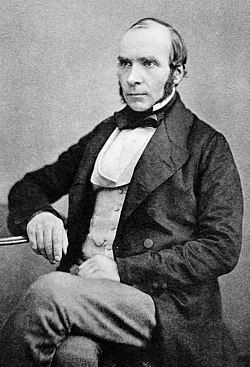
John Snow is famous for his investigations into the causes of the 19th-century cholera epidemics, and is also known as the father of (modern) Epidemiology for his rigorous mapping and analysis of disease transmission.
Image source: John Snow
1850
% complete
Semmelweis's findings were published in 1850, but his work was ill-received by his colleagues, who discontinued the procedure—a famous example of resistance to scientific evidence before germ theory was accepted.
1854
% complete
During the 1854 London cholera outbreak, John Snow famously mapped cases around the Broad Street pump, identifying contaminated water as the vehicle of transmission and establishing a model for modern field epidemiology.
Image source: 1854 Broad Street cholera outbreak
1860 - 1865
% complete
Louis Pasteur's earlier research on fermentation and microbial life provided the scientific foundation upon which Joseph Lister later built antiseptic surgery, transforming the prevention of surgical infections.
Image source: Louis Pasteur
1865
% complete
Disinfection did not become widely practiced until British surgeon Joseph Lister, aided by his colleague, chemist Thomas Anderson, was able to 'discover' antiseptics in 1865 based on the earlier work of Louis Pasteur, revolutionizing surgical safety.
Image source: Joseph Lister
1900 - 1940
% complete
Anderson Gray McKendrick was among those who introduced mathematical methods into epidemiology in the early 20th century, applying quantitative approaches to the spread of infectious diseases in populations.
1900 - 1916
% complete
In the early 20th century, mathematical methods were introduced into epidemiology by Ronald Ross, whose mathematical modeling of malaria transmission helped found the quantitative study of infectious disease dynamics.
Image source: Ronald Ross
1912 - 1926
% complete
Janet Lane-Claypon was among the pioneers who introduced mathematical methods into epidemiology in the early 20th century, conducting influential studies on infant mortality and later helping establish modern cohort and case-control methodology.
Image source: Janet Lane-Claypon
1927
% complete
In 1927, William Ogilvy Kermack and Anderson Gray McKendrick published the foundational SIR (Susceptible-Infected-Recovered) model, applying mass-action kinetics from chemistry to disease transmission in populations—a cornerstone of mathematical epidemiology.
Image source: Compartmental models in epidemiology
1951 - 1954
% complete
A major breakthrough came with the British Doctors Study led by Richard Doll and Austin Bradford Hill, which followed thousands of physicians over years and provided very strong statistical support for the link between tobacco smoking and lung cancer.
Image source: British Doctors Study
1954
% complete
The 1954 publication of the results of the British Doctors Study marked a turning point in epidemiology, lending very strong statistical support to the causal link between tobacco smoking and lung cancer and changing public health policy worldwide.
1965
% complete
In 1965, Austin Bradford Hill proposed a series of considerations to help assess evidence of causation, which have come to be commonly known as the 'Bradford Hill criteria' and remain central to judging causal inference in epidemiology.
1950 - 1999
% complete
Especially since the 20th century, the term epidemiology has been widely applied to cover chronic diseases such as diabetes, with researchers studying its distribution, risk factors, and causation in populations rather than only epidemic infectious disease.
Image source: Epidemiology of diabetes
1950 - 1999
% complete
In the 20th century, epidemiology expanded beyond infectious disease to cover cardiovascular disease, with large population studies describing risk factors such as diet, blood pressure, and cholesterol and shaping prevention strategies.
Image source: Cardiovascular disease
1950 - 1999
% complete
During the 20th century, epidemiology came to cover cancer alongside other chronic diseases, with studies like the British Doctors Study exemplifying how observational methods could identify environmental causes of malignancy.
Image source: Epidemiology of cancer
1980 - 1999
% complete
In the late 20th century, with the advancement of biomedical sciences, a number of molecular markers in blood, other biospecimens and environment were identified as predictors of development or risk of a certain disease, giving rise to molecular epidemiology.
2004
% complete
Wu Youke's concepts were still being considered in analysing the SARS outbreak by the World Health Organization in 2004 in the context of traditional Chinese medicine, demonstrating the enduring relevance of his 17th-century insights.
2012
% complete
By 2012, it was recognized that many pathogens' evolution is rapid enough to be highly relevant to epidemiology, and that much could be gained from an interdisciplinary approach integrating epidemiology and molecular evolution to inform control strategies or even patient treatment.
2012
% complete
Modern epidemiological studies can use advanced statistics and machine learning to create predictive models as well as to define treatment effects, expanding the analytical power of the field far beyond traditional methods.
2015
% complete
Robertson (2015) emphasized that if a necessary condition can be identified and controlled—for example, antibodies to a disease agent or energy in an injury—the harmful outcome can be avoided, reinforcing the practical value of causal reasoning in injury and disease prevention.
2017
% complete
In addition to its master's and doctoral degrees in epidemiology, the University of Michigan School of Public Health has offered undergraduate degree programs since 2017 that include coursework in epidemiology, broadening access to training in the field.
Image source: University of Michigan School of Public Health
Apr 2020
% complete
An April 2020 University of Southern California article noted the central role of epidemiology in understanding and responding to the coronavirus epidemic, underscoring the field's importance during the global COVID-19 pandemic.
Image source: COVID-19 pandemic
Or browse the full history timeline directory, with more than 2,000 topics.
This History of Epidemiology timeline was generated with the help of AI, using information found on the internet.
We work hard to keep these timelines accurate, but mistakes do get through. If you spot one, email us at [email protected] and we'll fix it for future visitors.
Generate yours with AI or build it from scratch, for free.
Export your timeline, add your own events, edit or remove AI-generated events, and much more
No credit card required.
Cancel anytime.
Cancel anytime.
You can create an unlimited number of timelines with up to 10 events on each one, customize how they look, export them to PDF, PNG, PowerPoint, CSV, and Excel, and share them with a link. Paid plans raise the event limit and add features like spreadsheet imports and collaborators.
Yes. You can cancel your subscription from your account page at any time, and you will not be charged again. Your subscription stays active for the rest of the period you already paid for.
Yes. We will email you a reminder before the annual renewal, and we will also email you a receipt.
Yes. You can email us within 15 days of any payment, and we will issue you a full refund.
Check out our pricing docs or send us an email anytime: [email protected].