-
Use Cases
-
Resources
-
Pricing
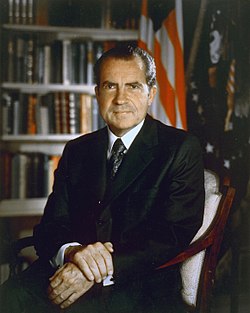
Richard Milhous Nixon (1913-1994) was the 37th President of the United States, serving from 1969 to 1974. A Republican, he previously served as Vice President under Dwight Eisenhower and as a U.S. Senator and Representative from California. His presidency was marked by major foreign policy achievements, including opening diplomatic relations with China and détente with the Soviet Union, as well as the end of U.S. involvement in the Vietnam War. Domestically, he created the EPA and pursued environmental and economic reforms. However, his presidency was ultimately defined by the Watergate scandal, which led to his resignation in August 1974, making him the only U.S. president to resign from office. He was later pardoned by his successor, Gerald Ford. More Less
Jan 9, 1913
% complete
Richard Milhous Nixon was born in Yorba Linda, California, the second of five sons of Francis and Hannah Nixon. The family later moved to Whittier, where they ran a grocery store and gas station, instilling in Nixon a work ethic that shaped his political career.
Image source: Richard Nixon
Jun 1937
% complete
Nixon graduated third in his class from Duke University School of Law, where he earned a scholarship and developed a reputation for discipline and ambition. He then returned to California to practice law in Whittier.
Image source: Duke University School of Law
Jun 21, 1940
% complete
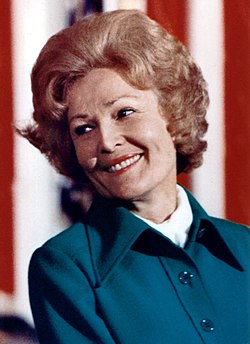
Nixon married Thelma 'Pat' Ryan, whom he had met while auditioning actors for a community theater production. Their marriage spanned over fifty years until her death in 1993.
Image source: Pat Nixon
Aug 1942 - Oct 1, 1945
% complete
Nixon joined the Navy after Pearl Harbor, serving as an operations officer in the South Pacific. He earned commendations including the Legion of Merit and rose to the rank of lieutenant commander before leaving active duty.
Image source: Richard Nixon
Nov 5, 1946
% complete
Nixon won election to the US House of Representatives from California's 12th district, defeating incumbent Democrat Jerry Voorhis in a campaign marked by aggressive anti-communist rhetoric.
Image source: California's congressional delegations
Aug 1948
% complete
As a member of the House Un-American Activities Committee, Nixon played a leading role in investigating Alger Hiss, accused of spying for the Soviets. Hiss's perjury conviction propelled Nixon onto the national stage.
Image source: Alger Hiss
Nov 7, 1950 - Jan 1, 1953
% complete
Nixon defeated Congresswoman Helen Gahagan Douglas in a bitterly fought Senate race, during which he was nicknamed 'Tricky Dick' by opponents over campaign tactics questioning Douglas's loyalty.
Image source: 1950 United States Senate election in California
Sep 23, 1952
% complete
Accused of financial improprieties while running for vice president, Nixon delivered a televised address defending himself, famously refusing to return the family dog Checkers. The speech saved his place on Dwight Eisenhower's ticket.
Image source: Checkers speech
Nov 8, 1960
% complete
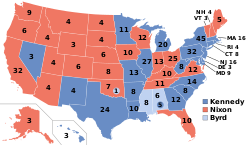
Nixon narrowly lost one of the closest elections in US history to Senator John F. Kennedy, a defeat influenced by the first televised presidential debates. He returned to California and practiced law.
Image source: 1960 United States presidential election
Nov 7, 1962
% complete
After losing the race for governor of California to Pat Brown, Nixon told reporters they would no longer have 'Dick Nixon to kick around,' appearing to signal his retirement from politics.
Image source: 1962 California gubernatorial election
Jan 20, 1953
% complete
At age 40, Nixon became one of the youngest vice presidents in American history, serving two terms under President Dwight D. Eisenhower and expanding the visibility of the office.
Jul 24, 1959
% complete
During the opening of the American National Exhibition in Moscow, Nixon engaged Soviet Premier Nikita Khrushchev in a famous impromptu debate about capitalism versus communism, enhancing his stature at home.
Image source: Kitchen Debate
Nov 5, 1968
% complete
Nixon staged a remarkable political comeback, defeating Hubert Humphrey and George Wallace amid the turbulence of the Vietnam War, assassinations, and civil unrest, promising to bring Americans together.
Image source: 1968 United States presidential election
Jan 20, 1969
% complete
Richard Nixon was sworn in as the 37th president, pledging to lower tensions domestically and internationally and to achieve 'peace with honor' in Vietnam.
Image source: First inauguration of Richard Nixon
Jul 20, 1969
% complete
During Nixon's first year in office, Apollo 11 astronauts Neil Armstrong and Buzz Aldrin walked on the Moon, and Nixon spoke with them via phone in a historic transmission from the Oval Office.
Image source: Apollo 11
Jul 25, 1969
% complete
The Nixon Doctrine pledged allied nations greater responsibility for their own defense, while secretly the administration began bombing Cambodian sanctuaries used by Vietnamese communists, escalating the war covertly.
Image source: Operation Menu
Dec 2, 1970
% complete
Nixon established the EPA by executive order, consolidating federal environmental programs. His administration also signed the Clean Air Act of 1970 into law, marking major environmental milestones.
Image source: United States Environmental Protection Agency
Aug 15, 1971
% complete
In a televised address, Nixon imposed a 90-day freeze on wages and prices and ended the dollar's convertibility into gold, moves collectively known as the 'Nixon shock' that reshaped the global monetary system.
Image source: Nixon shock
Feb 21, 1972 - Feb 28, 1972
% complete
Nixon made a historic week-long visit to the People's Republic of China, meeting Chairman Mao Zedong and Premier Zhou Enlai, opening diplomatic relations between the two nations after decades of estrangement.
Image source: 1972 visit by Richard Nixon to China
May 26, 1972
% complete
Nixon and Soviet leader Leonid Brezhnev signed SALT I and the Anti-Ballistic Missile Treaty in Moscow, marking the height of détente and easing Cold War nuclear tensions.
Image source: Strategic Arms Limitation Talks
Nov 7, 1972
% complete
Nixon was re-elected in one of the largest landslides in American history, carrying 49 states, even as the Watergate investigation continued in the background.
Image source: 1972 United States presidential election
Jan 27, 1973
% complete
The Paris Peace Accords were signed, formally ending direct American military involvement in Vietnam and fulfilling Nixon's promise to withdraw US forces while preserving a ceasefire.
Image source: Paris Peace Accords
Jun 17, 1972
% complete
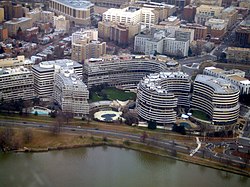
Five men were arrested for burglarizing the Democratic National Committee offices in the Watergate complex in Washington, DC. The crime and its cover-up would ultimately consume Nixon's presidency.
Image source: Watergate scandal
May 17, 1973
% complete
The televised Senate Watergate hearings revealed testimony about the break-in and cover-up, captivating the nation and eroding public confidence in the president.
Image source: United States Senate Watergate Committee
Oct 20, 1973
% complete
Nixon ordered the firing of special prosecutor Archibald Cox, prompting Attorney General Elliot Richardson and Deputy Attorney General William Ruckelshaus to resign rather than comply, sparking outrage and calls for impeachment.
Jul 24, 1974
% complete
The Supreme Court unanimously ruled that Nixon must release the White House tapes, establishing that executive privilege does not shield evidence needed in criminal proceedings.
Jul 27, 1974 - Jul 30, 1974
% complete
The House Judiciary Committee voted to approve three articles of impeachment against Nixon—obstruction of justice, abuse of power, and contempt of Congress—setting up a likely full House impeachment vote.
Image source: Impeachment process against Richard Nixon
Aug 9, 1974
% complete
Facing certain impeachment and conviction after release of the 'smoking gun' tape, Nixon announced his resignation on television on August 8 and left office the next day, the only president ever to resign. Gerald Ford succeeded him.
Image source: Presidency of Richard Nixon
Sep 8, 1974
% complete
President Ford granted Nixon a full and unconditional pardon for any crimes committed while in office, a controversial decision many historians believe contributed to Ford's 1976 election loss.
Image source: Pardon of Richard Nixon
May 1978
% complete
Nixon published a bestselling memoir offering his account of his life, career, presidency, and resignation, beginning his gradual rehabilitation in the public eye through writing and foreign policy commentary.
Oct 28, 1989 - Nov 3, 1989
% complete
Former president Nixon visited China months after the Tiananmen Square crackdown, meeting Chinese leaders to help stabilize relations between Washington and Beijing despite international condemnation of the repression.
Image source: 1989 Tiananmen Square protests and massacre
Apr 22, 1994
% complete
Nixon died four days after suffering a stroke in New York City. His state funeral in Yorba Linda drew all five living presidents, closing out the life of one of America's most consequential and controversial leaders.
Image source: Death and state funeral of Richard Nixon
Or browse the full history timeline directory, with more than 2,000 topics.
This Richard Nixon timeline was generated with the help of AI, using information found on the internet.
We work hard to keep these timelines accurate, but mistakes do get through. If you spot one, email us at [email protected] and we'll fix it for future visitors.
Generate yours with AI or build it from scratch, for free.
Export your timeline, add your own events, edit or remove AI-generated events, and much more
No credit card required.
Cancel anytime.
Cancel anytime.
You can create an unlimited number of timelines with up to 10 events on each one, customize how they look, export them to PDF, PNG, PowerPoint, CSV, and Excel, and share them with a link. Paid plans raise the event limit and add features like spreadsheet imports and collaborators.
Yes. You can cancel your subscription from your account page at any time, and you will not be charged again. Your subscription stays active for the rest of the period you already paid for.
Yes. We will email you a reminder before the annual renewal, and we will also email you a receipt.
Yes. You can email us within 15 days of any payment, and we will issue you a full refund.
Check out our pricing docs or send us an email anytime: [email protected].