-
Use Cases
-
Resources
-
Pricing
The Roaring Twenties was a decade of dramatic social, cultural, and economic change in the United States and Western Europe, marked by jazz music, flapper culture, Prohibition, mass consumerism, technological innovation, and unprecedented prosperity that ended with the 1929 stock market crash. More Less
Jan 16, 1920
% complete
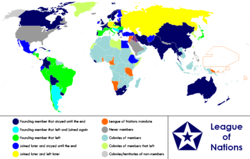
The League of Nations convened its first Council meeting in Geneva, formally beginning operations as the world's first intergovernmental organization dedicated to maintaining peace. Though the United States never joined, the League became a centerpiece of post-World War I diplomacy during the 1920s.
Image source: League of Nations
Jan 17, 1920
% complete
The Eighteenth Amendment took effect, banning the manufacture, sale, and transportation of alcohol in the United States. Prohibition gave rise to speakeasies, bootlegging, and organized crime figures like Al Capone, defining much of the era's cultural landscape.
Image source: Prohibition in the United States
Aug 18, 1920
% complete
The Nineteenth Amendment was ratified, prohibiting the denial of the vote on the basis of sex. It marked a landmark victory for the American women's suffrage movement after decades of activism led by figures such as Susan B. Anthony and Alice Paul.
Image source: Nineteenth Amendment to the United States Constitution
Nov 2, 1920
% complete
Republican Warren G. Harding won a landslide victory over James M. Cox, campaigning on a 'return to normalcy' after World War I. His administration promoted pro-business policies but was later tarnished by scandals such as Teapot Dome.
Image source: 1920 United States presidential election
May 31, 1921 - Jun 1, 1921
% complete
A white mob attacked the prosperous Black neighborhood of Greenwood in Tulsa, Oklahoma, known as 'Black Wall Street,' killing as many as 300 people and destroying some 35 blocks of homes and businesses in one of the worst episodes of racial violence in American history.
Image source: Tulsa race massacre
Nov 12, 1921 - Feb 6, 1922
% complete
Nine nations met in Washington, D.C., to negotiate naval disarmament and address tensions in the Pacific. The resulting Five-Power Treaty set battleship tonnage ratios among the great powers, marking a major effort at arms limitation between the wars.
Image source: Washington Naval Conference
Oct 28, 1922
% complete
Benito Mussolini and his Fascist Party staged a coup-like march on the Italian capital, prompting King Victor Emmanuel III to appoint Mussolini prime minister. The event marked the rise of fascism in Europe with far-reaching consequences for the following decades.
Image source: March on Rome
Aug 2, 1923
% complete
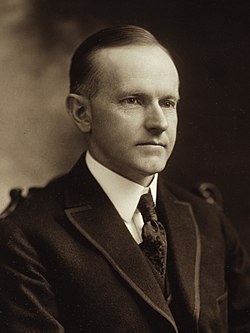
President Warren G. Harding died suddenly in San Francisco, and Vice President Calvin Coolidge was sworn in by his father at their Vermont home. 'Silent Cal' went on to win election in 1924 and presided over the booming mid-decade economy.
Image source: Calvin Coolidge
Jul 10, 1925 - Jul 21, 1925
% complete
Teacher John T. Scopes was tried in Dayton, Tennessee for teaching evolution, clashing famed lawyers Clarence Darrow and William Jennings Bryan. The 'Monkey Trial' dramatized the conflict between modern science and religious fundamentalism in 1920s America.
Image source: Scopes trial
Oct 16, 1925 - Dec 1, 1925
% complete
Germany, France, Belgium, Britain, and Italy agreed to mutually respect the borders established by the Treaty of Versailles. The treaties eased Franco-German tensions and paved the way for Germany's admission to the League of Nations in 1926.
Image source: Locarno Treaties
Aug 27, 1928
% complete
Sixty-two nations eventually signed the Kellogg-Briand Pact, outlawing war as an instrument of national policy. Though ultimately ineffective against aggression, it reflected the decade's optimistic spirit of international cooperation.
Image source: Kellogg–Briand Pact
Feb 14, 1929
% complete
Seven members of Chicago's North Side Gang were gunned down in a garage, allegedly on orders of Al Capone's South Side Italian gang. The brazen killing highlighted the violent underworld spawned by Prohibition-era bootlegging.
Image source: Saint Valentine's Day Massacre
Nov 2, 1920
% complete
Pittsburgh station KDKA received its license and broadcast the results of the Harding-Cox presidential election, widely considered the first commercially licensed radio broadcast in America. Radio quickly became a transformative mass medium of the decade.
Image source: KDKA (AM)
Jan 11, 1922
% complete
Canadian researchers Frederick Banting and Charles Best, working with John Macleod and James Collip, administered insulin to a diabetic patient for the first time at the University of Toronto, transforming diabetes from a fatal disease into a manageable condition.
Image source: Insulin
Mar 16, 1926
% complete
American physicist Robert H. Goddard launched the world's first liquid-fueled rocket from a farm in Auburn, Massachusetts. Though it flew only briefly, the experiment laid the foundation for modern rocketry and spaceflight.
Image source: Robert H. Goddard
May 9, 1926
% complete
American aviator Richard E. Byrd and pilot Floyd Bennett claimed to have flown over the North Pole from Spitsbergen, Norway. Their celebrated flight exemplified the era's aviation fever and hero worship of pioneering pilots.
Image source: North Pole
May 20, 1927 - May 21, 1927
% complete
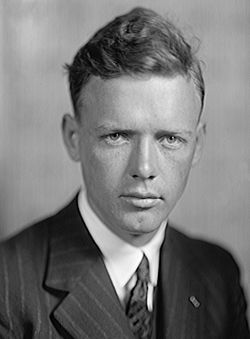
Charles Lindbergh flew the Spirit of St. Louis nonstop from New York to Paris in 33.5 hours, becoming an instant global celebrity. His feat electrified the public imagination and spurred rapid growth in commercial aviation.
Image source: Charles Lindbergh
Jun 17, 1928 - Jun 18, 1928
% complete
Amelia Earhart became the first woman to fly across the Atlantic Ocean as a passenger aboard the Fokker F.VII Friendship, landing in Wales. The achievement launched her fame as an aviation pioneer and symbol of women's expanding horizons.
Image source: Amelia Earhart
Sep 28, 1928
% complete
Scottish bacteriologist Alexander Fleming noticed that mold contaminating a culture plate killed surrounding bacteria, leading to the discovery of penicillin. Though not developed until the following decade, it revolutionized medicine and saved countless lives.
Image source: Penicillin
Apr 14, 1922
% complete
Investigations revealed that Secretary of the Interior Albert Fall had accepted bribes for leasing federal oil reserves at Teapot Dome, Wyoming, to private companies. The scandal became a symbol of government corruption during the Harding administration.
Image source: Teapot Dome scandal
Aug 30, 1924
% complete
An international committee led by Charles G. Dawes devised a plan to stabilize the German currency and restructure reparations payments after the hyperinflation crisis. American loans flowed into Germany, fueling European economic recovery through the late 1920s.
Image source: Dawes Plan
Oct 24, 1929 - Oct 29, 1929
% complete
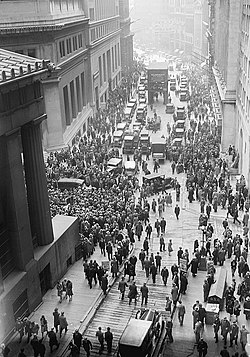
After years of speculative frenzy, stock prices collapsed in late October 1929, wiping out billions in wealth. Black Thursday and Black Tuesday ended the prosperity of the Roaring Twenties and ushered in the Great Depression.
Image source: Wall Street Crash of 1929
Nov 4, 1922
% complete
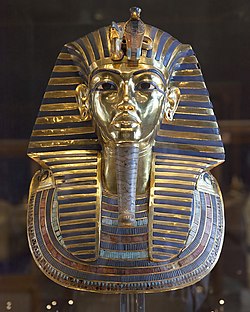
British archaeologist Howard Carter uncovered the nearly intact tomb of the Egyptian pharaoh Tutankhamun in the Valley of the Kings. The discovery sparked worldwide 'Egyptomania' and profoundly influenced Art Deco design and popular culture of the 1920s.
Image source: Tutankhamun
Mar 3, 1923
% complete
Briton Hadden and Henry Luce launched Time, the first weekly news magazine in the United States. Its concise, digest-style journalism shaped how Americans consumed news throughout the twentieth century.
Image source: Time (magazine)
Oct 16, 1923
% complete
Walt and Roy Disney founded a small animation studio in Hollywood, initially producing the Alice Comedies. The studio would later create Mickey Mouse and become one of the most influential entertainment companies in history.
Image source: The Walt Disney Company
Jan 25, 1924 - Feb 5, 1924
% complete
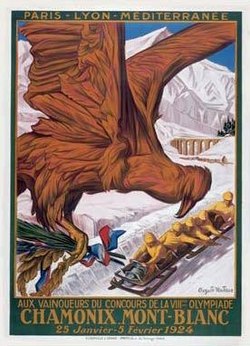
Chamonix, France hosted the inaugural Winter Olympics, featuring events such as skiing, skating, and ice hockey across sixteen disciplines. The games established winter sports competition as an international tradition alongside the Summer Games.
Image source: 1924 Winter Olympics
Apr 10, 1925
% complete
F. Scott Fitzgerald published his masterpiece chronicling Jay Gatsby's doomed pursuit of wealth and love amid Jazz Age excess on Long Island. Initially a modest success, the novel came to be regarded as the definitive portrait of the Roaring Twenties.
Image source: The Great Gatsby
Sep 30, 1927
% complete
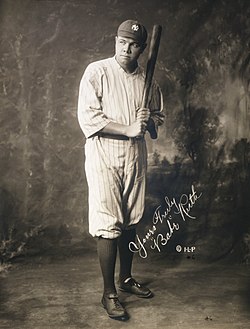
New York Yankees slugger Babe Ruth hit his sixtieth home run of the season, setting a single-season record that stood for 34 years. Ruth's larger-than-life persona made him the most famous athlete of the Jazz Age.
Image source: Babe Ruth
Oct 6, 1927
% complete
Warner Bros.' The Jazz Singer, starring Al Jolson, featured synchronized dialogue and songs, heralding the end of the silent film era. 'Talkies' revolutionized Hollywood and transformed cinema-going into the era's dominant mass entertainment.
Image source: The Jazz Singer
Nov 18, 1928
% complete
Disney's Steamboat Willie premiered in New York City as one of the first cartoons with fully synchronized sound, introducing Mickey Mouse to the world. The character became a cultural icon and anchor of the Disney empire.
Image source: Steamboat Willie
May 16, 1929
% complete
The Academy of Motion Picture Arts and Sciences presented its first Oscars at a private dinner in Hollywood, honoring films from 1927 and 1928. Wings won Outstanding Picture, cementing Hollywood's growing prestige industry.
Image source: 1st Academy Awards
Or browse the full history timeline directory, with more than 2,000 topics.
This Roaring Twenties timeline was generated with the help of AI, using information found on the internet.
We work hard to keep these timelines accurate, but mistakes do get through. If you spot one, email us at [email protected] and we'll fix it for future visitors.
Generate yours with AI or build it from scratch, for free.
Export your timeline, add your own events, edit or remove AI-generated events, and much more
No credit card required.
Cancel anytime.
Cancel anytime.
You can create an unlimited number of timelines with up to 10 events on each one, customize how they look, export them to PDF, PNG, PowerPoint, CSV, and Excel, and share them with a link. Paid plans raise the event limit and add features like spreadsheet imports and collaborators.
Yes. You can cancel your subscription from your account page at any time, and you will not be charged again. Your subscription stays active for the rest of the period you already paid for.
Yes. We will email you a reminder before the annual renewal, and we will also email you a receipt.
Yes. You can email us within 15 days of any payment, and we will issue you a full refund.
Check out our pricing docs or send us an email anytime: [email protected].