-
Use Cases
-
Resources
-
Pricing
The Smoot-Hawley Tariff Act, signed into law in June 1930, raised U.S. import duties on over 20,000 goods to historically high levels. Intended to protect American farmers and manufacturers during the early Great Depression, it instead triggered retaliatory tariffs from foreign nations, causing a sharp collapse in international trade and worsening the global economic crisis. The timeline covers the act's origins, passage, immediate consequences, and eventual reversal through later trade liberalization efforts. More Less
1927
% complete
In 1927, the League of Nations held a World Economic Conference in Geneva, addressing global trade issues in the years leading up to the Great Depression.
Image source: Geneva World Economic Conference (1927)
1928
% complete
In 1928, France became the first country to enact a new tariff law and quota system, signaling a rising wave of protectionism ahead of the Smoot–Hawley Tariff.
Image source: Smoot–Hawley Tariff Act
1928
% complete
During the 1928 United States presidential election, one of Herbert Hoover's campaign promises was to help beleaguered farmers by increasing tariffs on agricultural products. Hoover won, and Republicans maintained comfortable majorities in the House and the Senate.
Image source: Herbert Hoover
1929
% complete
In 1929, Senator Reed Smoot championed another tariff increase within the United States, which became the Smoot–Hawley Tariff Bill.
May 1929
% complete
The House of Representatives passed a version of the act in May 1929, increasing tariffs on agricultural and industrial goods. As it passed, boycotts broke out and foreign governments moved to increase rates against American products.
May 1929 - Mar 1930
% complete
The Senate debated its bill until March 1930, with many members trading votes based on industries in their states.
Image source: United States Senate
Oct 1929
% complete
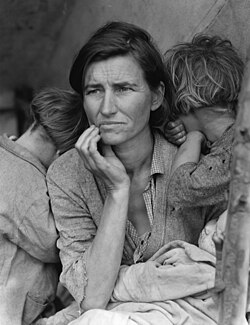
The Great Depression started in October 1929. In late 1929, as the global economy entered its first stages, the main policy goal of the United States federal government was to protect its jobs and farmers from foreign competition.
Image source: Great Depression
May 1930
% complete
In May 1930, a petition was signed by 1,028 economists in the United States asking President Hoover to veto the legislation; it was ultimately signed by over 1,250 economists.
Jun 17, 1930
% complete
The Tariff Act of 1930, also known as the Smoot–Hawley Tariff Act, was a protectionist trade measure signed into law by President Herbert Hoover on June 17, 1930. The act raised tariffs on over 20,000 imported goods to shield American industries from foreign competition during the onset of the Great Depression.
1929 - 1933
% complete
US imports decreased 66% from $4.4 billion (1929) to $1.5 billion (1933), and exports decreased 61% from $5.4 billion to $2.1 billion. Imports from Europe fell from $1.3 billion in 1929 to $390 million in 1932, while exports to Europe fell from $2.3 billion to $784 million. Overall, world trade decreased by some 66% between 1929 and 1934, and US gross national product fell from $103.1 billion in 1929 to $55.6 billion in 1933.
Sep 1929
% complete
By September 1929, Hoover's administration had received protest notes from 23 trading partners, but the threats of retaliatory actions were ignored.
1930 - 1933
% complete
Unemployment was 8% in 1930 when the Smoot–Hawley Act was passed, but the new law failed to lower it. The rate jumped to 16% in 1931 and to 25% in 1932–1933.
May 1930
% complete
In May 1930, Canada, the most loyal U.S. trading partner, took action by imposing new tariffs on 16 products which accounted for approximately 30% of U.S. exports to Canada. Later, Canada forged closer economic links with the British Empire via the British Empire Economic Conference of 1932.
Image source: Canada–United States relations
1931
% complete
When the Creditanstalt bank of Austria failed in 1931, the global deficiencies of the Smoot–Hawley Tariff became apparent, deepening the international financial crisis.
Image source: Creditanstalt
1932
% complete
According to the Bureau of the Census, the dutiable tariff rate peak of 1932 was 59.1%, second only to the 61.7% rate of 1830. However, 63% of all imports in 1933 were not taxed, which the dutiable rate does not reflect. The free and dutiable rate peaked in 1933 at 19.8%, one-third below the average 29.7% rate from 1821 to 1900.
1951
% complete
The American Tariff League Study of 1951 compared the free and dutiable tariff rates of 43 countries, demonstrating that few nations were reciprocating in reducing their levels as the United States reduced its own back toward its 1929 level.
Image source: Tariff
1932
% complete
Roosevelt spoke against the act during his successful campaign for president in 1932, and the 1932 Democratic campaign platform pledged to lower tariffs.
Image source: Franklin D. Roosevelt
Nov 1932
% complete
Consequently, Hawley lost re-nomination, while Smoot was one of 12 Republican senators who lost their seats in the 1932 elections, with the swing being the largest in Senate history, equaled only in 1958 and 1980.
Image source: 1932 United States elections
1934
% complete
Roosevelt and the now-Democratic Congress passed the Reciprocal Trade Agreements Act of 1934, which liberalized trade policy following the protectionist Smoot–Hawley era.
1944
% complete
While the Bretton Woods Agreement of 1944 focused on foreign exchange and did not directly address tariffs, those involved wanted a similar framework for international trade. Truman launched this process in November 1945 with negotiations for a proposed International Trade Organization (ITO).
Image source: Bretton Woods system
Oct 1947
% complete
Separate negotiations on the General Agreement on Tariffs and Trade (GATT) moved more quickly than the ITO effort, with an agreement signed in October 1947. Adding a multilateral most-favored-nation component to reciprocity, GATT served as a framework for gradual tariff reduction over the subsequent half century.
Feb 2016
% complete
Prior to 2016, the Tariff Act barred goods made with forced or indentured labor but included a consumptive demand exception allowing such imports when domestic production was insufficient. The exception was removed under Representative Ron Kind's amendment, incorporated into the Trade Facilitation and Trade Enforcement Act of 2015 and signed by President Obama in February 2016.
Image source: Internet Tax Freedom Act
1986
% complete
In the 1986 film Ferris Bueller's Day Off, Ben Stein, playing a high school economics teacher, memorably references the Smoot–Hawley Tariff in a droning lecture to his students. The act is also heavily featured in the 1989 book Dave Barry Slept Here by Dave Barry.
Image source: Ferris Bueller's Day Off
Nov 1993
% complete
In 1993, in discussion leading up to the passage of NAFTA, then-Vice President Al Gore mentioned the Smoot–Hawley Tariff as a response to objections voiced by Ross Perot during a debate they had on The Larry King Show.
Image source: North American Free Trade Agreement
Apr 2009
% complete
In April 2009, Representative Michele Bachmann made news when she referred incorrectly to the Smoot–Hawley Tariff as 'the Hoot–Smalley Act' and misattributed its signing to Franklin D. Roosevelt.
Image source: Michele Bachmann
2010
% complete
The Foreign Account Tax Compliance Act (FATCA) has been compared to the Smoot–Hawley Tariff, with Andrew Quinlan of the Center for Freedom and Prosperity calling FATCA 'the worst economic idea to come out of Congress since Smoot–Hawley'.
2024
% complete
During his 2024 political campaign, Donald Trump pledged to institute tariffs similar to those of the Smoot–Hawley era. In its November 2024 'Year Ahead' forecast supplement for the global economy, The Economist observed renewed parallels with the aftermath of the Tariff Act.
Image source: Donald Trump 2024 presidential campaign
Apr 2, 2025
% complete
The tariffs announced on April 2, 2025, which could raise tariff levels higher than those during the Smoot–Hawley era, brought renewed attention to the Smoot–Hawley Tariff Act.
Image source: Tariffs in the second Trump administration
Jul 2026
% complete
In July 2026, the Trump administration invoked section 338 of the Tariff Act for the first time in its history, 96 years after the act's passage in 1930.
Or browse the full history timeline directory, with more than 2,000 topics.
This Smoot-Hawley Tariff timeline was generated with the help of AI, using information found on the internet.
We work hard to keep these timelines accurate, but mistakes do get through. If you spot one, email us at [email protected] and we'll fix it for future visitors.
Generate yours with AI or build it from scratch, for free.
Export your timeline, add your own events, edit or remove AI-generated events, and much more
No credit card required.
Cancel anytime.
Cancel anytime.
You can create an unlimited number of timelines with up to 10 events on each one, customize how they look, export them to PDF, PNG, PowerPoint, CSV, and Excel, and share them with a link. Paid plans raise the event limit and add features like spreadsheet imports and collaborators.
Yes. You can cancel your subscription from your account page at any time, and you will not be charged again. Your subscription stays active for the rest of the period you already paid for.
Yes. We will email you a reminder before the annual renewal, and we will also email you a receipt.
Yes. You can email us within 15 days of any payment, and we will issue you a full refund.
Check out our pricing docs or send us an email anytime: [email protected].