-
Use Cases
-
Resources
-
Pricing
The Federal Bureau of Investigation (FBI) was established in 1908 by Attorney General Charles Bonaparte as the Bureau of Investigation. It became the FBI in 1935 under Director J. Edgar Hoover, whose tenure shaped the agency for nearly five decades. The FBI evolved from a small investigative force into the principal federal law enforcement and domestic intelligence agency of the United States, tackling organized crime, espionage, civil rights violations, cybercrime, and terrorism. More Less
Jul 26, 1908
% complete
Attorney General Charles Bonaparte created a small force of special agents within the Department of Justice, which became the Bureau of Investigation. The new bureau was tasked with investigating crimes related to federal law, laying the foundation for what would eventually become the FBI.
Image source: Federal Bureau of Investigation
Jul 26, 1908
% complete
Stanley W. Finch was named the first chief of the Bureau of Investigation, leading a small staff of agents drawn from the Secret Service as the bureau began building its investigative capacity.
Image source: Stanley Finch
Jun 25, 1910
% complete
The White-Slave Traffic Act, known as the Mann Act, prohibited interstate transport of women for immoral purposes. Its enforcement significantly expanded the bureau's jurisdiction into interstate crime fighting.
Image source: Mann Act
Apr 6, 1917 - Nov 11, 1918
% complete
During World War I, the bureau investigated espionage, sabotage, and sedition, monitoring German agents and anti-war activists under the Espionage Act of 1917 and the Sedition Act of 1918.
Nov 1919 - Jan 1920
% complete
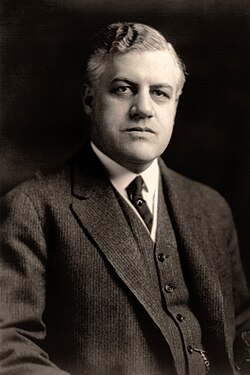
Under Attorney General A. Mitchell Palmer, the bureau carried out sweeping raids targeting suspected radicals and anarchists during the Red Scare, arresting thousands of people and deporting hundreds, actions later widely criticized for violating civil liberties.
Image source: Palmer Raids
May 10, 1924
% complete
J. Edgar Hoover was appointed acting director of the Bureau of Investigation and soon confirmed as director. He would lead the organization for nearly five decades, transforming it into a professional national law enforcement agency while accumulating enormous personal power.
Image source: J. Edgar Hoover
Jul 1, 1924
% complete
The bureau consolidated fingerprint records from across the country, creating one of the world's largest fingerprint repositories and establishing itself as a leader in forensic identification techniques.
Image source: Federal Bureau of Investigation
Nov 24, 1932
% complete
The FBI opened its Technical Crime Laboratory, pioneering forensic science services such as handwriting analysis, ballistics, and hair analysis for law enforcement agencies nationwide.
Image source: FBI Laboratory
Jul 1, 1935
% complete
The Bureau of Investigation was officially renamed the Federal Bureau of Investigation (FBI), formalizing its expanded role in federal law enforcement following the passage of major crime legislation in the early 1930s.
Jun 1940 - May 15, 1946
% complete
The FBI's Special Intelligence Service secretly operated in Latin America to counter Axis espionage networks, gathering intelligence on German and Japanese agents until it was disbanded after the war.
Image source: Special Intelligence Service
Dec 7, 1941 - Sep 2, 1945
% complete
During World War II, the FBI led counterespionage efforts against Nazi and Japanese intelligence operations in the Americas, capturing German saboteurs landed by submarine in Operation Pastorius in June 1942.
Mar 1, 1932
% complete
The kidnapping of aviator Charles Lindbergh's infant son prompted Congress to pass the Federal Kidnapping Act, giving the FBI jurisdiction over kidnappings and marking a major expansion of federal criminal authority.
Image source: Lindbergh kidnapping
Jun 17, 1933
% complete
The killing of four law enforcement officers by gangsters attempting to free Frank Nash galvanized public support for stronger federal powers, leading to legislation allowing FBI agents to carry firearms and make arrests.
Image source: Kansas City massacre
Jul 22, 1934
% complete
The FBI tracked down and shot notorious bank robber John Dillinger outside Chicago's Biograph Theater. His death marked a symbolic victory over the Depression-era gangsters who had captured national attention.
Image source: John Dillinger
Sep 19, 1934
% complete
German carpenter Bruno Hauptmann was arrested for the Lindbergh baby kidnapping after paying ransom bills were traced to him. He was convicted in 1935 and executed in 1936 in one of the most famous cases of the decade.
Image source: Bruno Richard Hauptmann
Oct 22, 1934
% complete
Charles 'Pretty Boy' Floyd, one of the era's most wanted bank robbers, was killed in an Ohio cornfield shootout with law enforcement including Melvin Purvis, another milestone in the FBI's campaign against Depression-era outlaws.
Image source: Pretty Boy Floyd
Jan 16, 1935
% complete
The FBI surrounded a Florida cottage where Kate 'Ma' Barker and her son Fred were hiding, resulting in an hours-long gun battle that left both dead, ending the Barker-Karpis Gang's reign.
Image source: Ma Barker
Mar 14, 1950
% complete
The FBI launched its Ten Most Wanted Fugitives program, publicizing the names of dangerous criminals to enlist the public's help in their capture, a publicity tool that proved remarkably effective.
Image source: FBI Ten Most Wanted Fugitives
Jul 1950 - Jun 19, 1953
% complete
FBI investigations into Soviet atomic espionage led to the arrest, trial, and execution of Julius and Ethel Rosenberg, one of the most controversial spy cases of the Cold War.
Image source: Julius and Ethel Rosenberg
Aug 28, 1956 - Apr 1971
% complete
The FBI began COINTELPRO, a series of covert programs designed to surveil, infiltrate, and disrupt domestic political organizations, including communist groups, the civil rights movement, and later antiwar activists, before being exposed in 1971.
Image source: COINTELPRO
Oct 1963 - Apr 4, 1968
% complete
Under Hoover's direction, the FBI wiretapped and harassed civil rights leader Martin Luther King Jr., seeking to discredit him. The campaign remains one of the most infamous examples of FBI abuse of power against political figures.
Image source: Martin Luther King Jr.
May 2, 1972
% complete
J. Edgar Hoover died in office after 48 years as FBI director. His death prompted reforms, including a statutory ten-year limit on the FBI directorship, to prevent any future director from accumulating similar unchecked power.
Jul 9, 1973 - Feb 23, 1978
% complete
Former Kansas City police chief Clarence Kelley took over the FBI and worked to professionalize the agency, implementing reforms in the wake of Watergate and revelations about past abuses like COINTELPRO.
Image source: Clarence M. Kelley
Jan 27, 1975 - Apr 29, 1976
% complete
The U.S. Senate's Church Committee exposed decades of FBI misconduct, including illegal surveillance, harassment of political activists, and covert action programs, prompting lasting congressional oversight of the bureau.
Image source: Church Committee
Oct 25, 1978
% complete
Congress passed FISA, establishing a secret court to authorize surveillance warrants for foreign intelligence purposes, imposing legal limits on the FBI's domestic spying activities in response to earlier abuses.
Feb 23, 1978 - May 25, 1987
% complete
Federal judge William Webster modernized the FBI, emphasizing white-collar crime, drug enforcement, and counterintelligence, and helped restore the bureau's reputation after the abuses uncovered by the Church Committee.
Image source: William H. Webster
Feb 1980
% complete
The FBI's Abscam undercover operation caught members of Congress accepting bribes from fake Arab sheikhs, resulting in convictions of several senators and representatives and demonstrating aggressive anticorruption tactics.
Image source: Abscam
Aug 21, 1992 - Aug 31, 1992
% complete
An 11-day standoff between federal agents and the Weaver family at Ruby Ridge, Idaho resulted in three deaths and triggered intense criticism of FBI tactics, contributing to later scrutiny of paramilitary operations.
Image source: Ruby Ridge
Feb 28, 1993 - Apr 19, 1993
% complete
A 51-day standoff between the FBI and the Branch Davidians near Waco, Texas ended when a fire destroyed the compound, killing about 80 people including children. The disaster prompted major reviews of federal crisis management.
Image source: Waco siege
Sep 1, 1993 - Jun 25, 2001
% complete
Former federal judge Louis Freeh served eight years as FBI director, prioritizing organized crime, financial fraud, and terrorism investigations, though his tenure also saw controversies such as the Wen Ho Lee case.
Image source: Louis Freeh
Apr 19, 1995
% complete
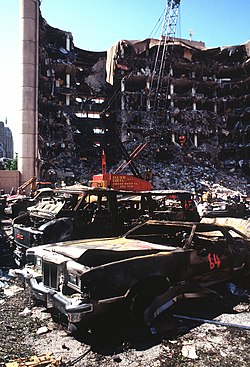
After Timothy McVeigh bombed the Alfred P. Murrah Federal Building, killing 168 people, the FBI conducted one of the largest manhunts in U.S. history, swiftly identifying and apprehending McVeigh and Terry Nichols.
Image source: Oklahoma City bombing
Apr 3, 1996
% complete
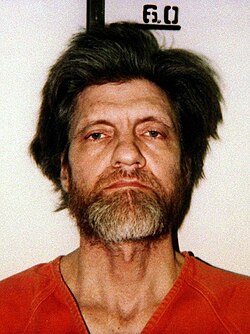
After a nearly two-decade hunt, FBI agents arrested Theodore Kaczynski at his Montana cabin, ending the Unabomber's mail-bombing campaign that had killed three people and injured many more.
Image source: Ted Kaczynski
Feb 18, 2001
% complete
FBI agent Robert Hanssen was arrested for selling secrets to Russia over two decades, in one of the worst intelligence breaches in American history, prompting deep soul-searching within the bureau about counterintelligence.
Image source: Robert Hanssen
Sep 4, 2001
% complete
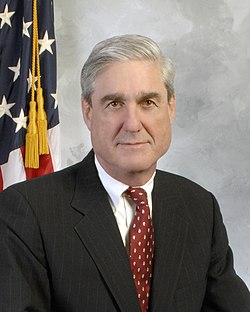
One week before the 9/11 attacks, Robert Mueller was sworn in as FBI director. Over twelve years he rebuilt the bureau into an intelligence-driven counterterrorism organization, serving longer than any director since Hoover.
Image source: Robert Mueller
Sep 11, 2001
% complete
The September 11 terrorist attacks fundamentally reoriented the FBI toward preventing terrorism, expanding intelligence gathering, creating Joint Terrorism Task Forces nationwide, and elevating counterterrorism as the bureau's top priority.
Image source: September 11 attacks
Oct 2001 - 2008
% complete
The FBI's Amerithrax investigation traced deadly anthrax-filled letters mailed after 9/11 to army scientist Bruce Ivins, closing one of the most complex bioterrorism investigations ever undertaken.
Image source: 2001 anthrax attacks
Sep 4, 2013
% complete
James Comey became FBI director, leading high-profile investigations including the Hillary Clinton email probe and early Russia election interference inquiry, amid intense partisan controversy.
Image source: James Comey
May 9, 2017
% complete
President Donald Trump fired FBI Director James Comey, citing the Russia investigation among other reasons. The unprecedented dismissal sparked outrage, calls for special counsel appointment, and the subsequent Mueller investigation.
Image source: Dismissal of James Comey
Aug 2, 2017
% complete
Christopher Wray was confirmed as the eighth Senate-confirmed FBI director, overseeing the bureau through investigations of foreign interference, domestic extremism, and growing tensions with the Trump administration.
Image source: Christopher A. Wray
Or browse the full history timeline directory, with more than 2,000 topics.
This History of the FBI timeline was generated with the help of AI, using information found on the internet.
We work hard to keep these timelines accurate, but mistakes do get through. If you spot one, email us at [email protected] and we'll fix it for future visitors.
Generate yours with AI or build it from scratch, for free.
Export your timeline, add your own events, edit or remove AI-generated events, and much more
No credit card required.
Cancel anytime.
Cancel anytime.
You can create an unlimited number of timelines with up to 10 events on each one, customize how they look, export them to PDF, PNG, PowerPoint, CSV, and Excel, and share them with a link. Paid plans raise the event limit and add features like spreadsheet imports and collaborators.
Yes. You can cancel your subscription from your account page at any time, and you will not be charged again. Your subscription stays active for the rest of the period you already paid for.
Yes. We will email you a reminder before the annual renewal, and we will also email you a receipt.
Yes. You can email us within 15 days of any payment, and we will issue you a full refund.
Check out our pricing docs or send us an email anytime: [email protected].