
-
Use Cases
-
Resources
-
Pricing
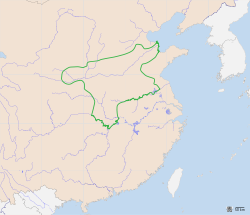
The Shang Dynasty was China's earliest dynasty with written records, ruling along the Yellow River valley. It is renowned for its advanced bronze metallurgy, oracle bone inscriptions (the earliest form of Chinese writing), elaborate royal tombs, and a sophisticated social hierarchy centered on ritual and ancestor worship. More Less
3000 BC - 2000 BC
% complete
Much older rammed earth fortifications of the type later used by the Shang have been found at Chinese Neolithic sites of the Longshan culture, showing that the Shang's wall-building tradition was inherited from these earlier cultures.
Image source: Longshan culture
1500 BC
% complete
As early as c. 1500 BC, the early Shang dynasty engaged in large-scale production of bronzeware vessels and weapons, one of the defining achievements of the period.
Image source: Shang dynasty
1200 BC
% complete
Bronze was used for the fittings of spoke-wheeled chariots, which appeared in China around 1200 BC during the late Shang period.
Image source: Chariot
2100 BC - 1800 BC
% complete
Radiocarbon dating suggests that the Erlitou culture, found at Yanshi south of the Yellow River near Luoyang, flourished between about 2100 BC and 1800 BC. The site is often associated with the legendary Xia dynasty that preceded the Shang.
Image source: Erlitou culture
1600 BC
% complete
Yanshi Shang City, a large walled city discovered in 1983 near Erlitou, dates from around 1600 BC. The Xia–Shang–Zhou Chronology Project identified the establishment of the dynasty with the foundation of this Erligang culture walled city.
Image source: Yanshi, Luoyang
1500 BC
% complete
The earth walls at Zhengzhou were erected in the 15th century BC. They would have been 20 m (66 ft) wide at the base, rising to a height of 8 m (26 ft), forming a roughly rectangular wall 7 km (4 mi) around the ancient city.
Image source: Zhengzhou Shang City
1899 AD
% complete
In 1899, several scholars noticed that Chinese pharmacists were selling 'dragon bones' marked with curious and archaic characters—the first recognition of Shang oracle bone inscriptions.
Image source: Oracle bone
1928 AD - 1937 AD
% complete
The 'dragon bones' were traced back in 1928 to Yinxu, north of the Yellow River near Anyang, where the Academia Sinica undertook archaeological excavation until the Second Sino-Japanese War in 1937.
Image source: Yinxu
1950 AD
% complete
After 1950, the remnants of the earlier walled settlement of Zhengzhou Shang City were discovered within the modern city of Zhengzhou, revealing an important early Shang urban center.
1959 AD
% complete
In 1959, the site of the Erlitou culture was found in Yanshi, south of the Yellow River near Luoyang, becoming central to discussions of the Xia–Shang transition.
1983 AD
% complete
In 1983, Yanshi Shang City was discovered 6 km (3.7 mi) north-east of the Erlitou site in Yanshi's Shixianggou Township, a large walled city dating from 1600 BC.
1989 AD - 2000 AD
% complete
Between 1989 and 2000, an important Shang settlement was excavated near Xiaoshuangqiao, about 20 km (12 mi) northwest of Zhengzhou.
Image source: Xiaoshuangqiao
1999 AD
% complete
The remains of a walled city of about 470 ha (1,200 acres) were discovered in 1999 across the Huan River from the well explored Yinxu site. The city, now known as Huanbei, was apparently occupied for less than a century and destroyed shortly before the construction of the Yinxu complex.
2022 AD
% complete
In 2022, excavation of an elite tomb inside the city walls yielded over 200 artefacts, including a gold face covering measuring 18.3 by 14.5 cm (7.2 by 5.7 in).
1766 BC - 1122 BC
% complete
The traditional dates of the Shang dynasty, from 1766 to 1122 BC, were calculated by Liu Xin during the Han dynasty, and remained influential for many centuries afterward.
1600 BC - 1046 BC
% complete
Modern scholarship dates the Shang dynasty between the 16th and 11th centuries BC, with more agreement surrounding the end date than the beginning date.
1554 BC - 1046 BC
% complete
David Pankenier, by attempting to identify astronomical events mentioned in Zhou texts, dated the beginning of the dynasty at 1554 BC and its overthrow at 1046 BC.
Image source: SN 386
1523 BC - 1027 BC
% complete
A calculation based on the 'old text' of the Bamboo Annals yields dates of 1523 to 1027 BC for the Shang dynasty.
1130 BC - 1018 BC
% complete
At least 44 dates for the end of the dynasty have been proposed, ranging from 1130 to 1018 BC, reflecting the difficulty of pinpointing the dynasty's fall.
1045 BC
% complete
David Nivison and Edward Shaughnessy argue for an end date of 1045 BC, based on their analysis of the Bamboo Annals.
1041 BC
% complete
Radiocarbon dating of oracle bones has yielded an end date of 1041 BC for the dynasty, with an uncertainty of about 10 years.
Image source: Radiocarbon dating
250 AD
% complete
Since Huangfu Mi's Records of Emperors and Kings in the 3rd century AD, the name 'Yin' has been frequently used to refer specifically to the latter half of the Shang dynasty.
Image source: Huangfu Mi
960 AD - 1279 AD
% complete
During the Song dynasty, antiquarians collected bronze ritual vessels attributed to the Shang era, some of which bore inscriptions, providing early material evidence for study of the period.
Image source: Song dynasty
1917 AD
% complete
In the last century before his death, Wang Guowei demonstrated that the succession to the Shang throne matched the list of kings in Sima Qian's Records of the Grand Historian, confirming the reliability of traditional accounts.
Image source: Wang Guowei
1996 AD - 2000 AD
% complete
The Xia–Shang–Zhou Chronology Project identified the establishment of the dynasty with the foundation of an Erligang culture walled city at Yanshi, dated c. 1600 BC.
Image source: Xia–Shang–Zhou Chronology Project
2000 AD
% complete
The project also arrived at an end date of 1046 BC, based on a combination of the astronomical evidence considered by David Pankenier and radiocarbon dating of archaeological layers.
1250 BC
% complete
The oldest extant direct records of the Shang dynasty date from c. 1250 BC at the Yinxu site near Anyang, covering the reigns of the last nine Shang kings.
1046 BC - 771 BC
% complete
Before the 20th century, the Zhou dynasty (1046–256 BC) was the earliest Chinese dynasty that could be verified from its own records; the Western Zhou period immediately followed the fall of the Shang.
Image source: Western Zhou
1046 BC - 771 BC
% complete
The name 'Shang' seems to have originated during the subsequent Zhou dynasty; it does not appear in oracle bone inscriptions—which refer to the state as 'Shang' and its capital as 'Great Settlement of Shang'—nor in any bronze inscriptions securely dated to the Western Zhou.
Or browse the full history timeline directory, with more than 2,000 topics.
This Shang Dynasty timeline was generated with the help of AI, using information found on the internet.
We work hard to keep these timelines accurate, but mistakes do get through. If you spot one, email us at [email protected] and we'll fix it for future visitors.
Generate yours with AI or build it from scratch, for free.
Export your timeline, add your own events, edit or remove AI-generated events, and much more
No credit card required.
Cancel anytime.
Cancel anytime.
You can create an unlimited number of timelines with up to 10 events on each one, customize how they look, export them to PDF, PNG, PowerPoint, CSV, and Excel, and share them with a link. Paid plans raise the event limit and add features like spreadsheet imports and collaborators.
Yes. You can cancel your subscription from your account page at any time, and you will not be charged again. Your subscription stays active for the rest of the period you already paid for.
Yes. We will email you a reminder before the annual renewal, and we will also email you a receipt.
Yes. You can email us within 15 days of any payment, and we will issue you a full refund.
Check out our pricing docs or send us an email anytime: [email protected].