-
Use Cases
-
Resources
-
Pricing
Akbar the Great, the third Mughal emperor, ruled from 1556 to 1605 and is widely regarded as one of India's greatest rulers. He expanded the Mughal Empire across much of the Indian subcontinent, promoted religious tolerance, abolished the jizya tax on non-Muslims, and fostered art, culture, and administrative innovation that defined the Mughal golden age. More Less
Oct 15, 1542
% complete
Jalal-ud-din Muhammad Akbar was born at the Rajput fortress of Umarkot in Sindh, where his father Humayun had taken refuge after losing his empire to the Suri dynasty. His birth gave Humayun renewed hope of restoring Mughal rule.
Image source: Akbar
Jul 1555
% complete
With Persian support, Humayun defeated the forces of Sikandar Shah Suri and retook Delhi and Agra, restoring Mughal power in northern India just months before his death, paving the way for Akbar's succession.
Image source: Humayun
Feb 14, 1556
% complete
After Humayun died from a fall in his library in Delhi, thirteen-year-old Akbar was proclaimed emperor at Kalanaur in Punjab. His regent Bairam Khan ruled effectively on his behalf during the early years of his reign.
1560
% complete
At eighteen, Akbar asserted his independence by dismissing Bairam Khan from the regency. Bairam rebelled but eventually submitted; while traveling to Mecca he was assassinated in 1561 by an Afghan seeking personal revenge.
Image source: Bairam Khan
Aug 30, 1569
% complete
Akbar's eldest surviving son and future successor, Salim (later Emperor Jahangir), was born at Fatehpur Sikri. His birth followed prayers at the shrine of Salim Chishti, deepening Akbar's devotion to the saint.
Image source: Jahangir
Aug 12, 1602
% complete
Abul Fazl, Akbar's close friend, biographer, and author of the Akbarnama, was assassinated at the instigation of Prince Salim, who feared Abul Fazl's influence blocked his path to the throne, deepening the rift between father and son.
Image source: Abul Fazl
Oct 27, 1605
% complete
Akbar died at Agra after a brief illness and was succeeded by his son Salim as Emperor Jahangir. He was buried in a magnificent sandstone mausoleum at Sikandra near Agra, leaving behind an empire spanning most of the Indian subcontinent.
Image source: Akbar's tomb
Nov 5, 1556
% complete
Bairam Khan led Akbar's army to a decisive victory over Hemu, the Hindu general who had seized Delhi and Agra for the Sur dynasty. Hemu's defeat secured the Mughal restoration in India.
Image source: Second Battle of Panipat
1561 - 1562
% complete
Mughal forces under Adham Khan captured Malwa from Baz Bahadur, expanding the empire into central India. The campaign was marred by atrocities that led Akbar to personally intervene and take control of subsequent conquests.
Image source: Mughal conquest of Malwa
1564
% complete
Mughal forces invaded Gondwana, defeating the valiant queen-regent Rani Durgavati, who chose death over capture. The rich region was annexed, extending Mughal control further into central India.
Image source: Rani Durgavati
Oct 1567 - Feb 23, 1568
% complete
Akbar besieged and stormed the great Rajput fortress of Chittor held by the Sisodia clan. After the fall, thousands of defenders perished and the garrison's commander Jaimal was killed, marking one of the most consequential episodes of Akbar's Rajput wars.
Image source: Siege of Chittorgarh (1567–1568)
1569
% complete
Following the capture of Chittor, the powerful Mewar fortress of Ranthambore surrendered to Akbar without a prolonged siege, cementing Mughal dominance over Rajasthan and prompting many Rajput rulers to submit.
Image source: Ranthambore Fort
1572 - 1573
% complete
Akbar personally led campaigns to annex Gujarat, gaining access to seaports like Surat and vast commercial wealth. To commemorate the victory he received the honorific title 'Ghazi' and built the Buland Darwaza at Fatehpur Sikri.
Image source: Mughal conquest of Gujarat
1574 - 1576
% complete
Mughal armies defeated Sultan Daud Khan Karrani, the last Afghan ruler of Bengal, culminating in the Battle of Tukaroi and later the Battle of Rajmahel. Bengal, with its immense wealth, became a core imperial province.
Image source: Bengal Subah
1585
% complete
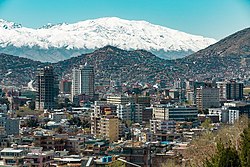
After the death of his half-brother Mirza Muhammad Hakim, Akbar brought Kabul under direct imperial control, securing the empire's northwestern frontier and reuniting the territories of his father Humayun.
Image source: Kabul
1586
% complete
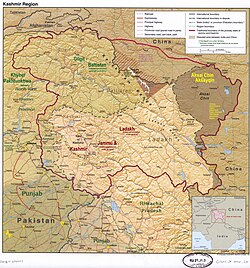
Mughal forces conquered the Kashmir valley, adding its famed beauty and saffron-producing lands to the empire. Kashmir became a favored summer retreat for later Mughal emperors.
Image source: Kashmir
1590 - 1595
% complete
Mughal campaigns completed the absorption of Sind and parts of Baluchistan, consolidating control over the lower Indus valley and strengthening imperial access to the Arabian Sea trade routes.
Image source: Sindh
1591 - 1600
% complete
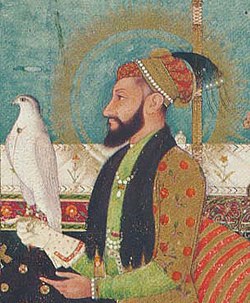
Akbar launched expeditions against the Deccan sultanates of Ahmadnagar, Berar, and Khandesh. Prince Daniyal and minister Abul Fazl led forces; by 1600 Ahmadnagar's fortress had fallen and Khandesh was annexed, opening Mughal expansion southward.
Image source: Aurangzeb
1595
% complete
The Safavid governor of Kandahar surrendered the strategic fortress city to the Mughals, giving Akbar control of a key node on routes between Persia and India, though the city remained contested with the Safavids.
Image source: Kandahar
1562
% complete
Akbar married Jodha Bai, daughter of Raja Bharmal of Amber, beginning his policy of incorporating Rajput chiefs into the Mughal nobility through marriage alliances, which transformed the empire's political foundations.
Image source: Akbar
1564
% complete
Akbar abolished the jizya, the poll tax levied on non-Muslim subjects, as part of his broader policy of religious tolerance and integration of India's diverse communities into imperial administration.
Image source: Jizya
1571
% complete
Akbar formalized the mansabdari system, ranking officials and military commanders with numerical grades that determined their salaries and obligations to supply cavalry, creating a unified bureaucracy drawing talent from all communities.
Image source: Mansabdar
1573 - 1580
% complete
Finance minister Raja Todar Mal implemented the zabti system, standardizing land revenue assessment based on measured land and average yields over ten years, greatly stabilizing imperial finances.
Image source: Todar Mal
Nov 1586
% complete
Raja Todar Mal, architect of Akbar's revenue system, died in 1586. His reforms endured as the fiscal backbone of the Mughal Empire and influenced later systems under the British Raj.
1565 - 1573
% complete
Akbar rebuilt the massive red sandstone Agra Fort, transforming it into a principal imperial residence and military stronghold that housed the Mughal court and treasury for generations.
Image source: Agra Fort
1569 - 1573
% complete
Akbar began building a new capital city near Agra, later called Fatehpur Sikri, honoring the Sufi saint Salim Chishti whose blessings were credited with the birth of Akbar's son Salim. The city served as the imperial seat until 1585.
Image source: Fatehpur Sikri
1574 - 1699
% complete
Under Akbar's patronage, the Maktab Khana translated major works including the Ramayana, Mahabharata (as Razmnama), and the Atharva Veda into Persian, fostering an unprecedented cultural synthesis between Persianate and Indic traditions.
Image source: Akbarnama
1575
% complete
Akbar built the Ibadat Khana, a house of worship where scholars of Islam, Hinduism, Christianity, Judaism, Zoroastrianism, and other faiths debated religious questions, reflecting his growing interest in comparative religion.
Image source: Ibadat Khana
1579
% complete
Akbar issued a decree declaring himself the supreme arbiter in religious disputes among Islamic scholars, placing the emperor above the ulama in matters of interpretation and provoking strong opposition among orthodox Muslims.
Image source: List of national flags of sovereign states
1582
% complete
Akbar promulgated Din-i Ilahi ('Divine Faith'), a syncretic ethical order drawing on elements of multiple religions and centered on loyalty to the emperor. It attracted few disciples but symbolized his vision of spiritual unity, sulh-i-kul.
Image source: Din-i Ilahi
Or browse the full history timeline directory, with more than 2,000 topics.
This Akbar the Great timeline was generated with the help of AI, using information found on the internet.
We work hard to keep these timelines accurate, but mistakes do get through. If you spot one, email us at [email protected] and we'll fix it for future visitors.
Generate yours with AI or build it from scratch, for free.
Export your timeline, add your own events, edit or remove AI-generated events, and much more
No credit card required.
Cancel anytime.
Cancel anytime.
You can create an unlimited number of timelines with up to 10 events on each one, customize how they look, export them to PDF, PNG, PowerPoint, CSV, and Excel, and share them with a link. Paid plans raise the event limit and add features like spreadsheet imports and collaborators.
Yes. You can cancel your subscription from your account page at any time, and you will not be charged again. Your subscription stays active for the rest of the period you already paid for.
Yes. We will email you a reminder before the annual renewal, and we will also email you a receipt.
Yes. You can email us within 15 days of any payment, and we will issue you a full refund.
Check out our pricing docs or send us an email anytime: [email protected].