-
Use Cases
-
Resources
-
Pricing
This timeline traces the life and legacy of Alan Turing (1912–1954), the British mathematician widely considered the father of theoretical computer science and artificial intelligence. It highlights his pivotal role in breaking the Enigma code during World War II, his formulation of the Turing Machine, the famous Turing Test, and his posthumous recognition. More Less
Jun 23, 1912
% complete
Alan Mathison Turing was born in Maida Vale, London, to Julius and Ethel Turing. His father was a civil servant in British India, and Alan spent much of his early childhood in the care of a retired couple in St Leonards-on-Sea while his parents were abroad.
Image source: Alan Turing
1926 - 1931
% complete
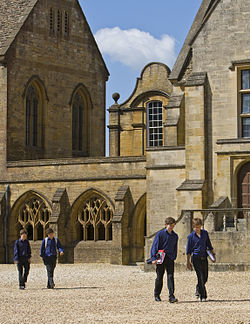
Turing began at Sherborne School in Dorset at age 13. Famously, the 1926 General Strike delayed his first day, and he cycled nearly 60 miles from Southampton to attend. His interest in science and mathematics was often at odds with the school's classical emphasis.
Image source: Sherborne School
Feb 13, 1930
% complete
The sudden death of Christopher Morcom, Turing's closest friend and intellectual companion at Sherborne, profoundly affected him. The loss spurred his lifelong inquiry into the nature of mind and consciousness and motivated his scientific ambitions.
Image source: Christopher Morcom
1931 - 1934
% complete
Turing entered King's College, Cambridge, to study mathematics. He flourished in the intellectually open environment of Cambridge, gained first-class honours in the Mathematical Tripos, and was elected a fellow of King's College at just 22 years old.
Image source: King's College, Cambridge
1935
% complete
At only 22, Turing was elected a Fellow of King's College, Cambridge, on the strength of his dissertation on the Central Limit Theorem, which proved it independently of earlier work by Lindeberg.
Image source: King's College, Cambridge
Sep 1936 - Jun 1938
% complete
Turing pursued a PhD at Princeton under Alonzo Church, working alongside logicians including John von Neumann. He earned his doctorate in 1938 with a thesis on systems of logic based on ordinals, then declined von Neumann's offer of a position as his assistant.
Image source: Princeton University

Nov 12, 1936
% complete
In this landmark paper, Turing introduced the concept of a universal computing machine—now called the Turing machine—to solve the Entscheidungsproblem posed by David Hilbert. The paper established the theoretical foundations of computer science and computability.
Oct 1, 1945 - 1947
% complete
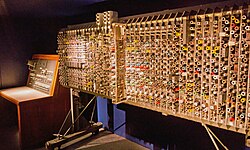
Turing joined the National Physical Laboratory in Teddington to design the Automatic Computing Engine (ACE), one of the earliest designs for a stored-program computer. Frustrations with engineering delays led him to leave before ACE was built.
Image source: Automatic Computing Engine
Mar 19, 1946
% complete
Turing submitted his detailed design report for the ACE, describing a complete stored-program electronic computer including memory architecture and programming instructions—a remarkably prescient blueprint for modern computers.
Oct 1948
% complete
Turing became deputy director of the Computing Machine Laboratory at the University of Manchester, where he worked on software for the Manchester Mark 1, one of the earliest operational stored-program computers, writing programming manuals and subroutines.
Image source: University of Manchester
1950
% complete
In the philosophy journal Mind, Turing posed the question 'Can machines think?' and introduced the imitation game, now known as the Turing Test. This paper founded the field of artificial intelligence and remains among the most cited works in computer science.
Image source: Computing Machinery and Intelligence
1952
% complete
Turning to mathematical biology, Turing proposed reaction–diffusion equations explaining how patterns like stripes, spots, and phyllotaxis emerge in living organisms. His theory of morphogenesis has been validated experimentally decades later.
Image source: The Chemical Basis of Morphogenesis
Jun 1938 - Sep 4, 1939
% complete
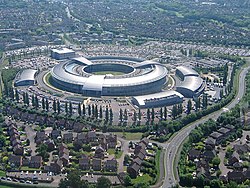
After returning from Princeton, Turing attended Government Code and Cypher School (GC&CS) courses and worked part-time with its codebreakers. On September 4, 1939, the day after Britain declared war, he reported to Bletchley Park full-time.
Image source: GCHQ
1939 - 1940
% complete
Building on Polish breakthroughs, Turing designed an electromechanical device—the Bombe—that could rapidly determine daily Enigma key settings. The first Bombe, named 'Victory', began operating in March 1940, dramatically accelerating Allied decryption of German messages.
Image source: Bombe
Sep 4, 1939
% complete
Turing joined Britain's top-secret codebreaking centre at Bletchley Park, where roughly 10,000 people would eventually work on intercepting and decrypting Axis communications. He became a central figure in the effort against German naval ciphers.
Image source: Bletchley Park
Dec 1939 - Feb 1940
% complete
Turing devised sophisticated techniques, including the Banburismus method, to attack the German Navy's more complex Enigma cipher used for U-boat communications. This work was vital to winning the Battle of the Atlantic and keeping Britain supplied.
Image source: Cryptanalysis of the Enigma
1941 - 1942
% complete
As head of Hut 8, Turing led the section responsible for naval Enigma decryption. The intelligence produced, codenamed Ultra, helped convoys evade U-boat wolfpacks and was decisive in the Battle of the Atlantic.
Image source: Hut 8
Oct 21, 1941
% complete
Frustrated by bureaucratic delays in staffing and funding, Turing and three other Hut 8 leaders wrote directly to Prime Minister Winston Churchill. Churchill responded immediately, ordering that requests be met 'with extreme priority'.
Jul 1942 - 1943
% complete
Turing developed the technique known as 'Turingery' for attacking the Lorenz cipher used in German high-command communications, contributing to the Colossus computer project led by Max Newman and Tommy Flowers at Bletchley Park.
Image source: Lorenz cipher
Nov 1942 - Mar 1943
% complete
Turing travelled to America as Britain's technical liaison, visiting Bell Labs in New York to share cryptographic knowledge and inspect speech-encryption technology. There he encountered ideas about electronic digital systems that informed his later computing designs.
Image source: Bell Labs
1945
% complete
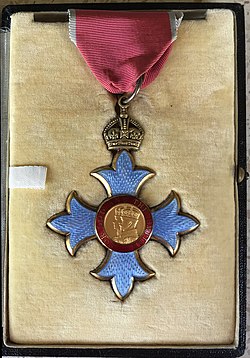
For his crucial contributions to codebreaking, Turing received appointment as an Officer of the Order of the British Empire (OBE) in the New Year Honours, recognized publicly only as service to the Foreign Office due to wartime secrecy.
Image source: Order of the British Empire
Mar 1951
% complete
At age 38, Turing was elected a Fellow of the Royal Society, one of Britain's highest scientific honours, recognizing both his wartime achievements and his foundational contributions to mathematics and computing.
Image source: Royal Society
1952 - 1953
% complete
Rather than face prison, Turing accepted probation conditioned on undergoing oestrogen injections designed to reduce libido. The treatment caused severe physical and psychological effects, and his security clearance was revoked, ending his consultancy for GCHQ.
Mar 31, 1952
% complete
Following a burglary at his home, Turing acknowledged a relationship with a man to police and was prosecuted under Victorian anti-homosexuality laws. He was convicted of gross indecency and given a choice between imprisonment and chemical castration.
Jun 7, 1954
% complete
Turing was found dead at his home in Wilmslow, Cheshire, having died of cyanide poisoning. An inquest ruled his death suicide, noting a half-eaten apple beside his body. He was 41 years old, and his death shocked colleagues who knew little of his persecution.
Image source: Alan Turing
1960 - 1980
% complete
Over the decades after his death, historians and scientists increasingly recognized Turing's pivotal wartime role and scientific genius. Former Bletchley colleague Peter Hilton famously estimated that Turing's work shortened the war in Europe by several years.
Image source: Legacy of Alan Turing
1966
% complete
The ACM established the A.M. Turing Award, often described as the Nobel Prize of computing, awarded annually for major lasting contributions to computer science, ensuring Turing's name remains central to the field he founded.
Image source: Turing Award
1974
% complete
Frederick Winterbotham's book 'The Ultra Secret' disclosed the scale of Bletchley Park's codebreaking triumphs, allowing the public to finally grasp the enormous strategic importance of Turing and his colleagues' secret wartime work.
Image source: Ultra (cryptography)
Jun 1998
% complete
Commemorations of Turing grew through the late 1990s, culminating in memorials such as the bronze statue at Bletchley Park and the Alan Turing Memorial statue in Manchester's Sackville Park depicting him holding an apple, honouring the man once shunned by the state.
Image source: Alan Turing Memorial
Sep 10, 2009
% complete
Following a public petition, Prime Minister Gordon Brown issued an official apology for the 'appalling' way Turing was treated, acknowledging the injustice of his conviction and the debt owed to his wartime contributions.
Image source: Gordon Brown
Dec 24, 2013
% complete
Queen Elizabeth II signed a rare posthumous royal pardon formally forgiving Turing's 1952 conviction, four years after the government apology. The pardon followed campaigns by scientists, politicians, and activists seeking justice for Turing.
Image source: Alan Turing
Jan 31, 2017
% complete
The Policing and Crime Act 2017, dubbed 'Turing's Law', granted posthumous pardons to tens of thousands of men convicted of same-sex offences under historical laws that criminalized homosexuality in England and Wales, extending Turing's pardon to thousands like him.
Image source: Policing and Crime Act 2017
Or browse the full history timeline directory, with more than 2,000 topics.
This Alan Turing timeline was generated with the help of AI, using information found on the internet.
We work hard to keep these timelines accurate, but mistakes do get through. If you spot one, email us at [email protected] and we'll fix it for future visitors.
Generate yours with AI or build it from scratch, for free.
Export your timeline, add your own events, edit or remove AI-generated events, and much more
No credit card required.
Cancel anytime.
Cancel anytime.
You can create an unlimited number of timelines with up to 10 events on each one, customize how they look, export them to PDF, PNG, PowerPoint, CSV, and Excel, and share them with a link. Paid plans raise the event limit and add features like spreadsheet imports and collaborators.
Yes. You can cancel your subscription from your account page at any time, and you will not be charged again. Your subscription stays active for the rest of the period you already paid for.
Yes. We will email you a reminder before the annual renewal, and we will also email you a receipt.
Yes. You can email us within 15 days of any payment, and we will issue you a full refund.
Check out our pricing docs or send us an email anytime: [email protected].