
-
Resources
-
Pricing
The Alien and Sedition Acts were four laws passed by the Federalist-controlled U.S. Congress in 1798 amid tensions with France. They expanded federal power over immigrants and restricted criticism of the government, provoking major debates about constitutional rights. More Less
Build a timeline like this one in minutes, for free. Start Yours →
1792 - 1797
During the War of the First Coalition, France retaliated against the United States by having French privateers seize American ships along the Eastern Seaboard and in the Caribbean.
Image source: War of the First Coalition

1793
Congress unilaterally suspended repayment of French loans from the Revolutionary War, contributing to worsening relations between the United States and France.
Image source: Alien and Sedition Acts
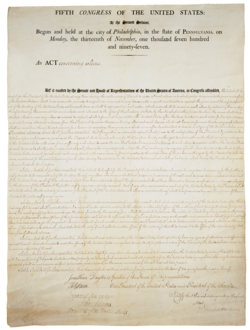
1794
The United States signed the Jay Treaty with Great Britain, a decision that further angered France and intensified diplomatic tensions.
Image source: Jay Treaty
1798 - Mar 1801
The Sedition Act included a sunset provision and expired in March 1801, at the beginning of the next presidential term.
Image source: Alien and Sedition Acts
1798
The most controversial of the four laws passed the House of Representatives by a 44–41 vote after amendments, including a sunset provision.
1798
The Alien and Sedition Acts became four federal statutes that restricted naturalization, empowered the president to detain and deport foreigners, and criminalized certain false or malicious statements against the federal government.
1798 - 1800
The unresolved dispute with France evolved into the Quasi-War, an undeclared conflict fought almost entirely at sea, primarily in the Caribbean and off the East Coast of the United States.
Image source: Quasi-War
Jul 14, 1798
President John Adams signed the Sedition Act into law. It made it illegal to print false, scandalous, and malicious writings against the federal government, Congress, or the president.
1802
The Acts were repealed by the Naturalization Act of 1802.
1798
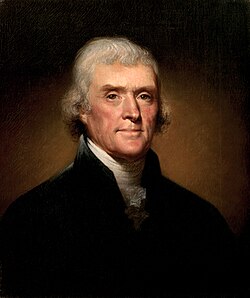
As campaign material for his 1800 presidential bid, Vice President Thomas Jefferson secretly authored the Kentucky Resolution, asserting that states could nullify the Acts as unconstitutional.
Image source: Kentucky and Virginia Resolutions
1798 - 1800
Protests occurred across the country. Critics denounced the Acts as an encroachment by the federal executive on Congress and the judiciary and as a violation of First Amendment free-speech rights.
1798
Luther Baldwin was indicted, convicted, and fined $100 after a drunken incident during a visit by President Adams to Newark, New Jersey.
1798
James Madison seconded the constitutional challenge in the Virginia legislature, helping articulate opposition to the Alien and Sedition Acts.
Image source: Kentucky and Virginia Resolutions
1798
Brown was arrested in Andover, Massachusetts. Unable to afford the $4,000 bail, he was taken to Salem for trial.
1798
Haswell was found guilty of seditious libel by Judge William Paterson and sentenced to a $200 fine and two months in prison.
1798
While awaiting trial, Matthew Lyon began publishing Lyon's Republican Magazine, subtitled The Scourge of Aristocracy, further enraging Federalist opinion.
Image source: Matthew Lyon
1798
Matthew Lyon was charged with libeling President Adams after describing him as a blind, bald, crippled, toothless, and querulous man and accusing him of nepotism and monarchical ambition.
1798 - 1801
At least four publishers, one protestor, one member of Congress, and one drunken bystander were prosecuted under the Sedition Act between 1798 and 1801.
Oct 1798
Lyon was fined $1,000 and sentenced to four months in jail after his conviction under the Sedition Act.
Nov 1798
David Brown led a group in Dedham, Massachusetts, including Benjamin Fairbanks, in erecting a liberty pole bearing slogans opposing the Stamp Act, Sedition Act, Alien Bills, and land tax.
1799
In 1799, Aurora publisher William Duane faced charges for allegedly instigating the St. Mary's Church riot in Philadelphia and for an editorial suggesting British intrigue influenced the Adams administration.
Image source: William Duane (journalist)
Jun 1799
Brown pleaded guilty at trial but refused to identify the people who had assisted him in creating the liberty pole.
Jun 1799
Justice Samuel Chase sentenced Brown to an $480 fine and eighteen months in prison, the most severe sentence imposed under the Sedition Act.
1800
With President Adams identifying William Duane as one of the men most responsible for his defeat, the Democratic-Republican ticket triumphed in the elections of 1800.
1800
Callender was convicted under the Sedition Act and sentenced to a $200 fine and nine months in jail.
Image source: James T. Callender
1800
James Callender was indicted after describing the Adams administration as a continual tempest of malignant passions and Adams as a repulsive pedant, gross hypocrite, and unprincipled oppressor.
1802
Unlike the Sedition Act, the Alien Enemies Act had no sunset clause and continued in force, later being codified as sections 4067 to 4070 of the Revised Statutes, 50 U.S.C. 21–24.
1812 - 1815
President James Madison invoked the act against British nationals during the War of 1812 and ordered them to report to local authorities for additional duties.
1917 - 1918
President Woodrow Wilson invoked the act against nationals of the Central Powers during World War I.
1918
An amendment to the Alien Enemies Act struck the provision restricting its application to males.
Dec 7, 1941
After the attack on Pearl Harbor, President Franklin D. Roosevelt issued Proclamations 2525, 2526, and 2527 concerning Japanese, German, and Italian enemy aliens and authorizing their apprehension, restraint, security, and removal.
Dec 8, 1941
German alien Kurt G. W. Lüdecke was detained under Proclamation 2526 and remained held after the cessation of hostilities.
Image source: Ludecke v. Watkins
1942
Most of the approximately 120,000 people of Japanese descent incarcerated in U.S. internment camps were American citizens detained solely because of Japanese ancestry under Executive Order 9066, rather than under the Alien Enemies Act.
Image source: Internment of Japanese Americans
Jul 14, 1945
After hostilities with Germany and Italy ended in May 1945, President Harry S. Truman issued Presidential Proclamation 2655.
Sep 8, 1945
Truman issued Proclamation 2662, authorizing the secretary of state to remove enemy aliens sent to the United States from Latin American countries.
Apr 10, 1946
Truman's Proclamation 2685 modified earlier proclamations and established a 30-day deadline for removal.
1947
After the attorney general ordered his deportation, Lüdecke petitioned for a writ of habeas corpus seeking his release.
1948
In Ludecke v. Watkins, the Supreme Court interpreted when release could occur under the Alien Enemies Act.
1988
President Ronald Reagan signed the Civil Liberties Act of 1988, acknowledging that Japanese American internment resulted from race prejudice, war hysteria, and a failure of political leadership, and authorizing compensation for survivors.
Image source: Civil Liberties Act of 1988
Sep 20, 2024
Amid increased numbers of Venezuelan asylum seekers, then-presidential nominee Donald Trump announced that, if elected to a second term, he would invoke the Alien Enemies Act to expedite removal of foreigners and criminal networks operating in the United States.
Oct 27, 2024
At a campaign rally at Madison Square Garden, Trump again said he would use the Alien Enemies Act to remove undocumented migrants operating within gangs and criminal networks on the first day of his presidency.
2025
The March 2025 invocation of the Alien Enemies Act remains subject to ongoing litigation.
Jan 20, 2025
Trump repeated his intention to invoke the Alien Enemies Act in his second inaugural address.
Image source: Second inauguration of Donald Trump
Mar 14, 2025
Trump signed Presidential Proclamation 10903, invoking the Alien Enemies Act against what he described as an invasion perpetrated or attempted by the Venezuelan criminal gang Tren de Aragua.
Mar 14, 2025
Attorney General Pam Bondi issued guidance directing immigration enforcement to obtain a document from an executive-branch immigration officer rather than a judicial warrant, and authorizing entry into a residence when circumstances made obtaining a document impracticable.
Mar 15, 2025
The day after the proclamation was signed, the administration conducted deportations of Venezuelans to the Terrorism Confinement Center, or CECOT, in El Salvador.
Image source: March 2025 United States deportations of Venezuelans
Apr 7, 2025
The Supreme Court vacated Judge Boasberg's temporary restraining order, held that the plaintiffs had to bring the lawsuit in Texas rather than Washington, D.C., and required sufficient notice and an opportunity to challenge deportation.
Apr 19, 2025
In an emergency late-night order in A.A.R.P. v. Trump, the Supreme Court halted the deportation process in the Northern District of Texas, signaling concern that the administration might not have complied with the April 7 ruling.
Image source: A.R.P. v. Trump
Build a timeline like this one in minutes, for free. Start Yours →
Or browse the full history timeline directory, with more than 2,500 topics.
This Alien and Sedition Acts timeline was generated with the help of AI, using information found on the internet.
We work hard to keep these timelines accurate, but mistakes do get through. If you spot one, email us at [email protected] and we'll fix it for future visitors.
Generate yours with AI or build it from scratch, for free.
Export your timeline, add your own events, edit or remove AI-generated events, and much more
No credit card required.
15-day money-back guarantee.
You can create an unlimited number of timelines with up to 10 events on each one, customize how they look, export them to PDF, PNG, PowerPoint, CSV, and Excel, and share them with a link. Timelines made with Timeline Maker AI keep every event the generator created, and you can add up to 5 events of your own. Paid plans remove the event limit, add spreadsheet imports and hide Preceden's branding, and the higher-priced plan also adds collaborators, a custom logo and a custom domain.
Yes. You can cancel your subscription from your account page at any time, and you will not be charged again. Your subscription stays active for the rest of the period you already paid for.
Yes. We email you a reminder 15 days before your annual renewal, and we email you a receipt after every payment.
Yes. You can email us within 15 days of any payment, and we will issue you a full refund.
Check out our pricing docs or send us an email anytime: [email protected].