
-
Use Cases
-
Resources
-
Pricing
1520
The Anabaptist movement from which the Amish later emerged began in circles around Huldrych Zwingli, who led the early Reformation in Switzerland.
Image source: Anabaptism
Jan 21, 1525
In Zürich, Conrad Grebel and George Blaurock practiced believer’s baptism with each other and then extended the practice to others, an event associated with the beginning of the Swiss Brethren movement.
1600
An informal division emerged among the Swiss Brethren between Oberländers from the Bernese Oberland and Emmentalers from the Emmental.
1693
The Amish church began with a schism in Switzerland among Swiss and Alsatian Mennonite Anabaptists led by Jakob Ammann.
1700 - 1750
In the early 18th century, many Amish and Mennonites emigrated to Pennsylvania, attracted by religious toleration and favorable land offers.
1710
Opponents of Jakob Ammann first used the term Amish as a Schandename, or term of disgrace, in 1710.
1717 - 1750
Approximately 500 Amish migrated to North America, mainly settling in the region that became Berks County, Pennsylvania. Land issues and security concerns connected to the French and Indian War later encouraged movement.
1740
The Northkill Amish Settlement in Berks County, Pennsylvania, was established in 1740 and became the first identifiable Amish community in the New World.
Sep 19, 1757
During the French and Indian War, local tribes attacked the Jacob Hochstetler homestead in the Northkill settlement.
1800 - 1900
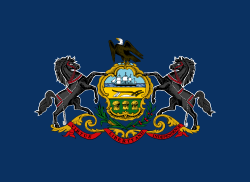
During the 19th century, Pennsylvania Dutch speakers strengthened their distinct identity, calling themselves Deitsche and distinguishing themselves from later German immigrants, whom they called Deitschlenner.
Image source: Pennsylvania Dutch
1809
By 1809, Amish farmers were farming alongside Native American farmers in Pennsylvania.
1815
Amish settlers began arriving in southwestern Ontario from the United States in 1815; additional immigrants came directly from Europe in 1822.
1850 - 1870
A second wave of around 1,500 Amish arrived around the mid-19th century, settling mainly in Ohio, Illinois, Iowa, and southern Ontario.
1850 - 1862
After 1850, tensions increased within individual Amish congregations and between congregations as members debated how to respond to modern society.
1858
The Egli Amish began withdrawing from the Amish church in 1858 and later moved away from traditional Amish practices.
1862 - 1878
Yearly Dienerversammlungen, or ministerial conferences, met in different places between 1862 and 1878 to discuss how the Amish should respond to social and technological pressures.
1865
Scholar Steven Nolt considers 1865 the symbolic point of public separation between change-minded and tradition-minded Amish.
1865
Conservatives attended the ministerial conferences in growing numbers through 1865, when they presented the Holmes County manifesto. After it was set aside, most stopped attending.
1870 - 1900
In the second half of the 19th century, Amish communities divided into Old Order Amish and Amish Mennonites. The latter accepted motor cars, while the Old Order retained more traditional practices.
1870 - 1920
The more progressive members, roughly two-thirds of the group, became known as Amish Mennonites and eventually united with the Mennonite Church and other Mennonite denominations, mostly in the early 20th century.
1908
After drifting away from old Amish ways, the Egli Amish changed their name to Defenseless Mennonite in 1908.
1910
Congregations that took no side in the post-1862 division formed the Conservative Amish Mennonite Conference in 1910.
1914 - 1918
A major Old Order split occurred during World War I, when the Swartzentruber Amish in Ohio and Buchanan Amish in Iowa emerged as especially conservative affiliations.
1917 - 1920
Germany’s aggression toward the United States during World War I contributed to suppression of German in the United States, accelerating language shift and leaving the Amish and other Old Orders among the principal Pennsylvania German speakers.
1937
The Ixheim Amish congregation, the last Amish congregation in Germany to merge, joined the neighboring Mennonite Church in 1937.
1966
The New Order Amish formed in 1966 after certain congregations left the Old Order over questions concerning salvation and the use of modern agricultural methods.
1900 - 1950
Until the early 20th century, Old Order Amish identity was not primarily linked to technology. Telephones were the first major technology rejected, followed by cars, tractors, radios, and other inventions.
1964
Two Amish farmers founded Pathway Publishers in 1964 to print additional material about the Amish and Anabaptists.
1965
A policy first accepted by the Internal Revenue Service in 1961 was codified in 1965, exempting qualifying Amish individuals from Social Security-related taxes when they opposed insurance and benefits on religious grounds.
1972 - 2000
After the 1972 Supreme Court decision, Amish children generally attended Amish schools. By the end of the 20th century, almost all Amish children attended such schools.
May 19, 1972
Jonas Yoder, Wallace Miller, and Adin Yutzy were fined for refusing to send Amish children to high school. In Wisconsin v. Yoder, the U.S. Supreme Court affirmed an exemption from compulsory education beyond eighth grade under the First Amendment’s Free Exercise Clause.
Image source: Wisconsin v. Yoder
1975 - 2000
In the last quarter of the 20th century, increasing pressure on small-scale farming led more Amish men to leave farm work and start small businesses. In Greater Holmes County, full-time farming among married men fell from about 75 percent in 1965 to about 40 percent in 1996.
2018
As of 2018, approximately 12,000 of the 40,000 dairy farms in the United States were Amish-owned.
1923 - 1929
The first attempt by Old Order Amish to settle in Latin America took place at Paradise Valley near Galeana, Nuevo León, Mexico. The settlement lasted from 1923 to 1929.
1968 - 1978
An Amish settlement was attempted in Honduras from about 1968 to 1978, but the experiment ultimately failed.
2015
New Order Amish settlements were founded in 2015 east of Catamarca, Argentina, and at Colonia Naranjita, Bolivia.
2016
Several dozen Old Order Amish families founded two new settlements in Kings County, Prince Edward Island, in 2016.
2017
An Amish settlement was founded near Stuartburn in Manitoba in 2017. The colony ceased to exist in 2024 after its residents sold their properties and moved to Minnesota.
2024
By 2024, the Amish population had surpassed 400,000, with about 415,000 Old Order Amish in the United States and more than 6,000 in Canada.
Jun 2026
In June 2026, the total Amish population in the United States stood at 414,545, an increase of 9,970, or 2.5 percent, over the previous year. Old Order communities were present in 33 states.
Or browse the full history timeline directory, with more than 2,500 topics.
This Amish History timeline was generated with the help of AI, using information found on the internet.
We work hard to keep these timelines accurate, but mistakes do get through. If you spot one, email us at [email protected] and we'll fix it for future visitors.
Generate yours with AI or build it from scratch, for free.
Export your timeline, add your own events, edit or remove AI-generated events, and much more
No credit card required.
Cancel anytime.
Cancel anytime.
You can create an unlimited number of timelines with up to 10 events on each one, customize how they look, export them to PDF, PNG, PowerPoint, CSV, and Excel, and share them with a link. Paid plans raise the event limit and add features like spreadsheet imports and collaborators.
Yes. You can cancel your subscription from your account page at any time, and you will not be charged again. Your subscription stays active for the rest of the period you already paid for.
Yes. We will email you a reminder before the annual renewal, and we will also email you a receipt.
Yes. You can email us within 15 days of any payment, and we will issue you a full refund.
Check out our pricing docs or send us an email anytime: [email protected].