-
Use Cases
-
Resources
-
Pricing
Benito Mussolini (1883–1945) was an Italian politician and journalist who founded the National Fascist Party and ruled Italy as Prime Minister from 1922 to 1943, establishing Europe's first fascist dictatorship. His alliance with Nazi Germany and entry into World War II led to Italy's defeat, his overthrow, and ultimately his execution by partisans in April 1945. More Less
Jul 29, 1883
% complete
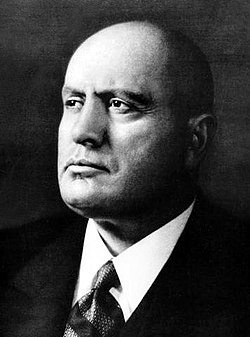
Benito Amilcare Andrea Mussolini was born in Predappio, Italy, to a blacksmith father and a schoolteacher mother. His politically charged upbringing, influenced by his socialist father, would shape his early ideological development and eventual path into politics.
Image source: Benito Mussolini
1902 - 1908
% complete
Mussolini spent several years working as a schoolteacher while also engaging in socialist activism. He emigrated briefly to Switzerland to avoid military service, where he became involved with socialist circles and developed skills as an agitator and journalist before returning to Italy.
Dec 1, 1912
% complete
Mussolini was appointed editor of Avanti!, the official newspaper of the Italian Socialist Party. His fiery editorials dramatically increased circulation and established him as one of the most prominent figures in Italian socialism.
Image source: Avanti!
Nov 1914
% complete
After advocating for Italy's entry into World War I, contrary to the Socialist Party's neutral stance, Mussolini was expelled from the party. He soon founded his own newspaper, Il Popolo d'Italia, funded partly by industrialist interests favoring intervention.
Image source: Italian Socialist Party
May 23, 1915
% complete
Following Italy's entry into World War I, Mussolini was drafted and served on the front lines until being seriously wounded by a mortar explosion in February 1917. His war experience deepened his nationalism and disillusionment with socialism.
Image source: Italian front (World War I)
Mar 23, 1919
% complete
In Milan's Piazza San Sepolcro, Mussolini founded the Fasci Italiani di Combattimento, the movement that would evolve into the National Fascist Party. The movement combined nationalist, anti-socialist, and veteran-focused rhetoric amid postwar social turmoil.
Image source: Fasci Italiani di Combattimento
Oct 27, 1922 - Oct 29, 1922
% complete
Tens of thousands of Blackshirts marched on Rome, pressuring King Victor Emmanuel III, who refused to sign martial law and instead invited Mussolini to form a government. The bloodless coup marked the beginning of fascist rule in Italy.
Image source: March on Rome
Oct 31, 1922
% complete
At just 39 years old, Mussolini was sworn in as Italy's youngest-ever Prime Minister. Initially leading a coalition government, he moved quickly to consolidate power and normalize the fascists' position within the Italian state.
Aug 31, 1923 - Sep 27, 1923
% complete
After an Italian general was assassinated on Greek soil, Mussolini bombarded and occupied the Greek island of Corfu, demanding reparations. Greece ultimately capitulated under international pressure, marking an early display of Mussolini's aggressive foreign policy.
Image source: Corfu incident
Jun 10, 1924
% complete
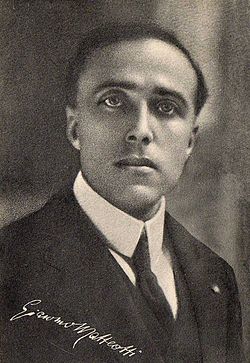
The murder of socialist deputy Giacomo Matteotti, who had denounced fascist electoral fraud, triggered national outrage and threatened Mussolini's regime. Opposition deputies withdrew from parliament in protest, but Mussolini survived the crisis through intimidation and political maneuvering.
Image source: Giacomo Matteotti
Jan 3, 1925
% complete
Taking responsibility for the Matteotti affair's aftermath, Mussolini boldly declared his intention to establish a dictatorship in a speech to parliament. Over the following years, he dismantled democratic institutions, banned opposition parties, and created a one-party totalitarian state.
Image source: Italian fascism
Apr 7, 1926
% complete
Irish aristocrat Violet Gibson shot Mussolini in the nose during a public appearance in Rome. He survived the attack, one of several assassination attempts against him, which the regime used to portray him as a resilient leader protected by destiny.
Image source: Violet Gibson
Feb 11, 1929
% complete
Mussolini's government signed the Lateran Treaty with Pope Pius XI, resolving the long-standing 'Roman Question.' The agreement created Vatican City, recognized Catholicism as Italy's state religion, and significantly bolstered the regime's legitimacy among Italians.
Image source: Lateran Treaty
Oct 3, 1935 - May 1936
% complete
Seeking to build an empire, Mussolini ordered the invasion of Ethiopia despite international condemnation. Using overwhelming force including chemical weapons, Italian forces conquered the country, prompting the League of Nations to impose sanctions on Italy.
Image source: Second Italo-Ethiopian War
May 9, 1936
% complete
Following the conquest of Ethiopia, Mussolini triumphantly proclaimed the rebirth of the Roman Empire from his balcony in Palazzo Venezia. King Victor Emmanuel III was declared Emperor of Ethiopia, marking the peak of the regime's popularity in Italy.
Image source: Italian Empire
Jul 1936 - 1939
% complete
Mussolini sent tens of thousands of troops, aircraft, and equipment to support Francisco Franco's Nationalists during the Spanish Civil War. The intervention strengthened ties with Nazi Germany and provided valuable military experience at great cost to Italy.
Image source: International response to the Spanish Civil War
Oct 25, 1936
% complete
Italy and Germany signed a protocol of cooperation, with Mussolini declaring that all other European countries would rotate around the Berlin-Rome axis. This alliance deepened over subsequent years, binding Italy's fate increasingly to Hitler's Germany.
Image source: Axis powers
Apr 7, 1939
% complete
Italian forces invaded and rapidly occupied Albania, installing Victor Emmanuel III as its king. The operation was intended to match Hitler's recent seizure of Czechoslovakia and secure a foothold in the Balkans.
Image source: Italian invasion of Albania
May 22, 1939
% complete
Mussolini and German foreign minister Joachim von Ribbentrop signed a formal military alliance committing both nations to mutual support in the event of war. The pact locked Italy into Germany's aggressive foreign policy trajectory.
Image source: Pact of Steel
Jun 10, 1940 - Jun 25, 1940
% complete
Declaring war on France and Britain just days before France's collapse, Mussolini sought to share in the spoils of Germany's victory. The poorly prepared Italian offensive made minimal gains, exposing the weaknesses of the Italian military.
Image source: Italian invasion of France
Oct 28, 1940 - Apr 1941
% complete
Launched without informing Hitler, the invasion of Greece from Albania quickly stalled against fierce Greek resistance. The humiliating failure required German intervention and disrupted German plans in the Balkans, damaging Mussolini's prestige.
Image source: Greco-Italian War
Dec 1940 - Feb 12, 1941
% complete
British forces launched Operation Compass, devastating the Italian Tenth Army in Egypt and Libya and capturing over 130,000 prisoners. Germany dispatched Erwin Rommel and the Afrika Korps to rescue the collapsing Italian position in North Africa.
Image source: Operation Compass
Dec 11, 1941
% complete
Following Japan's attack on Pearl Harbor and Hitler's declaration of war on the United States, Mussolini followed suit, committing Italy to a global conflict against the Allies. This decision further entangled Italy in a war it was ill-equipped to fight.
Image source: United States declaration of war on Italy
Oct 23, 1942 - May 13, 1943
% complete
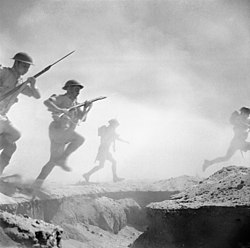
The Allied victory at El Alamein and the subsequent surrender of Axis forces in Tunisia destroyed Italy's African ambitions. Combined with the catastrophic losses of the Italian army on the Eastern Front at Stalingrad, these defeats eroded support for the regime.
Image source: Second Battle of El Alamein
Jul 9, 1943 - Aug 17, 1943
% complete
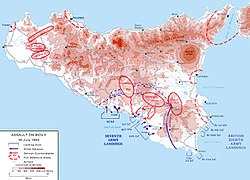
Operation Husky saw Allied forces successfully land in Sicily and overrun the island in five weeks. The invasion exposed Italy's vulnerability, shattered morale, and set the stage for the fall of Mussolini's government.
Image source: Allied invasion of Sicily
Jul 24, 1943 - Jul 25, 1943
% complete
Dino Grandi's motion of no confidence passed against Mussolini in the Grand Council of Fascism. The next day, King Victor Emmanuel III dismissed him from office and had him arrested as he left the royal residence, ending his two-decade dictatorship.
Image source: Grand Council of Fascism
Sep 12, 1943
% complete
German paratroopers led by Otto Skorzeny conducted a daring glider-borne raid on the Campo Imperatore hotel atop Gran Sasso, where Mussolini was held captive. They rescued him and flew him to Germany, allowing Hitler to install him as puppet ruler in northern Italy.
Image source: Gran Sasso raid
Sep 23, 1943 - Apr 25, 1945
% complete
Mussolini was installed as leader of the Italian Social Republic (Salò Republic), a German puppet state in northern Italy. Lacking real power and dependent on German support, he presided over a regime marked by repression, collaboration, and civil war against partisans.
Image source: Italian Social Republic
Apr 28, 1945
% complete
Attempting to flee to Switzerland disguised as a German soldier, Mussolini was captured by Italian partisans near Lake Como along with his mistress Claretta Petacci. Both were executed by firing squad in the village of Giulino di Mezzegra.
Apr 29, 1945
% complete
The bodies of Mussolini, Petacci, and other executed fascists were hung upside down at a petrol station in Milan's Piazzale Loreto, the same site where partisans had been executed by fascists. Crowds gathered to vent their fury, symbolically closing the chapter on Italian fascism.
Image source: Piazzale Loreto
Or browse the full history timeline directory, with more than 2,000 topics.
This Benito Mussolini timeline was generated with the help of AI, using information found on the internet.
We work hard to keep these timelines accurate, but mistakes do get through. If you spot one, email us at [email protected] and we'll fix it for future visitors.
Generate yours with AI or build it from scratch, for free.
Export your timeline, add your own events, edit or remove AI-generated events, and much more
No credit card required.
Cancel anytime.
Cancel anytime.
You can create an unlimited number of timelines with up to 10 events on each one, customize how they look, export them to PDF, PNG, PowerPoint, CSV, and Excel, and share them with a link. Paid plans raise the event limit and add features like spreadsheet imports and collaborators.
Yes. You can cancel your subscription from your account page at any time, and you will not be charged again. Your subscription stays active for the rest of the period you already paid for.
Yes. We will email you a reminder before the annual renewal, and we will also email you a receipt.
Yes. You can email us within 15 days of any payment, and we will issue you a full refund.
Check out our pricing docs or send us an email anytime: [email protected].