-
Use Cases
-
Resources
-
Pricing
Blaise Pascal (1623–1662) was a French mathematician, physicist, inventor, philosopher, and Catholic writer. A child prodigy, he made groundbreaking contributions to geometry, probability theory, and fluid mechanics, invented an early mechanical calculator, and later produced influential religious and philosophical writings such as the Pensées. More Less
Jun 19, 1623
% complete
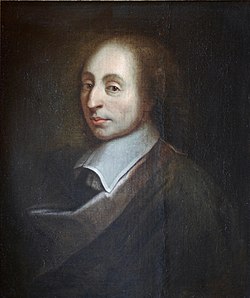
Blaise Pascal was born on 19 June 1623. He would grow up to become a French mathematician, physicist, inventor, philosopher, and Catholic writer, making lasting contributions across many fields.
Image source: Blaise Pascal
1631
% complete
In 1631, five years after the death of his wife, Étienne Pascal moved with his children to Paris. That same year, Étienne sold his position as second president of the Cour des Aides for 65,665 livres.
1631
% complete
In 1631, Étienne sold his position as second president of the Cour des Aides for 65,665 livres. The money was invested in a government bond providing a comfortable income that allowed the family to enjoy Paris.
1638
% complete
In 1638, Cardinal Richelieu, desperate for money to carry on the Thirty Years' War, defaulted on the government's bonds in which the Pascal family had invested their funds.
1639
% complete
After returning to good graces with Cardinal Richelieu, Étienne Pascal was appointed in 1639 as the king's commissioner of taxes in Rouen, a city whose tax records were in utter chaos due to uprisings.
1646
% complete
In the winter of 1646, Pascal's 58-year-old father broke his hip when he slipped and fell on an icy street of Rouen. Given his age and the state of 17th-century medicine, this could have been a fatal condition.
1651
% complete
Pascal's father died in 1651 and left his inheritance to Pascal and his sister Jacqueline, for whom Pascal acted as conservator.
Oct 1651
% complete
By the end of October in 1651, a truce had been reached between brother and sister over the matter of Jacqueline's inheritance and her desire to enter Port-Royal.
1659
% complete
In 1659, Pascal fell seriously ill, marking the beginning of the health decline that would trouble him until his death.
1662
% complete
In 1662, Pascal's illness became more violent, and his emotional condition had severely worsened since his sister's death.
Aug 18, 1662
% complete
In Paris on 18 August 1662, Pascal went into convulsions and received extreme unction, one day before his death on 19 August 1662.
1632
% complete
Pascal presented the first mechanical calculator to Christina, Queen of Sweden in 1632, demonstrating his pioneering work on calculating machines.
Image source: Pascal's calculator
1642
% complete
To ease his father's exhausting tax calculations, Pascal, not yet 19, constructed a mechanical calculator capable of addition and subtraction, called Pascal's calculator or the Pascaline. This established him as one of the first two inventors of the mechanical calculator.
1654
% complete
In 1654, Pascal proved Pascal's identity relating the sums of the p-th powers of the first n positive integers for p = 0, 1, 2, ..., k, an important result in mathematics.
1654 - 1665
% complete
Written in 1654 but published posthumously in 1665, Pascal's Traité du triangle arithmétique described a tabular presentation for binomial coefficients which he called the arithmetical triangle, now known as Pascal's triangle.
Image source: Pascal's triangle
1654
% complete
In 1654, prompted by his friend the Chevalier de Méré, Pascal corresponded with Pierre de Fermat on gambling problems, and from that collaboration was born the mathematical theory of probability.
Image source: Probability
1658
% complete
In 1658, while suffering from a toothache, Pascal began considering several problems concerning the cycloid, leading to significant mathematical results.
Image source: Cycloid
1658 - 1659
% complete
Between 1658 and 1659, Pascal wrote on the cycloid and its use in calculating the volume of solids, contributing important results to geometry.
1646
% complete
In 1646, Pascal and his sister Jacqueline identified with the religious movement within Catholicism known by its detractors as Jansenism, beginning his deep engagement with religion.
Image source: Jansenism
1648 - 1654
% complete
Pascal fell away from his initial religious engagement and experienced a few years of what some biographers have called his worldly period (1648–54).
Jun 1653
% complete
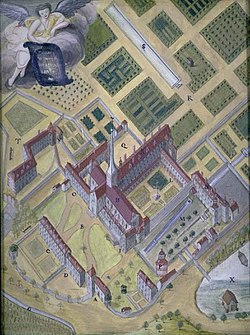
In early June 1653, after endless badgering from Jacqueline, Pascal formally signed over the whole of his sister's inheritance to Port-Royal, which to him 'had begun to smell like a cult'.
Image source: Port-Royal-des-Champs
1654
% complete
During visits to his sister at Port-Royal in 1654, Pascal displayed contempt for affairs of the world but was not yet drawn to God.
Nov 23, 1654
% complete
On 23 November 1654, between 10:30 and 12:30 at night, Pascal had an intense religious experience and immediately wrote a brief note to himself which began: 'Fire.' This marked the start of his influential works on philosophy and theology.
Jan 1655
% complete
His belief and religious commitment revitalized, Pascal visited the older of two convents at Port-Royal for a two-week retreat in January 1655.
1656 - 1657
% complete
Beginning in 1656–57, Pascal published his memorable attack on casuistry, an ethical method used especially by Jesuits. The 18-letter series was published under the pseudonym Louis de Montalte and incensed Louis XIV.
Image source: Lettres provinciales
1657
% complete
The final letter from Pascal, in 1657, had defied Pope Alexander VII himself, escalating the controversy surrounding his writings against casuistry.
1660
% complete
Outraged by the Lettres provinciales, King Louis XIV ordered that the book be shredded and burnt in 1660.
1661
% complete
In 1661, amid the formulary controversy, the Jansenist school at Port-Royal was condemned and closed down; those involved had to sign a 1656 papal bull condemning the teachings of Jansen as heretical. Louis XIV also suppressed the Jansenist movement at Port-Royal that year.
1647
% complete
In 1647, following more experimentation, Pascal produced Experiences nouvelles touchant le vide, which detailed basic rules describing to what degree various liquids could be supported by air pressure.
1647
% complete
Following Torricelli and Galileo Galilei, in 1647 Pascal rebutted Aristotle and Descartes, who insisted that nature abhors a vacuum, advancing the scientific understanding of air pressure.
1647
% complete
By 1647, Pascal had learned of Evangelista Torricelli's experimentation with barometers, which inspired his own investigations into atmospheric pressure and the vacuum.
Image source: Evangelista Torricelli
1648
% complete
This work was followed by Récit de la grande expérience de l'équilibre des liqueurs, published in 1648, further developing Pascal's findings on atmospheric pressure and liquids.
Sep 19, 1648
% complete
On 19 September 1648, after many months of Pascal's friendly but insistent prodding, Florin Périer, husband of Pascal's elder sister Gilberte, carried out the fact-finding mission vital to Pascal's theory on the vacuum.
1662 - 1675
% complete
Shortly before his death, Pascal established the carrosses à cinq sols, the first modern public transport service, earning him credit as the inventor of modern public transportation. The lines were not commercially successful, and the last one closed by 1675.
Image source: Carrosses à cinq sols
1669
% complete
The first version of the numerous scraps of paper found after Pascal's death appeared in print as a book in 1669 titled Pensées de M., one of the most influential works of philosophy and theology.
Image source: Pensées
1969
% complete
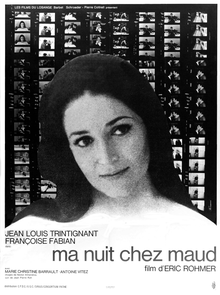
The 1969 Eric Rohmer film My Night at Maud's is based on the work of Pascal, reflecting his enduring influence on philosophy and culture.
Image source: My Night at Maud's
1971
% complete
Roberto Rossellini directed a filmed biopic, Blaise Pascal, which originally aired on Italian television in 1971.
1984
% complete
Pascal was a subject of the first edition of the 1984 BBC Two documentary Sea of Faith, presented by Don Cupitt.
1997
% complete
Pascal influenced both French sociologist Pierre Bourdieu, who named his Pascalian Meditations (1997) after him, and French philosopher Louis Althusser.
Image source: Pierre Bourdieu
2014
% complete
In 2014, Nvidia announced its new Pascal microarchitecture, named in honor of Blaise Pascal.
2016
% complete
The first graphics cards featuring Nvidia's Pascal architecture were released in 2016, bringing Pascal's name into modern computing.
2017
% complete
The 2017 game Nier: Automata has multiple characters named after famous philosophers, including a sentient pacifistic machine named Pascal who serves as a major supporting character.
Image source: Nier: Automata
2023
% complete
In 2023, Pope Francis released an apostolic letter, Sublimitas et miseria hominis, dedicated to Blaise Pascal, in commemoration of the fourth centenary of his birth.
Or browse the full history timeline directory, with more than 2,000 topics.
This Blaise Pascal timeline was generated with the help of AI, using information found on the internet.
We work hard to keep these timelines accurate, but mistakes do get through. If you spot one, email us at [email protected] and we'll fix it for future visitors.
Generate yours with AI or build it from scratch, for free.
Export your timeline, add your own events, edit or remove AI-generated events, and much more
No credit card required.
Cancel anytime.
Cancel anytime.
You can create an unlimited number of timelines with up to 10 events on each one, customize how they look, export them to PDF, PNG, PowerPoint, CSV, and Excel, and share them with a link. Paid plans raise the event limit and add features like spreadsheet imports and collaborators.
Yes. You can cancel your subscription from your account page at any time, and you will not be charged again. Your subscription stays active for the rest of the period you already paid for.
Yes. We will email you a reminder before the annual renewal, and we will also email you a receipt.
Yes. You can email us within 15 days of any payment, and we will issue you a full refund.
Check out our pricing docs or send us an email anytime: [email protected].