-
Use Cases
-
Resources
-
Pricing
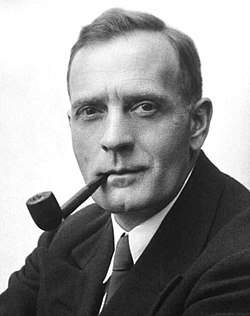
Edwin Hubble (1889–1953) was an American astronomer whose groundbreaking observations transformed our understanding of the cosmos. Working at Mount Wilson Observatory, he proved that galaxies exist beyond the Milky Way and, along with Milton Humason, established that the universe is expanding. The Hubble Space Telescope is named in his honor. More Less
Nov 20, 1889
% complete
Edwin Powell Hubble was born to Virginia Lee Hubble (née James) and John Powell Hubble, an insurance executive, in Marshfield, Missouri. He would grow up to become one of the most important astronomers in history.
Image source: Edwin Hubble
1900
% complete
Hubble moved with his family from Marshfield, Missouri, to Wheaton, Illinois, where he spent his youth and attended high school.
1906
% complete
Hubble won seven first places and a third place in a single high school track and field meet in 1906. He was also a talented basketball player, playing a variety of positions from center to shooting guard.
1907
% complete
Hubble led the University of Chicago's basketball team to their first Big Ten Conference title in 1907, demonstrating athletic prowess alongside his academic gifts.
1909
% complete
In 1909, Hubble's father moved his family from Chicago to Shelbyville, Kentucky, so that the family could live in a small town, ultimately settling in nearby Louisville.
1910
% complete
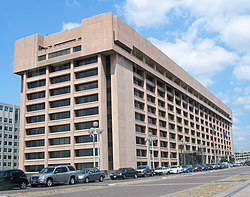
Hubble's studies at the University of Chicago were concentrated on mathematics, astronomy and philosophy, which resulted in a Bachelor of Science degree by 1910.
Image source: University of Chicago
1913
% complete
After the death of his father in 1913, Edwin returned to the Midwest from Oxford but did not have the motivation to practice law, turning instead toward astronomy.
1913
% complete
Hubble's father died in the winter of 1913, while Edwin was still in England studying at Oxford.
1917
% complete
After the United States declared war on Germany in 1917, Hubble rushed to complete his Ph.D. so he could join the military effort.
Image source: American entry into World War I
Feb 26, 1924
% complete
Hubble married Grace Lillian (Burke) Leib (1889–1980), daughter of John Patrick and Luella (Kepford) Burke, on February 26, 1924.
1929
% complete
In recognition of his contributions to science, Hubble was elected a member of the American Philosophical Society in 1929.
Image source: American Philosophical Society
1946
% complete
Hubble received the Legion of Merit in 1946 for his outstanding contribution to ballistics research during World War II.
Image source: Legion of Merit
Jul 1949
% complete
Hubble suffered a heart attack in July 1949 while on vacation in Colorado, marking a decline in his health during his final years.
1953
% complete
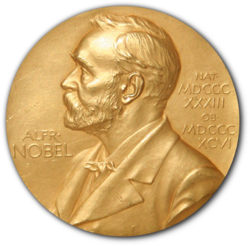
It is often claimed that had Hubble not died suddenly in 1953, he would have won that year's Nobel Prize in Physics. However, the assertion is likely false, although he was indeed nominated for the prize that year.
Image source: Nobel Prize in Physics
Sep 28, 1953
% complete
Edwin Hubble died of cerebral thrombosis (a blood clot in his brain) on September 28, 1953, in San Marino, California, at the age of 63.
1980
% complete
Grace Burke Hubble died in 1980, and her husband's papers were donated by her upon her death, preserving his scientific legacy for future researchers.
1914 - 1917
% complete
At Yerkes, Hubble had access to its 40-inch refractor telescope built by George Ellery Hale in 1897, as well as an innovative 26-inch (61 cm) reflector telescope, which he used for his doctoral research.
Image source: Yerkes Observatory
1919 - 1953
% complete
In 1919, Hubble was offered a staff position at the Carnegie Institution for Science's Mount Wilson Observatory, near Pasadena, California, by George Ellery Hale, the founder and director of the observatory. He remained on staff until his death in 1953.
Image source: Mount Wilson Observatory
1931
% complete
Albert Einstein visited Mount Wilson Observatory in 1931 and met Hubble. In 1917 Einstein had found that his newly developed theory of general relativity indicated that the universe must be either expanding or contracting, and Hubble's observations provided crucial evidence for expansion.
Image source: Albert Einstein
1936
% complete
In 1936 Hubble wrote The Observational Approach to Cosmology and The Realm of the Nebulae, which explain his approaches to extra-galactic astronomy and his view of the subject's history.
Image source: Spiral galaxy
Dec 1941
% complete
In December 1941, Hubble reported to the American Association for the Advancement of Science that results from a six-year survey with the Mount Wilson telescope did not support the expanding universe theory.
1924
% complete
Hubble's observations made in 1924 proved conclusively that spiral nebulae were much too distant to be part of the Milky Way and were, in fact, entire galaxies outside the Milky Way galaxy. This idea had first been hypothesized as early as 1755 when Immanuel Kant's General History of Nature and Theory of the Heavens appeared.
Nov 23, 1924
% complete
Despite opposition, Hubble had his findings on external galaxies published in The New York Times on November 23, 1924, bringing his revolutionary discovery to public attention.
Jan 1, 1925
% complete
Hubble presented his findings that nebulae were external galaxies to other astronomers at the January 1, 1925, meeting of the American Astronomical Society.
Image source: American Astronomical Society
1929
% complete
Hubble confirmed in 1929 that the recessional velocity of a galaxy increases with its distance from Earth, a behavior that became known as Hubble's law, although it had been proposed two years earlier by Georges Lemaître. Using the strong relationship between a classical Cepheid variable's luminosity and pulsation period (discovered in 1908 by Henrietta Swan Leavitt), he scaled galactic and extragalactic distances.
Image source: Hubble's law
1929
% complete
Hubble's results for the Andromeda galaxy were formally published in a peer-reviewed scientific journal in 1929, cementing the discovery of galaxies beyond the Milky Way.
Image source: Andromeda Galaxy
Aug 30, 1935
% complete
In addition to his astronomical achievements, Hubble discovered the asteroid 1373 Cincinnati on August 30, 1935.
Aug 4, 1937
% complete
Aside from his contributions in stellar and extragalactic astronomy, Hubble also discovered a comet of his own, C/1937 P1 (Hubble), on August 4, 1937.
Image source: C/1937 P1 (Hubble)
Oct 28, 1937
% complete
The comet C/1937 P1 (Hubble) remained observable for 58 days after its discovery, until October 28, 1937.
Mar 6, 2008
% complete
On March 6, 2008, the United States Postal Service released a 41-cent stamp honoring Hubble on a sheet titled 'American Scientists' designed by artist Victor Stabin, recognizing him as a 'pioneer of the distant stars' who played a pivotal role in deciphering the vast and complex nature of the universe.
Image source: United States Postal Service
2011
% complete
In 2011, the journal Nature reported claims that Hubble might have played a role in the redaction of key parts of the 1931 English translation of Lemaître's 1927 paper, which formulated what was later called Hubble's law and also gave observational evidence.
Image source: Georges Lemaître
Nov 2011
% complete
In November 2011, astronomer Mario Livio reported in Nature that a letter he found in the Lemaître archive demonstrated that the redaction had been made by Lemaître himself, who apparently saw no point in publishing scientific content already reported in 1929 by Hubble, clearing Hubble of responsibility.
Image source: Mario Livio
2017
% complete
In 2017, Edwin Hubble was recognized posthumously by the Indiana Basketball Hall of Fame, honoring his athletic achievements including leading the University of Chicago to their first Big Ten Conference title in 1907.
Image source: Indiana Basketball Hall of Fame
Or browse the full history timeline directory, with more than 2,000 topics.
This Edwin Hubble timeline was generated with the help of AI, using information found on the internet.
We work hard to keep these timelines accurate, but mistakes do get through. If you spot one, email us at [email protected] and we'll fix it for future visitors.
Generate yours with AI or build it from scratch, for free.
Export your timeline, add your own events, edit or remove AI-generated events, and much more
No credit card required.
Cancel anytime.
Cancel anytime.
You can create an unlimited number of timelines with up to 10 events on each one, customize how they look, export them to PDF, PNG, PowerPoint, CSV, and Excel, and share them with a link. Paid plans raise the event limit and add features like spreadsheet imports and collaborators.
Yes. You can cancel your subscription from your account page at any time, and you will not be charged again. Your subscription stays active for the rest of the period you already paid for.
Yes. We will email you a reminder before the annual renewal, and we will also email you a receipt.
Yes. You can email us within 15 days of any payment, and we will issue you a full refund.
Check out our pricing docs or send us an email anytime: [email protected].