
-
Use Cases
-
Resources
-
Pricing
Radio astronomy is the study of celestial objects through the radio waves they emit. The field began in the early 1930s when Karl Jansky detected radio signals from the Milky Way, and it grew rapidly after World War II with advances in radar technology. Radio astronomy has revealed phenomena invisible to optical telescopes, including pulsars, quasars, and the cosmic microwave background radiation, fundamentally transforming our understanding of the universe. More Less
1896
In 1896, German astrophysicists Johannes Wilsing and Julius Scheiner conducted an early attempt to detect radio emissions from the Sun. Their experiment failed to confirm any solar radio signal, decades before the technology matured enough to detect such emissions.
Image source: Radio astronomy

1897 - 1900
Between 1897 and 1900, Oliver Lodge set up a centimeter wave radiation apparatus in another attempt to detect solar radio emissions. Like earlier efforts, the equipment of the era was insufficiently sensitive to pick up the Sun's radio signals.
Image source: Oliver Lodge
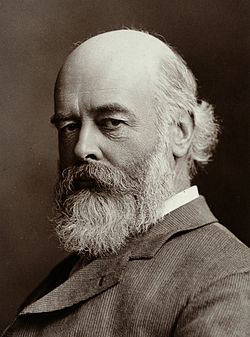
1902
In 1902, upon the discovery of the radio-reflecting ionosphere, physicists concluded that this atmospheric layer would bounce any solar or other astronomical radio transmissions back into space, making them undetectable from the ground. This belief discouraged further attempts at astronomical radio observation for decades.
Image source: Ionosphere

1932
Karl Jansky worked at Bell Telephone Laboratories, where he was assigned to investigate sources of static that might interfere with shortwave transatlantic telephone communications. His investigations with a rotating directional antenna led him toward an unexpected cosmic discovery.
Image source: Karl Guthe Jansky

1933
In 1933, Karl Jansky at Bell Telephone Laboratories reported radiation coming from the Milky Way. This serendipitous detection of extraterrestrial radio waves marked the first observation of cosmic radio emission and laid the groundwork for a new science.
Apr 1933
In April 1933, Jansky announced his discovery at a meeting in Washington, D.C., and the field of radio astronomy was born. The announcement attracted public attention, including front-page coverage in The New York Times.
Oct 1933
In October 1933, Jansky's discovery was published in a journal article entitled 'Electrical disturbances apparently of extraterrestrial origin' in the Proceedings of the Institute of Radio Engineers. The paper formally documented the cosmic radio noise he had detected.
1935
After 1935, Jansky wanted to investigate the radio waves from the Milky Way in further detail, but Bell Labs reassigned him to another project, so he did no further work in the field of astronomy. Despite this, his pioneering work had already opened the door for others.
1937
In 1937, radio amateur Grote Reber, inspired by Jansky's work, built a parabolic radio telescope 9 meters (30 ft) in diameter in his backyard in Wheaton, Illinois. It was the first purpose-built parabolic dish antenna used for radio astronomy.
Image source: Grote Reber

1938
Using his homemade dish telescope, Grote Reber systematically surveyed the sky and produced the first maps of radio emission from the Milky Way, confirming and extending Jansky's discovery and demonstrating the scientific value of radio observations of the cosmos.
This History of Radio Astronomy timeline was generated with the help of AI, using information found on the internet.
We work hard to keep these timelines accurate, but mistakes do get through. If you spot one, email us at [email protected] and we'll fix it for future visitors.
Generate yours with AI or build it from scratch, for free.


