-
Use Cases
-
Resources
-
Pricing
Carl Sagan (1934–1996) was an American astronomer, planetary scientist, and celebrated science communicator. He pioneered research on extraterrestrial life, helped design NASA missions including the Viking landers and Voyager probes, created the Emmy and Peabody Award-winning television series 'Cosmos,' and inspired millions with books like 'The Dragons of Eden' and 'Pale Blue Dot.' More Less
Nov 9, 1934
% complete
Carl Edward Sagan was born to Rachel and Samuel Sagan in Brooklyn, New York. His early curiosity about the stars, fostered by trips to the 1939 World's Fair and library books on astronomy, set him on a path toward becoming one of the world's most famous scientists.
Jun, 1951
% complete
Sagan graduated from Rahway High School in New Jersey, where he was known for his exceptional intellect and already harbored ambitions of becoming an astronomer.
1955
% complete
Sagan received his Bachelor of Arts degree with general and special honors from the University of Chicago, having studied under prominent scientists including geneticist Hermann Joseph Muller and chemist Harold Urey.
Image source: University of Chicago
1960
% complete
Sagan completed his doctorate at the University of Chicago with a thesis on the physical conditions of the early solar system planets, working with Gerard Kuiper, one of the founders of modern planetary science.
Image source: Carl Sagan
1960
% complete
Sagan's research concluded that Venus's extremely high surface temperatures were caused by a runaway greenhouse effect, a landmark finding that later informed understanding of climate change on Earth.
Image source: Greenhouse effect
1962
% complete
Sagan became an assistant professor at Harvard, where he conducted research on planetary atmospheres and the possibility of extraterrestrial life, though he was ultimately denied tenure there in 1968.
Image source: Harvard University
1962 - 1975
% complete
Sagan served as a consultant and adviser to NASA, briefing Apollo astronauts before their Moon flights and contributing to the Mariner, Viking, Voyager, and Galileo robotic missions exploring the solar system.
Image source: Mariner program
1966
% complete
Co-authored with Soviet astronomer Iosif Shklovsky, this influential book explored the scientific basis for the search for extraterrestrial intelligence and helped establish SETI as a legitimate field of inquiry.
Image source: Ancient astronauts
1968
% complete
After being denied tenure at Harvard, Sagan moved to Cornell University in Ithaca, New York, where he would spend the rest of his career, eventually becoming the David Duncan Professor of Astronomy and Space Sciences.
Image source: Cornell University
1972
% complete
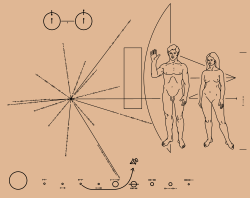
Working alongside Frank Drake and his wife Linda Salzman Sagan, Carl helped create the engraved pictorial message aboard the Pioneer 10 spacecraft intended to communicate information about Earth and humanity to any extraterrestrial civilization that might encounter it.
Image source: Pioneer plaque
1977
% complete
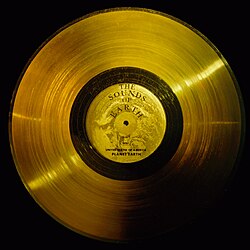
Sagan led the committee that assembled the contents of the Golden Records carried aboard both Voyager spacecraft, featuring sounds and images portraying the diversity of life and culture on Earth for potential alien discoverers.
Image source: Voyager Golden Record
1980
% complete
Together with Bruce Murray and Louis Friedman, Sagan founded The Planetary Society, which grew into the world's largest space-interest group, advocating for space exploration and planetary research.
Image source: The Planetary Society
1983
% complete
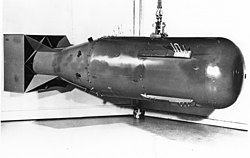
Following the 1983 TTAPS paper co-authored by Sagan describing the potential climatic catastrophe of nuclear war, he became a prominent advocate for arms control, testifying before Congress and campaigning against nuclear escalation.
Image source: Nuclear winter
1973
% complete
This popular science book brought Sagan widespread public recognition for his ability to explain complex scientific ideas about humanity's place in the cosmos in accessible and poetic language.
Image source: The Cosmic Connection
1977
% complete
This book on the evolution of human intelligence earned Sagan the Pulitzer Prize for General Nonfiction in 1978, cementing his reputation as a leading public intellectual.
Image source: The Dragons of Eden
1980
% complete
The bestselling book accompanying the television series became one of the best-selling science books ever published in English, extending the reach of the Cosmos phenomenon to readers around the globe.
Image source: Cosmos (Sagan book)
Sep 28, 1980
% complete
The thirteen-part series, co-written and narrated by Sagan, became the most widely watched PBS series in history, inspiring millions worldwide with its exploration of science, evolution, and humanity's place in the universe.
Image source: Cosmos: A Personal Voyage
1985
% complete
Sagan's only work of fiction imagined humanity's first contact with extraterrestrial intelligence, drawing on his deep knowledge of SETI. It was later adapted into a 1997 film starring Jodie Foster.
Image source: Contact (novel)
1994
% complete
Inspired by the famous photograph of Earth taken by Voyager 1 from beyond Neptune's orbit, this book reflected on humanity's future in space and our responsibility to protect our fragile home planet.
Image source: Pale Blue Dot (book)
1995
% complete
In this passionate defense of science and critical thinking, Sagan warned against pseudoscience and superstition, introducing the famous 'baloney detection kit' for evaluating claims rationally.
Image source: The Demon-Haunted World
1990
% complete
Sagan was awarded the Oersted Medal by the American Association of Physics Teachers in recognition of his outstanding contributions to the teaching of physics and his extraordinary skill in science communication.
Image source: Oersted Medal
1994
% complete
Sagan received the National Academy of Sciences' highest honor for his distinguished contributions to public understanding of science and his role in awakening public enthusiasm for the scientific enterprise.
1994
% complete
Sagan was diagnosed with myelodysplastic syndrome, a rare blood disorder requiring bone marrow transplants, which he battled while continuing to write and speak publicly about science.
Image source: Myelodysplastic syndrome
Dec, 1996
% complete
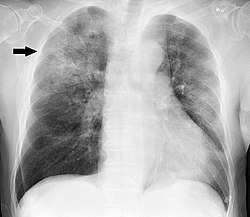
During treatment for his blood disease, Sagan contracted pneumonia, a serious complication that ultimately proved fatal after three rounds of intensive care.
Image source: Pneumonia
Dec 20, 1996
% complete
Carl Sagan passed away at the Fred Hutchinson Cancer Research Center in Seattle, Washington, leaving behind a monumental legacy as scientist, author, and communicator who inspired generations to look up at the stars.
1997
% complete
Completed as Sagan faced his final illness, this collection of essays addressed topics ranging from global warming and ozone depletion to his own mortality, published shortly after his death.
Image source: Billions and Billions
1997
% complete
NASA honored Sagan posthumously with its highest civilian award, recognizing his decades of service advancing planetary science and public engagement with the space program.
Image source: NASA Distinguished Public Service Medal
Jul, 1997
% complete
The Mars Pathfinder lander's touchdown site on Mars was officially renamed the Carl Sagan Memorial Station, honoring his lifelong contributions to the exploration of the red planet.
Image source: Mars Pathfinder
Jul 11, 1997
% complete
The film based on Sagan's 1985 novel premiered a year after his death, starring Jodie Foster as a character partly inspired by real SETI scientists, and dedicated to Sagan's memory.
Image source: Contact (1997 American film)
Mar 9, 2014
% complete
Hosted by astrophysicist Neil deGrasse Tyson and produced by Sagan's widow Ann Druyan, this revival of the original Cosmos series introduced a new generation to Sagan's vision of wonder, skepticism, and cosmic perspective.
Image source: Cosmos: A Spacetime Odyssey
Or browse the full history timeline directory, with more than 2,000 topics.
This Carl Sagan timeline was generated with the help of AI, using information found on the internet.
We work hard to keep these timelines accurate, but mistakes do get through. If you spot one, email us at [email protected] and we'll fix it for future visitors.
Generate yours with AI or build it from scratch, for free.
Export your timeline, add your own events, edit or remove AI-generated events, and much more
No credit card required.
Cancel anytime.
Cancel anytime.
You can create an unlimited number of timelines with up to 10 events on each one, customize how they look, export them to PDF, PNG, PowerPoint, CSV, and Excel, and share them with a link. Paid plans raise the event limit and add features like spreadsheet imports and collaborators.
Yes. You can cancel your subscription from your account page at any time, and you will not be charged again. Your subscription stays active for the rest of the period you already paid for.
Yes. We will email you a reminder before the annual renewal, and we will also email you a receipt.
Yes. You can email us within 15 days of any payment, and we will issue you a full refund.
Check out our pricing docs or send us an email anytime: [email protected].