-
Use Cases
-
Resources
-
Pricing
Vera Rubin (1928–2016) was an American astronomer whose groundbreaking observations of galaxy rotation curves provided some of the first compelling evidence for the existence of dark matter. Despite facing significant gender barriers in science throughout her career, Rubin became a pioneering figure in astrophysics, earning the National Medal of Science and having the Vera C. Rubin Observatory named in her honor. More Less
Jul 23, 1928
% complete
Vera Florence Cooper was born on July 23, 1928, in Philadelphia, Pennsylvania. She would go on to become an American astronomer who pioneered work on galaxy rotation rates.
1938
% complete
In 1938 the family moved to Washington, D.C., where ten-year-old Vera developed an interest in astronomy while watching the stars from her window.
1944
% complete
Rubin attended public school at Coolidge Senior High School in Washington, D.C., graduating in 1944.
1948
% complete
Rubin attempted to enroll in the astronomy program at Princeton but was barred due to her gender; Princeton would retain its policy of gender discrimination against women in its astronomy department until 1975.
1948
% complete
Rubin earned her bachelor's degree in astronomy in 1948 at Vassar, then an all-women's school famous for its association with pioneering 19th century astronomer Maria Mitchell, discoverer of Comet 1847 VI.
Image source: Vassar College
1948
% complete
Rubin married in 1948, when her husband, Robert Joshua Rubin, was a graduate student at Cornell University, and she herself had recently graduated from Vassar.
1951
% complete
Rubin completed her work at Cornell University with the award of her 1951 master's degree in astronomy.
Image source: Cornell University
1963
% complete
By 1963, Rubin, working and with four children, was described as the sole member of Vassar's class of 1948 as having come near to filling the Utopian aim of being a full-time professional without mostly putting her children into someone else's hands. All four children—David (born 1950), Judith Young (1952–2014), Karl (born 1956), and Allan (born 1960)—earned PhDs in natural sciences or mathematics.
Image source: Vera Rubin
2008
% complete
In 2008, Robert Joshua Rubin, Vera Rubin's husband, with whom she had been married for about 60 years, died.
Dec 1950
% complete
Her presentation to the American Astronomical Society in December 1950 received front page headlines, including 'Young Mother Has Own Theory of Universe', disseminated from an article in the Washington Post.
1954
% complete
Her dissertation, completed in 1954, concluded that galaxies clumped together rather than being randomly distributed through the universe, a controversial idea not pursued by others for two decades.
Image source: Galaxy cluster
1954
% complete
In 1954 Rubin completed her PhD under George Gamow, who was at nearby George Washington University, though much of her classwork was completed with Georgetownian Francis Heyden.
Image source: George Gamow
1955 - 1965
% complete
From 1955 to 1965 Rubin worked at Georgetown University as a research associate astronomer, lecturer (1959–1962), and finally assistant professor of astronomy (1962–1965).
Image source: Georgetown University
1963 - 1964
% complete
From 1963, Rubin began a year-long collaboration with Geoffrey and Margaret Burbidge, during which she made her first observations of the rotation of galaxies while using the McDonald Observatory's 82-inch telescope.
Image source: Margaret Burbidge
1965
% complete
In 1965 Rubin joined the Carnegie Institution of Washington (later called Carnegie Institution of Science) as a staff member in the Department of Terrestrial Magnetism.
Image source: Carnegie Institution for Science
1976
% complete
A decade of observations coalesced in the shared discovery of the Rubin-Ford effect, with publication first appearing in 1976.
1986
% complete
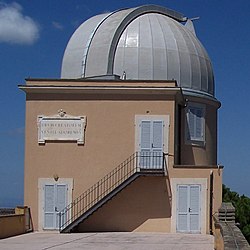
An initiating faculty member of the Vatican Observatory Summer School in 1986, Rubin continued this relationship through subsequent decades, providing dedication remarks for the opening of the Vatican Advanced Technology Telescope on Mount Graham.
Image source: Vatican Observatory
2000
% complete
Rubin's perspective on the history of work on galaxy movements was presented in a review, "One Hundred Years of Rotating Galaxies," for the Publications of the Astronomical Society of the Pacific in 2000. It adapted her 1996 Gold Medal lecture.
2000 - 2013
% complete
In the early 2000s, Vera Rubin remained actively engaged in scientific work, and articles with her participation were still being published as late as 2013.
2014
% complete
Rubin retired from the Carnegie Institution in 2014 as Senior Fellow of Astronomy in the Department of Terrestrial Magnetism.
1965
% complete
During her work at the Carnegie Institution, Rubin became the first female astronomer permitted to observe at the Palomar Observatory in 1965, despite the building having no facilities for women.
Image source: Palomar Observatory
1981
% complete
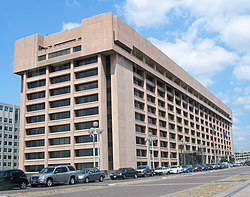
When Rubin was elected to the National Academy of Sciences in 1981, she became only the second woman astronomer in its ranks, after her colleague Margaret Burbidge.
Image source: National Academy of Sciences
1991
% complete
Rubin and her research were discussed in the 1991 PBS series, The Astronomers.
Image source: Astronomer
1996
% complete
Rubin received the Gold Medal of the Royal Astronomical Society in 1996, becoming only the second woman so honored, 168 years after Caroline Herschel received the medal in 1828.
Image source: Gold Medal of the Royal Astronomical Society
2002
% complete
In 2002, Discover magazine recognized Vera Rubin as one of the 50 most important women in science.
2005
% complete
Rubin was granted honorary doctorates from Harvard University, Yale University, Smith College, Grinnell College, and Princeton University, the latter awarded in 2005.
Image source: Princeton University
Dec 25, 2016
% complete
Vera Rubin died of natural causes at age 88 on the night of December 25, 2016. Her name is regularly mentioned in articles listing 20th century women who missed out on Nobel Prizes.
Dec 20, 2019
% complete
On December 20, 2019, the Large Synoptic Survey Telescope was renamed the Vera C. Rubin Observatory in her honor.
Image source: Vera C. Rubin Observatory
Nov 6, 2020
% complete
On November 6, 2020, a satellite named after her (ÑuSat 18 or "Vera", COSPAR 2020-079K) was launched into space.
Image source: ÑuSat
2024
% complete
In 2024, Nvidia announced that their next generation of data center accelerators would be named after her, with the CPU named Vera and GPU named Rubin.
Image source: Nvidia
2025
% complete
Rubin is honored on a 2025 U.S. postage stamp, continuing posthumous honors and recognition that have proliferated since her death.
Image source: United States Postal Service
Apr 2025
% complete
As of April 2025, the Vera C. Rubin Observatory had begun operation and was producing images and volumes of new astronomical data.
Or browse the full history timeline directory, with more than 2,000 topics.
This Vera Rubin timeline was generated with the help of AI, using information found on the internet.
We work hard to keep these timelines accurate, but mistakes do get through. If you spot one, email us at [email protected] and we'll fix it for future visitors.
Generate yours with AI or build it from scratch, for free.
Export your timeline, add your own events, edit or remove AI-generated events, and much more
No credit card required.
Cancel anytime.
Cancel anytime.
You can create an unlimited number of timelines with up to 10 events on each one, customize how they look, export them to PDF, PNG, PowerPoint, CSV, and Excel, and share them with a link. Paid plans raise the event limit and add features like spreadsheet imports and collaborators.
Yes. You can cancel your subscription from your account page at any time, and you will not be charged again. Your subscription stays active for the rest of the period you already paid for.
Yes. We will email you a reminder before the annual renewal, and we will also email you a receipt.
Yes. You can email us within 15 days of any payment, and we will issue you a full refund.
Check out our pricing docs or send us an email anytime: [email protected].