-
Use Cases
-
Resources
-
Pricing
The history of telescopes spans over four centuries of innovation, beginning with Dutch spectacle makers in 1608 and Galileo's astronomical discoveries in 1609. From simple refracting tubes to giant reflecting mirrors and advanced space observatories, telescopes have continuously expanded humanity's view of the universe, revolutionizing astronomy and our understanding of the cosmos. More Less
300 BC
% complete
The Greek mathematician Euclid wrote 'Optics,' one of the earliest works on the geometry of vision and the behavior of light rays, laying intellectual foundations for later optical instruments.
Image source: Euclid's Optics
150 AD
% complete
Claudius Ptolemy studied the bending of light as it passes between media, producing early tables of refraction angles that anticipated the science behind lens-based instruments.
Image source: Ptolemy
1011 - 1021
% complete
The Arab scholar Ibn al-Haytham (Alhazen) wrote his seven-volume Book of Optics, correctly describing how light enters the eye and how lenses form images, profoundly influencing later European optics.
Image source: Book of Optics
1286
% complete
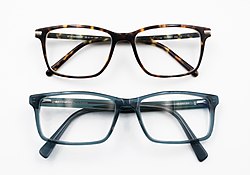
Eyeglasses were invented in northern Italy around 1286, marking the first widespread practical use of convex lenses and stimulating a European glass-grinding industry essential to telescope making.
Image source: Glasses
1550
% complete
English mathematician Leonard Digges is credited by some historians with constructing rudimentary perspective glasses capable of magnifying distant scenes decades before the official invention of the telescope.
Image source: Leonard Digges (scientist)
Oct 2, 1608
% complete
Dutch spectacle maker Hans Lippershey applied for a patent on a device that magnified distant objects using two lenses. The States-General denied the patent but the 'Dutch perspective glass' spread rapidly across Europe.
Image source: Hans Lipperhey
1609
% complete
After hearing of the Dutch instrument, Galileo Galilei constructed an improved refracting telescope with about 20x magnification without ever seeing the original design, beginning the era of observational astronomy.
Image source: Refracting telescope
Jan 7, 1610
% complete
Using his telescope, Galileo observed four moons orbiting Jupiter, providing decisive evidence against geocentrism and demonstrating the telescope's power to transform astronomy. He published these findings in 'Sidereus Nuncius.'
Image source: Galilean moons
1611
% complete
Christoph Scheiner systematically observed sunspots through a telescope, contributing to debates about the perfection of the heavens and developing safe projection methods for solar observation.
Image source: Christoph Scheiner
1611
% complete
Johannes Kepler proposed a telescope using two convex lenses, which produced a wider field of view than Galileo's design, though it inverted the image. This became the standard astronomical refractor configuration.
Image source: Refracting telescope
1637
% complete
René Descartes published his 'Dioptrique,' giving a mathematical account of refraction via Snell's law and analyzing spherical aberration, guiding more precise lens manufacture.
Image source: La Géométrie
Mar 25, 1655
% complete
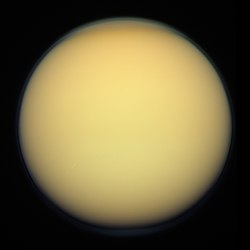
Christiaan Huygens, using a self-made refracting telescope of superior quality, discovered Saturn's largest moon Titan and later correctly explained Saturn's rings, aided by his brother Constantijn's lens grinding.
Image source: Titan (moon)
1670 - 1720
% complete
Because single-lens objectives suffered from color fringing, astronomers like Huygens and Cassini built extremely long 'aerial' telescopes up to 45 meters, with objective lenses mounted on tall masts and no tube at all.
Image source: Aerial telescope
1814
% complete
Joseph von Fraunhofer perfected crown-and-flint achromatic doublet lenses and discovered the solar spectral lines, enabling high-quality refractors and founding scientific optics manufacturing.
Image source: Joseph von Fraunhofer
1897
% complete
The Yerkes Observatory in Wisconsin opened with a 40-inch refracting telescope, the largest refractor ever built, funded by Charles T. Yerkes and directed by George Ellery Hale.
Image source: Yerkes Observatory
1663
% complete
James Gregory described a reflecting telescope using a concave primary mirror and a concave secondary mirror forming an upright image in his book 'Optica Promota,' though he never successfully built one himself.
Image source: Gregorian telescope
1668
% complete
Isaac Newton constructed the first working reflecting telescope, using a polished speculum metal mirror instead of a lens to eliminate chromatic aberration. His six-inch instrument was presented to the Royal Society in 1671.
Image source: Newtonian telescope
1672
% complete
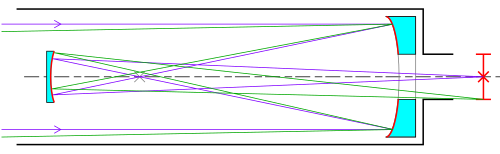
French priest Laurent Cassegrain described a reflector using a convex secondary mirror that folds light back through a hole in the primary, creating a compact design still dominant in modern telescopes.
Image source: Cassegrain reflector
Mar 13, 1781
% complete
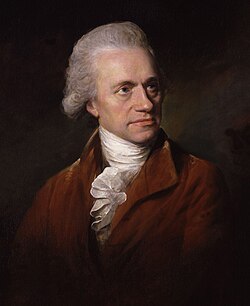
William Herschel, a musician turned telescope maker, discovered the planet Uranus from Bath, England, using a 6.2-inch Newtonian reflector of exceptional quality that he had ground and polished himself.
Image source: William Herschel
1789
% complete
William Herschel completed a massive 48-inch reflector with a 40-foot focal length near Slough, England, then the largest telescope in the world, which he used to survey nebulae and star clusters.
Image source: 40-foot telescope
1845
% complete
William Parsons, 3rd Earl of Rosse, completed a 72-inch reflecting telescope in Ireland, the largest in the world until 1915, and used it to make the first drawing of the spiral structure of M51, the Whirlpool Galaxy.
Image source: Leviathan of Parsonstown
Nov 2, 1917
% complete
The 100-inch Hooker Telescope began operations at Mount Wilson Observatory in California. Edwin Hubble used it to prove that spiral nebulae are external galaxies and to discover cosmic expansion.
Image source: Mount Wilson Observatory
1930
% complete
Bernhard Schmidt invented a wide-field catadioptric camera combining a spherical mirror with a corrective lens plate, revolutionizing photographic sky surveys.
Image source: Schmidt camera
1932
% complete
Karl Jansky detected radio waves from the Milky Way at Bell Labs, founding radio astronomy and extending 'telescopes' beyond visible light into entirely new wavelengths.
Image source: Karl Guthe Jansky
1940 - 1960
% complete
Catadioptric designs combining mirrors and corrector plates, including the Maksutov-Cassegrain and Schmidt-Cassegrain, produced compact, portable telescopes that fueled the amateur astronomy boom.
Image source: Catadioptric system
Jan 26, 1949
% complete
The 200-inch Hale Telescope at Palomar Observatory, the largest effective telescope in the world for nearly three decades, achieved first light under Edwin Hubble's supervision.
Image source: Hale Telescope
1979
% complete
The Multiple Mirror Telescope in Arizona combined six 72-inch mirrors to act as a single large aperture, pioneering segmented and multi-mirror techniques used by today's giant observatories.
Image source: MMT Observatory
1990 - 2000
% complete
Ground-based observatories adopted adaptive optics systems that deform mirrors hundreds of times per second to cancel atmospheric blur, allowing large telescopes to rival space-based resolution.
Image source: Adaptive optics
Apr 24, 1990
% complete
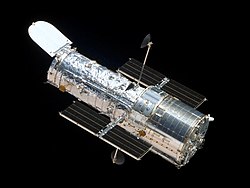
NASA deployed the Hubble Space Telescope aboard Space Shuttle Discovery. After a 1993 servicing mission corrected its flawed mirror, Hubble delivered iconic deep-field images and precise measurements of the universe's expansion.
Image source: Hubble Space Telescope
May 17, 1993
% complete
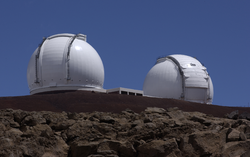
The Keck I telescope atop Mauna Kea achieved first light with its 10-meter primary composed of 36 hexagonal segments, becoming the largest optical telescope and proving the viability of segmented mirrors.
Image source: W. M. Keck Observatory
Mar 13, 2013
% complete
ALMA, an array of 66 radio dishes in Chile's Atacama Desert, was formally inaugurated, providing unprecedented views of cold gas and dust in star-forming regions across the universe.
Image source: Atacama Large Millimeter Array
Dec 25, 2021
% complete
The James Webb Space Telescope, carrying a 6.5-meter gold-coated segmented infrared mirror, launched on an Ariane 5 rocket toward the Sun-Earth L2 point, succeeding Hubble as humanity's premier space observatory.
Image source: James Webb Space Telescope
Or browse the full history timeline directory, with more than 2,000 topics.
This History of Telescopes timeline was generated with the help of AI, using information found on the internet.
We work hard to keep these timelines accurate, but mistakes do get through. If you spot one, email us at [email protected] and we'll fix it for future visitors.
Generate yours with AI or build it from scratch, for free.
Export your timeline, add your own events, edit or remove AI-generated events, and much more
No credit card required.
Cancel anytime.
Cancel anytime.
You can create an unlimited number of timelines with up to 10 events on each one, customize how they look, export them to PDF, PNG, PowerPoint, CSV, and Excel, and share them with a link. Paid plans raise the event limit and add features like spreadsheet imports and collaborators.
Yes. You can cancel your subscription from your account page at any time, and you will not be charged again. Your subscription stays active for the rest of the period you already paid for.
Yes. We will email you a reminder before the annual renewal, and we will also email you a receipt.
Yes. You can email us within 15 days of any payment, and we will issue you a full refund.
Check out our pricing docs or send us an email anytime: [email protected].