
-
Use Cases
-
Resources
-
Pricing
Brexit refers to the United Kingdom's withdrawal from the European Union, following a 2016 referendum in which 51.9% of voters chose to leave. The process involved years of complex negotiations over trade, borders, and citizens' rights, culminating in the UK's official departure on January 31, 2020, and the end of the transition period on December 31, 2020. More Less
Jun 5, 1975
% complete
Britain held its first nationwide referendum, asking voters whether the UK should remain in the European Communities. About 67% voted to stay, temporarily settling the question of British membership, though Euroscepticism persisted within both major parties.
Image source: 1975 United Kingdom European Communities membership referendum
Feb 7, 1992
% complete
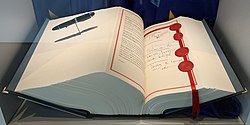
The Maastricht Treaty transformed the European Community into the European Union, deepening political and monetary integration. Its ratification proved contentious in Britain, fueling rebellion among Conservative MPs and strengthening the emerging Eurosceptic movement.
Image source: Maastricht Treaty
Jan 1, 1999
% complete
When the euro launched as an accounting currency for eleven EU member states, the United Kingdom exercised its opt-out negotiated at Maastricht. Chancellor Gordon Brown later set five economic tests that were judged unmet, keeping Britain outside the single currency.
Image source: United Kingdom and the euro
Jan 23, 2013
% complete
Prime Minister David Cameron announced that a Conservative government would renegotiate Britain's EU membership terms and then hold an in-out referendum, aiming to placate Eurosceptic backbenchers and counter the rise of UKIP.
Image source: 2016 United Kingdom European Union membership referendum
Dec 17, 2015
% complete
After winning the 2015 general election with an outright majority, Cameron's government passed legislation authorizing a national referendum on continued EU membership, setting the legal framework for the historic vote.
Image source: European Union Referendum Act 2015
Feb 19, 2016
% complete
At a summit in Brussels, Cameron secured a package of reforms including a 'benefits brake' on migrant welfare payments and protections for non-euro states. Critics dismissed the deal as minor, and it became largely irrelevant after the Leave vote.
Image source: 2015–2016 United Kingdom renegotiation of European Union membership
Jun 23, 2016
% complete
Voters across the United Kingdom and Gibraltar went to the polls to decide whether to remain in or leave the European Union. Turnout reached 72%, one of the highest in British electoral history, reflecting the magnitude of the decision.
Jun 24, 2016
% complete
Financial markets reacted sharply to the Leave vote, with the pound falling more than 10% against the dollar to its lowest level since 1985. The FTSE 100 initially dropped before recovering, while uncertainty gripped businesses and households.
Image source: Economic effects of Brexit
Jun 24, 2016
% complete
The result was declared in the early hours of June 24: 51.9% voted Leave against 48.1% for Remain. England and Wales backed Leave while Scotland and Northern Ireland voted Remain, exposing deep divisions within the union itself.
Image source: Results of the 2016 United Kingdom European Union membership referendum
Mar 29, 2017
% complete
May formally notified the European Council of Britain's intention to leave the EU, starting a two-year countdown to departure set for March 29, 2019. The letter was delivered by ambassador Tim Barrow to Donald Tusk in Brussels.
Image source: Withdrawal from the European Union
Jun 19, 2017
% complete
Formal talks opened between Brexit Secretary David Davis and the EU's chief negotiator Michel Barnier. Early rounds focused on citizens' rights, the financial settlement, and the Irish border question before trade discussions could begin.
Dec 8, 2017
% complete
May and European Commission President Jean-Claude Juncker announced sufficient progress on citizens' rights, the so-called divorce bill of roughly £39 billion, and the Irish border, allowing talks to move to future relations.
Oct 17, 2019
% complete
Johnson negotiated a new deal replacing the backstop with a customs border in the Irish Sea via the Northern Ireland Protocol. The DUP refused to support it, but the EU endorsed the agreement at the Brussels summit.
Image source: Brexit withdrawal agreement
Jun 24, 2016 - Jul 13, 2016
% complete
Having staked his premiership on a Remain victory, Cameron announced his resignation hours after the result, saying the country required fresh leadership. He left office once Theresa May won the Conservative leadership contest.
Image source: 2016 Conservative Party leadership election
Jul 13, 2016
% complete
Theresa May succeeded Cameron after her rivals withdrew from the leadership contest. Her mantra 'Brexit means Brexit' signaled commitment to honoring the referendum result, though she initially resisted setting a timetable for withdrawal.
Image source: Premiership of Theresa May
Jan 24, 2017
% complete
The Supreme Court ruled unanimously that the government could not trigger Article 50 using royal prerogative alone; Parliament had to authorize the process. The ruling led to the European Union (Notification of Withdrawal) Act 2017.
Apr 18, 2017
% complete
Seeking a larger majority to strengthen her hand in Brexit negotiations, May called an early election despite previously ruling one out. The gamble would prove costly to her authority.
Image source: 2017 United Kingdom general election
Jun 8, 2017
% complete
Labour under Jeremy Corbyn outperformed expectations, costing the Conservatives their parliamentary majority. May formed a confidence-and-supply agreement with the Democratic Unionist Party, weakening her position ahead of crucial Brexit votes.
Nov 14, 2018
% complete
The draft deal including the controversial Northern Ireland backstop triggered the resignations of Brexit Secretary Dominic Raab and Work and Pensions Secretary Esther McVey, deepening divisions within the Conservative Party.
Jan 15, 2019
% complete
Parliament defeated the withdrawal agreement by 230 votes, the largest defeat for a sitting government in modern British history. The backstop's potential to keep Northern Ireland tied to EU customs rules was central to opposition.
Mar 12, 2019
% complete
Despite last-minute assurances from Brussels on the backstop, MPs rejected the revised deal by 149 votes. A day earlier, Parliament had voted against leaving without a deal, intensifying the constitutional crisis.
Mar 14, 2019
% complete
Parliament approved a motion seeking an extension of Article 50, forcing May to request a delay from the EU. The original March 29 deadline was pushed first to April 12 and then to October 31, 2019.
Image source: United Kingdom invocation of Article 50 of the Treaty on European Union
Mar 29, 2019
% complete
On the day Britain was originally due to leave the EU, the Commons rejected the withdrawal agreement for a third time by 58 votes. May told Conservative MPs she would step down if her deal passed, but it did not.
Image source: 2019 Conservative Party leadership election
May 24, 2019 - Jul 24, 2019
% complete
Emotionally announcing her departure outside Downing Street, May said she had done her best to deliver Brexit and would leave once a successor was chosen. Boris Johnson won the leadership contest and took office on July 24.
Jul 24, 2019
% complete
Boris Johnson, the face of the Vote Leave campaign, entered Downing Street pledging to leave the EU by October 31 'do or die,' with or without a deal, and appointed a cabinet of committed Brexiteers.
Image source: Premiership of Boris Johnson
Sep 9, 2019 - Oct 19, 2019
% complete
Backbench MPs led by Hilary Benn passed a law requiring Johnson to seek a Brexit extension unless Parliament approved a deal. Johnson sent an unsigned letter requesting a delay alongside a signed note arguing against one.
Sep 24, 2019
% complete
In a landmark unanimous ruling, the Supreme Court found Johnson's five-week suspension of Parliament unlawful because it frustrated parliamentary scrutiny of Brexit. Parliament resumed the following day.
Image source: R (Miller) v The Prime Minister and Cherry v Advocate General for Scotland
Dec 12, 2019
% complete
Fighting under the slogan 'Get Brexit Done,' Johnson secured an 80-seat majority, the Conservatives' best result since 1987. Labour's worst performance since 1935 cleared the way for ratification of the withdrawal agreement.
Image source: 2019 United Kingdom general election
Jan 31, 2020
% complete
At 11 p.m. GMT, 47 years after joining, the United Kingdom ceased to be an EU member state. Big Ben did not chime as some Brexiteers had hoped, but celebrations and protests marked the moment across the country.
Feb 1, 2020 - Dec 31, 2020
% complete
During the 11-month transition, the UK remained bound by EU rules while both sides negotiated their future relationship. Johnson declined repeated offers from Brussels to extend the period beyond the end of 2020.
Dec 24, 2020
% complete
After months of deadlock over fishing quotas, level playing field rules, and governance, negotiators struck a zero-tariff, zero-quota free trade deal on Christmas Eve, narrowly avoiding a chaotic no-deal exit.
Dec 31, 2020
% complete
At 11 p.m., the transition ended and the UK exited the EU single market and customs union. New customs checks, immigration rules, and regulatory divergence began, fundamentally reshaping trade and travel between Britain and Europe.
Jan 2021
% complete
New checks on goods moving from Great Britain to Northern Ireland disrupted supplies and angered unionists, who demanded the protocol be scrapped. The dispute dominated UK-EU relations throughout 2021 and threatened the Good Friday Agreement's delicate balance.
Image source: Northern Ireland Protocol
Or browse the full history timeline directory, with more than 2,000 topics.
This Brexit timeline was generated with the help of AI, using information found on the internet.
We work hard to keep these timelines accurate, but mistakes do get through. If you spot one, email us at [email protected] and we'll fix it for future visitors.
Generate yours with AI or build it from scratch, for free.
Export your timeline, add your own events, edit or remove AI-generated events, and much more
No credit card required.
Cancel anytime.
Cancel anytime.
You can create an unlimited number of timelines with up to 10 events on each one, customize how they look, export them to PDF, PNG, PowerPoint, CSV, and Excel, and share them with a link. Paid plans raise the event limit and add features like spreadsheet imports and collaborators.
Yes. You can cancel your subscription from your account page at any time, and you will not be charged again. Your subscription stays active for the rest of the period you already paid for.
Yes. We will email you a reminder before the annual renewal, and we will also email you a receipt.
Yes. You can email us within 15 days of any payment, and we will issue you a full refund.
Check out our pricing docs or send us an email anytime: [email protected].