-
Use Cases
-
Resources
-
Pricing
1731
% complete
Isaac Herschel became a bandmaster in the Hanoverian Foot Guards, whom he first joined in 1731. He was away with his regiment for substantial periods during Caroline's childhood.
Image source: Caroline Herschel
1743
% complete
Isaac Herschel became ill after the Battle of Dettingen (in the War of the Austrian Succession) in 1743 and never recovered fully; he suffered a weak constitution, chronic pain, and asthma for the remainder of his life.
Image source: Battle of Dettingen
Mar 16, 1750
% complete
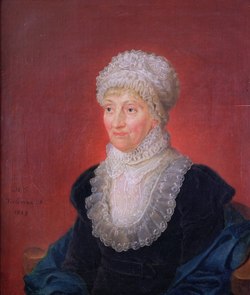
Caroline Lucretia Herschel was born in the town of Hanover, Germany, on 16 March 1750. She was the eighth child and fourth daughter of Isaac Herschel (1707–1767), a self-taught oboist, and his wife, Anna Ilse Moritzen (1710–1789).
1755
% complete
The oldest daughter, Sophia Elizabeth Herschel (1733–1803), sixteen years older than Caroline, married violinist Joachim Heinrich Griesbach when Caroline was five, which resulted in the younger girl being tasked with much of the household drudgery.
Aug 15, 1772
% complete
Caroline eventually left Hanover on 15 August 1772 after her brothers intervened with their recalcitrant mother, moving to England to join her brother William.
1788
% complete
When William married a rich widow, Mary Pitt (née Baldwin) in 1788, the union caused tension in the brother-sister relationship. As Caroline destroyed her journals from 1788 to 1798, her feelings about the period are not entirely known.
Image source: William Herschel
Jan 9, 1848
% complete
Caroline Herschel died peacefully in Hanover on 9 January 1848, leaving behind a remarkable legacy as one of the pioneering women astronomers in history.
1778
% complete
She became the principal singer at her brother's oratorio concerts, and acquired such a reputation as a vocalist that she was offered an engagement for the Birmingham festival after a performance of Handel's Messiah in April 1778, where she was the first soloist.
1782
% complete
Caroline and William gave their last musical performance in 1782, when her brother accepted the private office of court astronomer to King George III; the last few months of their musical career had been in shambles and were critically panned.
Mar 13, 1781
% complete
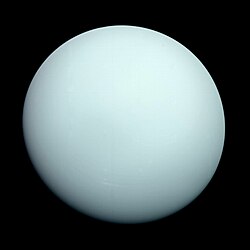
The Herschels moved to a new house in March 1781 after their millinery business failed, and Caroline was guarding the leftover stock on 13 March, the night that William discovered the planet Uranus.
Image source: Uranus
1782
% complete
Caroline was asked to move from the high culture of Bath to the relative backwater of Datchet in 1782, a small town near Windsor Castle where William would be on hand to entertain royal guests.
Image source: Datchet
Aug 28, 1782
% complete
On 28 August 1782, Caroline initiated her first record book, marking the beginning of her systematic astronomical work alongside her brother.
1783
% complete
In the summer of 1783, William finished building a comet-searching telescope for Caroline, which she began to use immediately in her hunt for comets.
Feb 26, 1783
% complete
On 26 February 1783, Caroline made her first discovery: she had found a nebula that was not included in the Messier catalogue.
Image source: Messier object
Oct 1783
% complete
Beginning in October 1783, the Herschels used a 20-foot reflecting telescope to search for nebulae, greatly expanding their astronomical observations.
Aug 1, 1786
% complete
During 1786–1797 Caroline discovered eight comets, the first on 1 August 1786 while her brother was away and she was using his telescope.
Image source: 35P/Herschel–Rigollet
Jan 7, 1790 - Apr 17, 1790
% complete
The third comet was discovered on 7 January 1790, and the fourth one on 17 April 1790. She announced both to Sir Joseph Banks, and all were discovered with her 1783 telescope.
1791
% complete
In 1791, Caroline began to use a 9-inch telescope for her comet-searching, and discovered three more comets with this instrument.
Dec 15, 1791 - Oct 7, 1795
% complete
Her fifth comet was discovered on 15 December 1791 and the sixth on 7 October 1795, both found using her instruments during her dedicated comet searches.
1795
% complete
Caroline had unquestioned priority as discoverer of five of her comets and rediscovered Comet Encke in 1795, adding to her growing reputation among astronomers.
Image source: Comet Encke
1797
% complete
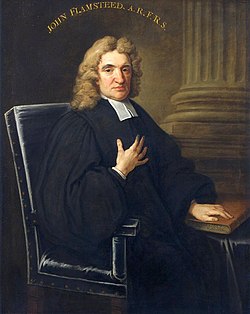
In 1797 William's observations showed there were great many discrepancies in John Flamsteed's star catalogue, which was difficult to use because it had been published as two volumes and contained many errors.
Image source: John Flamsteed
Aug 6, 1797
% complete
Two years later, her eighth and last comet was discovered on 6 August 1797, the only comet she discovered without optical aid.
1798
% complete
Flamsteed's Observations Contained in the Second Volume of the Historia Coelestis, and Not Inserted in the British Catalogue was published by the Royal Society in 1798, containing an index of every observation of every star made by Flamsteed, a list of errata, and a list of more than 560 stars that had not been included—work presented by Caroline to the Royal Society.
1802
% complete
In 1802, the Royal Society published Caroline's catalogue in its Philosophical Transactions of the Royal Society A under William's name.
Image source: Philosophical Transactions of the Royal Society
1822
% complete
After her brother died in 1822, Caroline was grief-stricken and moved back to Hanover, Germany, continuing her astronomical studies to verify and confirm William's findings and producing a catalogue of nebulae to assist her nephew John Herschel in his work.
Image source: Hanover
Jan 31, 1824
% complete
Caroline added her final entry to her observing book on 31 January 1824 about the Great Comet of 1823, which had already been discovered on 29 December 1823.
Image source: Great Comet of 1823
1787
% complete
In 1787, Caroline was granted an annual salary of £50 by George III for her work as William's assistant, becoming the first woman—at a time when even men rarely received wages for scientific enterprises—to receive a salary for services to science.
Image source: George III
Dec 1788
% complete
In December 1788, Astronomer Royal Nevil Maskelyne wrote back congratulating Caroline on her comet discoveries.
Image source: Nevil Maskelyne
Aug 1799
% complete
In August 1799, Caroline was independently recognized for her work when she spent a week in Greenwich as a guest of the royal family, and she was also a guest of Maskelyne at the Royal Observatory that year.
Image source: Royal Observatory, Greenwich
1816 - 1818
% complete
Caroline was a guest of members of the Royal Family at various times in 1816, 1817 and 1818, reflecting her growing recognition for her scientific contributions.
1828
% complete
In 1828 the Royal Astronomical Society presented Caroline with their Gold Medal 'for her recent reduction, to January, 1800, of the [2,500] Nebulæ discovered by her illustrious brother'—no woman would be awarded it again until Vera Rubin in 1996.
Image source: Royal Astronomical Society
1835
% complete
The Royal Astronomical Society elected Caroline an honorary member in 1835, along with Mary Somerville; they were the first female members of the society.
1838
% complete
Caroline was elected as an honorary member of the Royal Irish Academy in Dublin in 1838, further cementing her international recognition.
Image source: Royal Irish Academy
1846
% complete
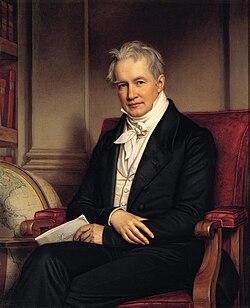
In 1846, at the age of 96, Caroline was awarded a gold medal for Science by the King of Prussia, conveyed to her by Alexander von Humboldt, 'in recognition of the valuable services rendered to Astronomy by you, as the fellow-worker of your immortal brother, Sir William Herschel.'
Image source: Alexander von Humboldt
1825
% complete
In 1825, Caroline donated the works of Flamsteed to the Royal Academy of Göttingen, contributing to the preservation of important astronomical records.
Image source: University of Göttingen
1888
% complete
The asteroid 281 Lucretia (discovered 1888) was named after Caroline's second given name, honoring her contributions to astronomy.
Image source: 281 Lucretia
1968
% complete
Adrienne Rich's 1968 poem 'Planetarium' celebrates Caroline Herschel's life and scientific achievements.
Image source: Aniara
1969
% complete
Judy Chicago's artwork The Dinner Party, which celebrates historical women who have made extraordinary contributions, features a place setting for Caroline Herschel.
Image source: The Dinner Party
Mar 16, 2016
% complete
Google honoured Caroline Herschel with a Google Doodle on her 266th birthday (16 March 2016).
Image source: Google Doodle
Nov 6, 2020
% complete
On 6 November 2020, a satellite named after her (ÑuSat 10 or 'Caroline', COSPAR 2020-079B) was launched into space.
Image source: ÑuSat
2022
% complete
Poet Jessy Randall's 2022 collection Mathematics for Ladies includes a poem honoring Caroline Herschel.
2023
% complete
In 2023, the 57 densely handwritten pages of her diary were put on display in the music room of the Herschel Museum of Astronomy in Bath, where Herschel resided. The diary documents her life from 1755 to 1775.
Image source: Herschel Museum of Astronomy
2024
% complete
In 2024, UK musician and singer-songwriter Jay Anderson released the single 'Moving' on Real Kind Records, a song dedicated to the life and times of Caroline Herschel.
Image source: Samantha Crain
Or browse the full history timeline directory, with more than 2,000 topics.
This Caroline Herschel timeline was generated with the help of AI, using information found on the internet.
We work hard to keep these timelines accurate, but mistakes do get through. If you spot one, email us at [email protected] and we'll fix it for future visitors.
Generate yours with AI or build it from scratch, for free.
Export your timeline, add your own events, edit or remove AI-generated events, and much more
No credit card required.
Cancel anytime.
Cancel anytime.
You can create an unlimited number of timelines with up to 10 events on each one, customize how they look, export them to PDF, PNG, PowerPoint, CSV, and Excel, and share them with a link. Paid plans raise the event limit and add features like spreadsheet imports and collaborators.
Yes. You can cancel your subscription from your account page at any time, and you will not be charged again. Your subscription stays active for the rest of the period you already paid for.
Yes. We will email you a reminder before the annual renewal, and we will also email you a receipt.
Yes. You can email us within 15 days of any payment, and we will issue you a full refund.
Check out our pricing docs or send us an email anytime: [email protected].