-
Use Cases
-
Resources
-
Pricing
The Chinese Civil War was a prolonged conflict fought between the Nationalist Kuomintang (KMT) government under Chiang Kai-shek and the Chinese Communist Party led by Mao Zedong. Beginning in 1927, the war was interrupted by the Second Sino-Japanese War (1937–1945), then resumed until the Communists' decisive victory in 1949, forcing the Nationalists to retreat to Taiwan and reshaping modern East Asian history. More Less
Jul 1, 1921
% complete
The Chinese Communist Party (CCP) was founded in Shanghai in July 1921, with Mao Zedong among its early delegates. Inspired by the Russian Revolution, the party sought to organize workers and peasants, eventually becoming the principal rival to the Kuomintang (KMT) for control of China.
Image source: 100th Anniversary of the Chinese Communist Party
Jan 20, 1924 - Jul 15, 1927
% complete
The KMT under Sun Yat-sen allied with the newly formed CCP and the Soviet Union to unify warlord-torn China. CCP members joined the KMT, and the two parties jointly organized the Northern Expedition, though ideological tensions simmered beneath the surface of the cooperation.
Image source: First United Front
Mar 12, 1925
% complete
The death of Sun Yat-sen, the father of modern China and leader of the KMT, created a power vacuum in the Nationalist movement. Chiang Kai-shek eventually emerged as the dominant KMT leader, shifting the party rightward and straining its alliance with the Communists.
Image source: Sun Yat-sen
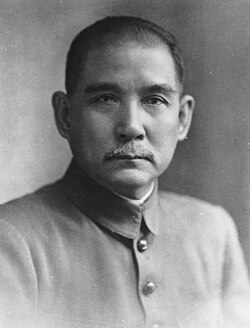
Jul 9, 1926 - Dec 29, 1928
% complete
The KMT, with Communist participation, launched a military campaign from Guangzhou to defeat the warlords dominating northern China. The expedition achieved major successes, but the growing power of the left-wing labor and peasant movements alarmed Chiang Kai-shek and conservative Nationalists.
Image source: Northern Expedition
Apr 12, 1927
% complete
Chiang Kai-shek ordered the violent suppression of Communist members and labor unions in Shanghai, killing thousands. The massacre marked the beginning of open warfare between the KMT and the CCP, shattering the First United Front and initiating the Chinese Civil War's first phase.
Image source: Shanghai massacre
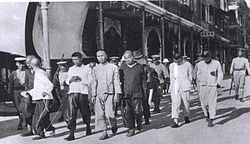
Aug 1, 1927 - Aug 5, 1927
% complete
Communist forces staged an armed uprising in Nanchang against the KMT, the first major military action by the CCP. Though the city was soon abandoned, the uprising is commemorated as the founding of the People's Liberation Army and marked the CCP's turn to armed struggle.
Image source: Nanchang Uprising
Sep 7, 1927 - Oct 1927
% complete
Mao Zedong led a peasant uprising in Hunan and Jiangxi provinces against Nationalist rule. Though the revolt was crushed, Mao's retreat into the Jinggang Mountains established the strategy of rural revolutionary base areas, a defining feature of Chinese Communist warfare.
Image source: Autumn Harvest Uprising
Nov 7, 1931 - Oct 1934
% complete
The CCP proclaimed the Chinese Soviet Republic in Ruijin, Jiangxi, under Mao Zedong's leadership. This rival state to the Nationalist government in Nanjing governed millions of people and became the center of Communist power until it was overrun by KMT encirclement campaigns.
Image source: Chinese Soviet Republic
Sep 25, 1933 - Oct 1934
% complete
Chiang Kai-shek's Nationalist forces, using blockhouse tactics and German military advisors, systematically encircled and squeezed the Jiangxi Soviet. The Communists' conventional defense failed catastrophically, forcing them to abandon their base and begin the Long March.
Oct 16, 1934 - Oct 20, 1935
% complete
The Red Army undertook a grueling year-long retreat of roughly 6,000 miles across China, evading Nationalist forces and enduring immense hardship. Mao Zedong emerged as the undisputed leader of the CCP during the march, which became a foundational legend of the Communist movement.
Image source: Long March
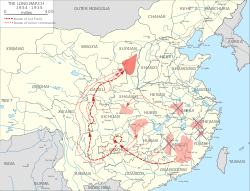
Jan 15, 1935 - Jan 17, 1935
% complete
During the Long March, the CCP leadership met at Zunyi to review its military failures. Mao Zedong gained control of the party's military strategy, displacing the Moscow-backed leadership and setting the course for his eventual dominance of the Chinese Communist movement.
Image source: Zunyi Conference
Sep 18, 1931 - Feb 27, 1932
% complete
Japan seized Manchuria following the staged Mukden Incident, installing the puppet state of Manchukuo. The invasion fueled Chinese nationalism and public demands that the KMT and CCP unite against foreign aggression rather than fight each other.
Image source: Japanese invasion of Manchuria
Dec 12, 1936 - Dec 25, 1936
% complete
General Zhang Xueliang detained Chiang Kai-shek in Xi'an to force him to stop fighting the Communists and resist Japan instead. After mediation, Chiang agreed to a united front, temporarily halting the civil war and redirecting Nationalist efforts against Japanese aggression.
Image source: Xi'an Incident
Jul 7, 1937 - Sep 9, 1945
% complete
The Marco Polo Bridge Incident triggered full-scale war between China and Japan. The KMT and CCP formed the Second United Front, with the Communists waging guerrilla warfare behind Japanese lines while the Nationalists fought major conventional battles, though cooperation remained fragile.
Image source: Second Sino-Japanese War
Aug 13, 1937 - Nov 26, 1937
% complete
One of the largest battles of the war, the Nationalist defense of Shanghai involved hundreds of thousands of troops. Though the city fell to Japan, the fierce resistance shattered Japanese hopes for a swift victory and rallied international sympathy for China.
Dec 13, 1937 - Jan 1938
% complete
After capturing the Nationalist capital of Nanjing, Japanese troops carried out mass murder, rape, and looting, killing hundreds of thousands of civilians and disarmed soldiers. The atrocity hardened Chinese resolve and became a lasting symbol of Japanese wartime brutality.
Image source: Nanjing Massacre
Mar 24, 1938 - Apr 7, 1938
% complete
Chinese forces under Li Zongren achieved a major victory over the Japanese at Taierzhuang, destroying two Japanese divisions. The triumph, the first major Chinese victory of the war, boosted national morale and demonstrated that Japanese forces could be defeated in conventional battle.
Image source: Battle of Taierzhuang
Jan 1941
% complete
Nationalist forces attacked the Communist New Fourth Army in Anhui, effectively destroying its headquarters and killing thousands. The incident marked the collapse of genuine KMT-CCP military cooperation and foreshadowed the resumption of civil war after Japan's defeat.
Aug 15, 1945 - Sep 2, 1945
% complete
Japan announced its surrender after the atomic bombings of Hiroshima and Nagasaki and the Soviet entry into the war. With the common enemy gone, the uneasy truce between the Nationalists and Communists collapsed, and both sides raced to accept Japanese surrenders and seize territory and arms.
Image source: Surrender of Japan
Aug 1945 - 1946
% complete
The Soviet Red Army, which had overrun Japanese forces in Manchuria, transferred captured Japanese weapons and equipment to the CCP and allowed Communist forces to enter the northeast. This windfall significantly strengthened the Communists' military position for the coming civil war.
Image source: Soviet invasion of Manchuria
Aug 28, 1945 - Oct 10, 1945
% complete
Chiang Kai-shek and Mao Zedong met in Chongqing to negotiate a peaceful postwar settlement. The talks produced the Double Tenth Agreement calling for political democratization and national unity, but both sides continued military preparations and the agreement soon unraveled.
Image source: Double Tenth Agreement
Dec 1945 - Jan 1947
% complete
U.S. General George Marshall was sent to mediate between the Nationalists and Communists and broker a coalition government. Despite a temporary truce in early 1946, the mission ultimately failed as full-scale fighting resumed, and Marshall departed in early 1947.
Image source: Marshall Mission
May 4, 1946 - 1948
% complete
The CCP launched radical land reform in areas it controlled, redistributing land from landlords to poor peasants and mobilizing mass campaigns against rural elites. The policy won the party crucial peasant support, providing recruits and logistical backing for its armies.
Image source: Land Reform Movement
Jun 1946
% complete
Nationalist forces launched a major offensive in Manchuria, attacking Communist strongholds and capturing key cities including Siping. The resumption of large-scale fighting marked the start of the final and decisive phase of the Chinese Civil War.
Mar 19, 1947
% complete
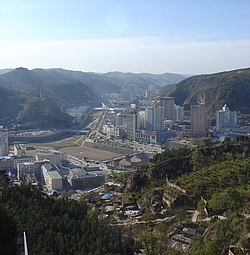
Nationalist forces captured Yan'an, the CCP's wartime capital, in a major symbolic victory. However, the Communists had already evacuated, and the capture drained Nationalist resources while the Communists' mobile guerrilla strategy preserved their fighting strength.
Image source: Yan'an
Jun 30, 1947
% complete
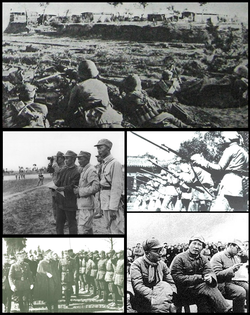
The People's Liberation Army crossed the Yellow River and launched offensives deep into Nationalist-held territory, including Liu Bocheng and Deng Xiaoping's thrust into the Dabie Mountains. The campaign marked the transition from Communist strategic defense to offensive operations.
Image source: Chinese Civil War
Sep 12, 1948 - Nov 2, 1948
% complete
The PLA's first of three decisive campaigns destroyed nearly half a million Nationalist troops in Manchuria and captured the entire region. The victory gave the Communists overwhelming numerical superiority for the first time and secure industrial bases for the war effort.
Image source: Liaoshen campaign
Nov 6, 1948 - Jan 10, 1949
% complete
One of the largest battles in military history, the Huaihai campaign in central China saw the PLA annihilate over 500,000 Nationalist troops with massive peasant logistical support. The decisive victory destroyed the Nationalists' best armies and opened the path to southern China.
Image source: Huaihai campaign
Nov 29, 1948 - Jan 31, 1949
% complete
The PLA encircled and defeated Nationalist forces in northern China, capturing Tianjin and accepting the peaceful surrender of Beiping (Beijing). The campaign completed the Communist conquest of North China and left the Nationalists with little hope of victory.
Image source: Pingjin campaign
Jan 21, 1949
% complete
Facing military collapse and American pressure, Chiang Kai-shek stepped down as president of the Nationalist government, handing nominal power to Vice President Li Zongren while retaining control of the KMT party and planning the eventual retreat to Taiwan.
Image source: Chiang Kai-shek
Apr 20, 1949 - Apr 23, 1949
% complete
After peace talks collapsed, Communist forces launched a massive crossing of the Yangtze River and stormed Nanjing, the Nationalist capital. The symbolic fall of the capital signaled the imminent collapse of Nationalist rule on the mainland.
Image source: Yangtze River Crossing campaign
May 12, 1949 - May 27, 1949
% complete
The PLA captured Shanghai, China's largest city and economic center, after a brief but intense campaign. The fall of the city deprived the Nationalists of their principal financial base and demonstrated the Communists' ability to take and hold major urban centers.
Image source: Shanghai Campaign
Oct 1, 1949
% complete
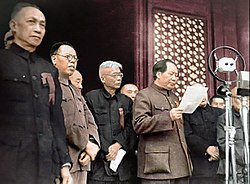
Mao Zedong proclaimed the founding of the People's Republic of China from Tiananmen in Beijing before a massive crowd. The establishment of Communist rule over mainland China marked the effective victory of the CCP in the civil war and transformed the geopolitics of Asia.
Image source: Proclamation of the People's Republic of China
Oct 25, 1949 - Oct 27, 1949
% complete
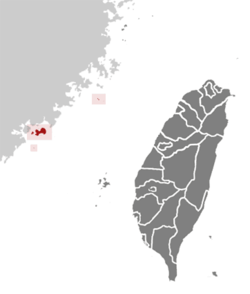
Communist forces attempting to invade Quemoy (Kinmen) island were decisively defeated by Nationalist defenders. The victory halted the Communist advance toward Taiwan, preserved the Nationalist foothold on offshore islands, and helped secure the cross-strait stalemate.
Image source: Battle of Guningtou
Dec 7, 1949
% complete
Chiang Kai-shek moved the Nationalist government to Taipei after the fall of Chengdu, evacuating over a million soldiers and civilians along with gold reserves and cultural treasures. The retreat established the Republic of China on Taiwan, dividing the Chinese nation across the Taiwan Strait.
Image source: Retreat of the government of the Republic of China to Taiwan
Mar 5, 1950 - May 1, 1950
% complete
The PLA invaded and captured Hainan Island, the last major Nationalist stronghold on the mainland coast. The fall of Hainan consolidated Communist control of mainland China and further narrowed the Nationalist-held territory to Taiwan and nearby islands.
Image source: Hainan Island Operation
Jun 27, 1950
% complete
Following the outbreak of the Korean War, President Truman ordered the U.S. Seventh Fleet into the Taiwan Strait to prevent a Communist invasion of Taiwan and Nationalist attacks on the mainland. The move froze the cross-strait conflict and cemented the division of China that persists today.
Image source: First Taiwan Strait Crisis
Or browse the full history timeline directory, with more than 2,000 topics.
This Chinese Civil War timeline was generated with the help of AI, using information found on the internet.
We work hard to keep these timelines accurate, but mistakes do get through. If you spot one, email us at [email protected] and we'll fix it for future visitors.
Generate yours with AI or build it from scratch, for free.
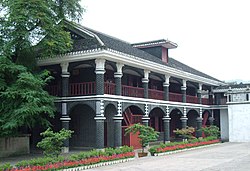
Export your timeline, add your own events, edit or remove AI-generated events, and much more
No credit card required.
Cancel anytime.
Cancel anytime.
You can create an unlimited number of timelines with up to 10 events on each one, customize how they look, export them to PDF, PNG, PowerPoint, CSV, and Excel, and share them with a link. Paid plans raise the event limit and add features like spreadsheet imports and collaborators.
Yes. You can cancel your subscription from your account page at any time, and you will not be charged again. Your subscription stays active for the rest of the period you already paid for.
Yes. We will email you a reminder before the annual renewal, and we will also email you a receipt.
Yes. You can email us within 15 days of any payment, and we will issue you a full refund.
Check out our pricing docs or send us an email anytime: [email protected].