-
Use Cases
-
Resources
-
Pricing
The Columbia disaster occurred on February 1, 2003, when the Space Shuttle Columbia broke apart during re-entry into Earth's atmosphere at the end of mission STS-107, killing all seven crew members. The tragedy was caused by damage to the shuttle's left wing from a piece of insulating foam that broke off the external fuel tank during launch sixteen days earlier. More Less
1991 - 1994
% complete
Program operating costs were lowered by 21% from 1991 to 1994, despite a planned increase in the yearly flight rate for assembly of the International Space Station.
Image source: Space Shuttle program
1998
% complete
Thicker reinforced carbon-carbon (RCC) was developed and installed in 1998 to prevent damage from micrometeoroid and orbital debris.
Image source: Space Shuttle thermal protection system
Jul 2000
% complete
The seven-member crew of STS-107 were selected in July 2000 for what would become Columbia's final mission.
Image source: STS-107
Jan 11, 2001 - Jan 16, 2003
% complete
The mission was originally scheduled to launch on January 11, 2001, but it was delayed thirteen times, until its launch on January 16, 2003.
Oct 2002
% complete
During STS-112, which flew in October 2002, a 4-by-5-by-12-inch chunk of bipod ramp foam broke away from the external tank bipod ramp and hit the SRB-ET attachment ring near the bottom of the left SRB, creating a dent 4 inches wide and 3 inches deep.
Image source: STS-112
Jul 2001
% complete
Seven asteroids discovered in July 2001 were later named after the astronauts: 51823 Rickhusband, 51824 Mikeanderson, 51825 Davidbrown, 51826 Kalpanachawla, 51827 Laurelclark, 51828 Ilanramon, and 51829 Williemccool.
Image source: Space Shuttle Columbia disaster
2003
% complete
In 2003, the airport in Amarillo, Texas, where Commander Rick Husband was from, was renamed to the Rick Husband Amarillo International Airport.
Image source: Rick Husband Amarillo International Airport
2003
% complete
A mountain peak in the Sangre de Cristo Range in the Colorado Rockies was renamed Columbia Point in 2003.
Feb 4, 2003
% complete
On February 4, 2003, President Bush and his wife Laura led a memorial service for the astronauts' families at the Johnson Space Center.
Feb 5, 2003
% complete
The first dedicated meteorological satellite launched by the Indian Space Research Organisation (ISRO), Metsat-1, was renamed to Kalpana-1 on February 5, 2003, after astronaut Kalpana Chawla.
Image source: Kalpana-1
Apr 1, 2003
% complete
On April 1, 2003, the Opening Day of baseball season, the Houston Astros honored the Columbia crew by having seven simultaneous first pitches thrown by family and friends of the crew.
Oct 28, 2003
% complete
On October 28, 2003, the names of the crew were added to the Space Mirror Memorial at the KSC Visitor Complex in Merritt Island, Florida, alongside the names of 17 other astronauts and cosmonauts who have died in the line of duty.
Image source: Space Mirror Memorial
2004
% complete
In 2004, the documentary Columbia: The Tragic Loss was released; it told of the life of Ilan Ramon and focused on the issues in NASA management that led to the disaster.
2004
% complete
In 2004, two space journalists, Michael Cabbage and William Harwood, released their book, Comm Check: The Final Flight of Shuttle Columbia.
Image source: Space Shuttle Columbia disaster
2004
% complete
In 2004, Bush conferred posthumous Congressional Space Medals of Honor to all 14 crew members killed in the Challenger and Columbia accidents.
Image source: Congressional Space Medal of Honor
2004
% complete
A supercomputer built in 2004 at the NASA Advanced Supercomputing Division was named "Columbia" in honor of the lost shuttle and her crew.
Image source: Columbia (supercomputer)
Feb 1, 2004
% complete
On February 1, 2004, the first anniversary of the Columbia disaster, Super Bowl XXXVIII held in Houston's Reliant Stadium began with a pregame tribute to the crew by singer Josh Groban performing "You Raise Me Up", with the crew of STS-114 in attendance.
Feb 2, 2004
% complete
On February 2, 2004, NASA Administrator Sean O'Keefe unveiled a memorial for the STS-107 crew at Arlington National Cemetery, located near the Challenger memorial.
Oct 2004
% complete
In October 2004, both houses of Congress passed a resolution to change the name of Downey, California's Space Science Learning Center to the Columbia Memorial Space Center, which is located at the former manufacturing site of the Space Shuttle orbiters.
Image source: Columbia Memorial Space Center
2005
% complete
A complex of seven hills east of the Spirit landing site was dubbed the Columbia Hills; each of the seven hills was individually named for a member of the crew, and the rover explored the summit of Husband Hill in 2005.
Image source: Columbia Hills (Mars)
2006
% complete
In 2006, the International Astronomical Union approved naming seven lunar craters after the Columbia astronauts.
Feb 2006
% complete
In February 2006, NASA's National Scientific Balloon Facility was renamed the Columbia Scientific Balloon Facility.
Image source: Columbia Scientific Balloon Facility
2008
% complete
PBS released a Nova documentary, Space Shuttle Disaster, in 2008, examining the Columbia accident.
Image source: Nova (American TV program)
2018
% complete
Michael Leinbach, a retired Launch Director at KSC who was working on the day of the disaster, released Bringing Columbia Home: The Untold Story of a Lost Space Shuttle and Her Crew in 2018.
Image source: Bringing It All Back Home
Jan 16, 2003
% complete
When STS-107 launched, Atlantis was undergoing preparation for the STS-114 launch on March 1, 2003.
Image source: STS-114
Feb 1, 2003
% complete
On February 1, 2003, Space Shuttle Columbia disintegrated as it re-entered the atmosphere over Texas and Louisiana, killing all seven astronauts on board. It was the second of two Space Shuttle missions to end in disaster, after the loss of Challenger and crew in 1986. Columbia had been scheduled to reenter the atmosphere and land that day.
Mar 2003 - Jun 2003
% complete
The Columbia Accident Investigation Board (CAIB) conducted public hearings from March until June 2003 as it investigated the causes of the disaster.
Image source: Columbia Accident Investigation Board
Mar 19, 2003
% complete
Columbia's flight data recorder was found near Hemphill, Texas, 75 miles southeast of Nacogdoches, on March 19, 2003.
Apr 28, 2003
% complete
A culture, which was part of an experiment to research their growth while consuming synthetic nutrients, was found to be alive on April 28, 2003.
Aug 2003
% complete
The CAIB released its final report in August 2003, detailing the technical and organizational causes of the Columbia disaster.
Jul 2011
% complete
In July 2011, lower water levels caused by a drought revealed a four-foot-diameter piece of debris in Lake Nacogdoches.
Jan 2004
% complete
In January 2004 President Bush announced the Vision for Space Exploration, calling for the Space Shuttle fleet to complete the ISS and be retired by 2010, to be replaced by a newly developed Crew Exploration Vehicle for travel to the Moon and Mars.
Image source: Vision for Space Exploration
2004
% complete
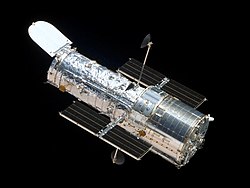
In 2004, NASA Administrator Sean O'Keefe canceled a planned servicing of the Hubble Space Telescope and decided that future missions would all rendezvous with the ISS to ensure the safety of the crew.
Image source: Hubble Space Telescope
Jul 26, 2005
% complete
The first Return to Flight mission, STS-114, began with the launch of Discovery on July 26, 2005, at 10:39 am EDT, resuming shuttle flights after the Columbia disaster.
2006
% complete
In 2006, NASA Administrator Michael Griffin decided to have one more servicing mission to the Hubble telescope, STS-125, which flew in May 2009.
Image source: STS-125
2011
% complete
The retirement of the Space Shuttle was delayed until 2011, after which no further crewed spacecraft were launched from the United States until 2020 when SpaceX's Crew Dragon Demo-2 mission successfully carried NASA astronauts Doug Hurley and Robert Behnken to the ISS.
Or browse the full history timeline directory, with more than 2,000 topics.
This Columbia Disaster timeline was generated with the help of AI, using information found on the internet.
We work hard to keep these timelines accurate, but mistakes do get through. If you spot one, email us at [email protected] and we'll fix it for future visitors.
Generate yours with AI or build it from scratch, for free.
Export your timeline, add your own events, edit or remove AI-generated events, and much more
No credit card required.
Cancel anytime.
Cancel anytime.
You can create an unlimited number of timelines with up to 10 events on each one, customize how they look, export them to PDF, PNG, PowerPoint, CSV, and Excel, and share them with a link. Paid plans raise the event limit and add features like spreadsheet imports and collaborators.
Yes. You can cancel your subscription from your account page at any time, and you will not be charged again. Your subscription stays active for the rest of the period you already paid for.
Yes. We will email you a reminder before the annual renewal, and we will also email you a receipt.
Yes. You can email us within 15 days of any payment, and we will issue you a full refund.
Check out our pricing docs or send us an email anytime: [email protected].