-
Use Cases
-
Resources
-
Pricing
The Counterculture of the 1960s was a social and cultural movement, primarily in the United States and Western Europe, that rejected mainstream values through anti-war activism, the hippie lifestyle, psychedelic music, civil rights advocacy, and experimentation with alternative ways of living. More Less
1957
% complete
The Situationist International was a restricted group of international revolutionaries founded in 1957. Rooted in Marxism and the European avant-gardes, it advocated alternative experiences of life and reached its peak influence during the wildcat strikes of May 1968 in France.
Image source: Situationist International
1965
% complete
During the IX Congress of the Italian Anarchist Federation in Carrara in 1965, a group split off from the organization and created the Gruppi di Iniziativa Anarchica.
Image source: Counterculture of the 1960s
Aug 19, 1966
% complete
During a 'safety intervention' organized by the state police on August 19, 1966, 140 long-haired people were arrested; that year around 4,000 young males were forced to cut their hair under a Communist Party campaign against the máničky subculture.
1968
% complete
In 1968, in Carrara, Italy, the International of Anarchist Federations was founded during an international anarchist conference by the French, Italian, Iberian, and Bulgarian-in-exile federations.
1968
% complete
Harsh responses from the Soviet Union towards popular uprisings, such as Czechoslovakia's Prague Spring in 1968, exemplified the authoritarian crackdowns that shaped the global context of the counterculture.
May 1968
% complete
In France, the General Strike centered in Paris in May 1968 united French students and workers and nearly toppled the government, influenced in part by Situationist ideas.
Image source: May 68
Aug 1969
% complete
In August 1969, during the first anniversary of the Soviet occupation of Czechoslovakia, long-haired youth were among the most active voices protesting against the occupation.
1971
% complete
The three-day Festival Rock y Ruedas de Avándaro, held in 1971 near Toluca, Mexico, became known as 'The Mexican Woodstock'; afterward, anything connected to the counterculture was banned from Mexican public airwaves until the late 1980s.
1958
% complete
In an act of civil disobedience, 60,000–100,000 protesters made up of students and pacifists converged on Trafalgar Square, London, in what became the 'ban the Bomb' demonstrations, marking an early expression of the era's anti-nuclear activism.
1960
% complete
Eisenhower's initial deception over the nature of the 1960 U-2 incident resulted in the government being caught in a blatant lie at the highest levels, contributing to a backdrop of growing distrust of authority among many who came of age during the period.
1961 - 1962
% complete
At the height of the Cold War, about 50,000 women brought together by Women Strike for Peace marched in 60 cities across the United States to demonstrate against nuclear weapons testing.
Apr 1961
% complete
The botched US Bay of Pigs Invasion of Cuba in 1961 was one example of harsh Cold War government actions that fueled skepticism toward authority among young people in Western democracies.
Oct 1962
% complete
The Cuban Missile Crisis brought the world to the brink of nuclear war and was largely fomented by duplicitous speech and actions on the part of the Soviet Union, deepening public anxiety about Cold War politics.
1963
% complete
Betty Friedan's The Feminine Mystique challenged the role of women as full-time homemakers in industrial society, giving momentum to the women's movement and influencing what many called Second-wave feminism.
1963
% complete
In 1963, many countries ratified the Partial Test Ban Treaty, which prohibited atmospheric nuclear testing—a victory for the growing anti-nuclear movement that had mobilized public concern since the mid-1950s.
1963
% complete
Nearly real-time TV news coverage of the civil rights movement's 1963 Birmingham campaign brought horrifying images of the bloody reality of armed conflict and repression into American living rooms for the first time.
Nov 22, 1963
% complete
Kennedy's assassination in November 1963, along with the attendant conspiracy theories concerning the event, led to further diminished trust in government, including among younger people.
1964
% complete
The 1964 Free Speech Movement at the University of California, Berkeley, which had its roots in the Civil Rights Movement of the southern United States, was one early example of student activism shaping the counterculture.
1964
% complete
Opposition to the Vietnam War began in 1964 on United States college campuses; by 1968, after large protests at the United Nations and the Pentagon, a majority of Americans opposed the war.
Mar 1965
% complete
The 'Bloody Sunday' event of the 1965 Selma to Montgomery marches was broadcast into American living rooms, galvanizing support for civil rights and fueling the counterculture's distrust of authority.
Oct 1, 1966 - Dec 31, 1966
% complete
By late 1966, the Diggers opened free stores which simply gave away their stock, provided free food, distributed free drugs, gave away money, organized free music concerts, and performed works of political art.
1968
% complete
In the US, social tension between elements of the counterculture and law enforcement reached the breaking point in notable cases such as the 1968 Columbia University protests in New York City.
1968
% complete
The Yippies employed theatrical gestures, such as advancing a pig ('Pigasus the Immortal') as a candidate for president in 1968, to mock the social status quo.
Jul 1968
% complete
The American Indian Movement (AIM), a Native American grassroots movement, was founded in July 1968 in Minneapolis, Minnesota, becoming a significant voice for Indigenous rights within the broader activist landscape.
Image source: American Indian Movement
Aug 1968
% complete
The 1968 Democratic National Convention protests in Chicago marked a breaking point in tensions between the counterculture and law enforcement, later portrayed in the film Medium Cool alongside the Chicago police riots.
Jun 28, 1969
% complete
The Stonewall riots were a series of spontaneous, violent demonstrations against a police raid that took place in the early morning hours of June 28, 1969, at the Stonewall Inn, a gay bar in Greenwich Village, New York City.
Image source: Stonewall riots
Apr 22, 1970
% complete
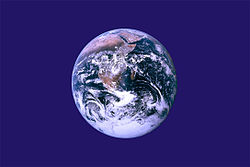
The first Earth Day in 1970 was significant in bringing environmental concerns to the forefront of youth culture, building on the counterculture's already prevalent 'back to nature' theme.
Image source: Earth Day
May 4, 1970
% complete
At Kent State University in Kent, Ohio, National Guardsmen acting as surrogates for police shot and killed students during antiwar protests, one of the most notorious breaking points between the counterculture and law enforcement.
Image source: Kent State shootings
1971
% complete
The 1970 pamphlet Women and Their Bodies, soon expanded into the 1971 book Our Bodies, Ourselves, was particularly influential in bringing about the new feminist consciousness of Second-wave feminism.
Image source: Our Bodies, Ourselves
1964
% complete
Oz magazine, first published as a satirical humour magazine in Sydney between 1963 and 1969, was strongly identified with the underground press and became the subject of a celebrated obscenity trial in Australia in 1964.
1969
% complete
Dennis Hopper's 'Road Trip' adventure Easy Rider became accepted as one of the landmark films of the era, capturing the spirit of the counterculture for mainstream audiences.
Aug 1969
% complete
The 1969 Woodstock Festival in New York state became a symbol of the counterculture movement, embodying its 'back to nature' ethos, although the 1970 Isle of Wight Festival would draw a larger crowd.
Image source: Woodstock
Aug 1969
% complete
Miles Davis's Bitches Brew sessions, recorded in August 1969 and released the following year, mostly abandoned jazz's usual swing beat in favor of a rock-style backbeat, fusing jazz with rock as the two worlds merged after 1967.
Image source: Bitches Brew
1964
% complete
Ken Kesey and his Merry Pranksters helped shape the developing character of the 1960s counterculture when they embarked on a cross-country voyage in a psychedelic school bus named Furthur, later chronicled in Tom Wolfe's The Electric Kool-Aid Acid Test.
1965
% complete
In 1965, Sandoz laboratories stopped its still legal shipments of LSD to the United States for research and psychiatric use, after a request from the US government concerned about its growing recreational use.
1966
% complete
Beginning in 1966, Stephen Gaskin's 'Monday Night Class' eventually outgrew the lecture hall and attracted 1,500 hippie followers in open discussions of spiritual values drawing from Christian, Buddhist, and Hindu teachings.
1966
% complete
ISKCON (the International Society for Krishna Consciousness) established its first temple in New York City in 1966, reflecting the counterculture's embrace of Eastern spirituality.
Sep 19, 1966
% complete
On September 19, 1966, Timothy Leary founded the League for Spiritual Discovery, a religion declaring LSD as its holy sacrament, in part as an unsuccessful attempt to maintain legal status for psychedelic use based on a 'freedom of religion' argument.
Jan 14, 1967
% complete
After the January 14, 1967 Human Be-In in San Francisco organized by artist Michael Bowen, the media's attention on counterculture was fully activated, gathering some 30,000 hippies in Golden Gate Park.
Jun 1967 - Sep 1967
% complete
Scott McKenzie's rendition of 'San Francisco (Be Sure to Wear Flowers in Your Hair)' brought as many as 100,000 young people from all over the world to celebrate San Francisco's 'Summer of Love' in 1967.
Or browse the full history timeline directory, with more than 2,000 topics.
This Counterculture of the 1960s timeline was generated with the help of AI, using information found on the internet.
We work hard to keep these timelines accurate, but mistakes do get through. If you spot one, email us at [email protected] and we'll fix it for future visitors.
Generate yours with AI or build it from scratch, for free.
Export your timeline, add your own events, edit or remove AI-generated events, and much more
No credit card required.
Cancel anytime.
Cancel anytime.
You can create an unlimited number of timelines with up to 10 events on each one, customize how they look, export them to PDF, PNG, PowerPoint, CSV, and Excel, and share them with a link. Paid plans raise the event limit and add features like spreadsheet imports and collaborators.
Yes. You can cancel your subscription from your account page at any time, and you will not be charged again. Your subscription stays active for the rest of the period you already paid for.
Yes. We will email you a reminder before the annual renewal, and we will also email you a receipt.
Yes. You can email us within 15 days of any payment, and we will issue you a full refund.
Check out our pricing docs or send us an email anytime: [email protected].