-
Use Cases
-
Resources
-
Pricing
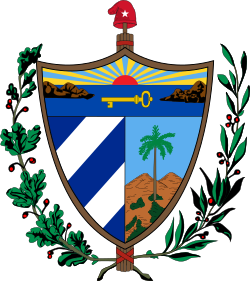
The Cuban Revolution was an armed rebellion led by Fidel Castro and the 26th of July Movement against the authoritarian government of Fulgencio Batista. Beginning with the failed 1953 attack on the Moncada Barracks, the revolutionaries waged guerrilla warfare in the Sierra Maestra mountains before ultimately toppling Batista on January 1, 1959, transforming Cuba into a socialist state aligned with the Soviet Union. More Less
May 20, 1902
% complete
Cuba formally became an independent republic, but the Platt Amendment limited its sovereignty by allowing U.S. intervention. This period established a pattern of political instability and American economic dominance that shaped Cuban politics for decades.
Image source: Cuban War of Independence
Sep 4, 1933
% complete
Sergeant Fulgencio Batista led the Revolt of the Sergeants, overthrowing the provisional government of Carlos Manuel de Céspedes. Batista became the dominant figure in Cuban politics, ruling directly or through puppet presidents for much of the next two decades.
Image source: Fulgencio Batista
Oct 1, 1940
% complete
Batista was elected president under a new progressive constitution. His first term saw social reforms and close ties with the United States, but his later return to power would be marked by authoritarianism and corruption.
Image source: 1940 Cuban general election
Mar 1952
% complete
Fidel Castro, a young lawyer, filed legal challenges against Batista's coup, arguing it violated the constitution. When the courts refused to act, Castro concluded that only armed revolution could remove the dictatorship.
Image source: Murder of Sonia Rescalvo Zafra
Mar 10, 1952
% complete
Batista seized power in a bloodless coup just months before scheduled elections, canceling them and suspending constitutional guarantees. His increasingly corrupt and repressive regime became the catalyst for armed opposition, including Fidel Castro's movement.
Image source: 1952 Cuban coup d'état
Jul 26, 1953
% complete
Fidel Castro led roughly 160 rebels in an assault on the Moncada Barracks in Santiago de Cuba, hoping to spark an uprising against Batista. The attack failed disastrously; many rebels were killed or captured, but the date, July 26, became the namesake of Castro's July 26 Movement.
Image source: Attack on the Moncada Barracks
Oct 16, 1953
% complete
At his trial, Castro delivered a defiant speech condemning the Batista regime and outlining his program of reform. Though sentenced to prison, the speech circulated widely and transformed Castro into a national symbol of resistance.
Image source: History Will Absolve Me
May 15, 1955
% complete
Under public pressure, Batista released political prisoners, including Fidel and Raúl Castro. The brothers went into exile in Mexico, where they began planning a new armed expedition to overthrow the regime.
Image source: Havana Presidential Palace attack (1957)
Jul 1955
% complete
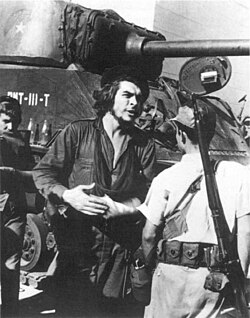
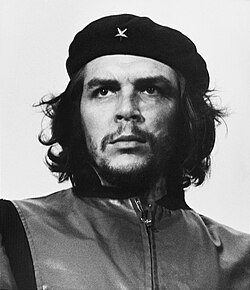
In Mexico City, Argentine doctor Ernesto 'Che' Guevara met Fidel Castro and joined his revolutionary expedition. Guevara became one of the most important figures of the Cuban Revolution, providing military leadership and ideological direction.
Image source: Che Guevara
Nov 25, 1956
% complete
Eighty-two rebels, including Fidel Castro, Che Guevara, Raúl Castro, and Camilo Cienfuegos, sailed from Mexico aboard the yacht Granma. The overcrowded vessel reached Cuba's eastern coast on December 2 after a difficult voyage.
Image source: Landing of the Granma
Dec 5, 1956
% complete
Batista's army ambushed the exhausted Granma survivors shortly after their landing, killing or capturing most of them. Only about a dozen fighters, including Castro and Guevara, escaped into the Sierra Maestra mountains to regroup.
Image source: Battle of Alegría de Pío
Feb 1957
% complete
The surviving rebels built a guerrilla base in the remote Sierra Maestra mountains, launching small attacks and winning support from local peasants. Herbert Matthews' interview with Castro in The New York Times that month dispelled rumors of his death and boosted the movement's credibility.
Image source: Sierra Maestra
Mar 13, 1957
% complete
Student revolutionaries from the Directorio Revolucionario stormed the Presidential Palace in Havana in an attempt to assassinate Batista. The attack failed, and most participants were killed, but it demonstrated widespread opposition to the regime.
Sep 5, 1957
% complete
Naval officers and civilians rose up against Batista in Cienfuegos, briefly seizing the city before being crushed by government forces. The revolt revealed growing discontent even within the military.
Feb 1958
% complete
Raúl Castro led a column eastward to establish the Frank País Second Front in the Sierra Cristal near Oriente's north coast. The front expanded rebel territory, captured soldiers, and ran its own administration, demonstrating the insurgency's growing strength.
Image source: Second National Front of the Escambray
Mar 14, 1958
% complete
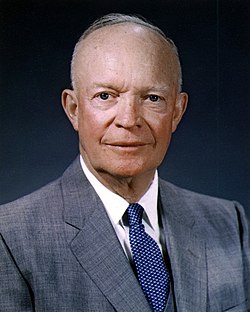
The Eisenhower administration suspended arms shipments to Cuba, signaling declining U.S. support for Batista. The embargo weakened the regime militarily and politically, hastening its collapse.
Image source: United States embargo against Cuba
May 24, 1958 - Aug 8, 1958
% complete
Batista committed thousands of troops to crush the rebellion in the Sierra Maestra. Despite superior numbers and equipment, government forces suffered heavy losses, and the campaign ended in failure, boosting rebel morale and recruitment.
Image source: Operation Verano
Jul 29, 1958 - Aug 8, 1958
% complete
The final engagement of Operation Verano saw Castro's forces nearly trapped by the army. Through skillful negotiation and fighting, the rebels escaped encirclement, effectively ending the government's last major offensive.
Image source: Battle of Las Mercedes
Aug 21, 1958
% complete
With the army demoralized, Castro ordered simultaneous offensives: Che Guevara and Camilo Cienfuegos led columns west toward Santa Clara, while other forces advanced in Oriente province, isolating government garrisons city by city.
Image source: Cuban Revolution
Nov 20, 1958 - Nov 30, 1958
% complete
Castro's forces attacked the army garrison at Guisa in Oriente province, capturing the town after fierce fighting. The victory opened the way for the rebel advance on Santiago de Cuba and further eroded government control.
Image source: Battle of Guisa
Dec 28, 1958 - Jan 1, 1959
% complete
Che Guevara's column attacked Santa Clara, derailing an armored train and overwhelming the garrison despite heavy fighting. The fall of the city, Cuba's third largest, made Batista's position untenable and is regarded as the decisive battle of the revolution.
Image source: Battle of Santa Clara
Jan 1, 1959
% complete
In the early hours of New Year's Day, Batista resigned and fled to the Dominican Republic with family and close associates, ending his rule. A military junta briefly attempted to hold power as rebel forces advanced on Havana.
Jan 1959
% complete
Revolutionary tribunals tried former Batista officials and security personnel for crimes including torture and murder. Hundreds were executed after public trials, drawing international criticism but reflecting the population's demand for justice.
Jan 8, 1959
% complete
Fidel Castro arrived in Havana to jubilant crowds after a triumphal march across the island. Manuel Urrutia had been installed as provisional president, but Castro emerged as the revolution's undisputed leader.
Feb 16, 1959
% complete
After President Urrutia resigned amid disputes over the pace of radical change, Castro assumed the office of prime minister, consolidating his personal control over the revolutionary government.
Image source: Prime Minister of Cuba
May 17, 1959
% complete
The revolutionary government enacted sweeping land reform, expropriating large estates and distributing land to peasants. The law angered wealthy landowners and foreign corporations, particularly American sugar companies, straining relations with the United States.
Image source: Agrarian reforms in Cuba
Oct 19, 1960
% complete
In response to Cuba's nationalization of American-owned properties and deepening Soviet ties, the Eisenhower administration imposed a partial trade embargo, which was expanded to a full embargo in 1962 and remained in place for decades.
Apr 16, 1961
% complete
On the eve of the Bay of Pigs invasion, Castro publicly declared the Cuban Revolution to be socialist, marking the definitive ideological turn of the revolution and aligning Cuba with Marxism-Leninism.
Image source: Politics of Cuba
Apr 17, 1961 - Apr 19, 1961
% complete
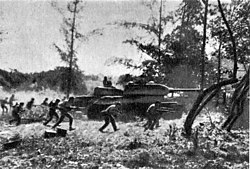
CIA-trained Cuban exiles landed at the Bay of Pigs attempting to overthrow Castro's government. The invasion collapsed within three days, humiliating the United States, cementing Castro's popularity, and pushing Cuba firmly toward the Soviet bloc.
Image source: Bay of Pigs Invasion
Oct 16, 1962 - Oct 28, 1962
% complete
The discovery of Soviet nuclear missiles in Cuba triggered a thirteen-day standoff between the United States and the Soviet Union. The crisis was resolved through negotiation, with the Soviets withdrawing the missiles in exchange for a U.S. pledge not to invade Cuba.
Image source: Cuban Missile Crisis
Oct 9, 1967
% complete
Che Guevara, who had left Cuba to foment revolution abroad, was captured by Bolivian forces assisted by the CIA and executed. He became a global martyr and enduring symbol of revolutionary struggle.
Image source: Guerrillero Heroico
Or browse the full history timeline directory, with more than 2,000 topics.
This Cuban Revolution timeline was generated with the help of AI, using information found on the internet.
We work hard to keep these timelines accurate, but mistakes do get through. If you spot one, email us at [email protected] and we'll fix it for future visitors.
Generate yours with AI or build it from scratch, for free.
Export your timeline, add your own events, edit or remove AI-generated events, and much more
No credit card required.
Cancel anytime.
Cancel anytime.
You can create an unlimited number of timelines with up to 10 events on each one, customize how they look, export them to PDF, PNG, PowerPoint, CSV, and Excel, and share them with a link. Paid plans raise the event limit and add features like spreadsheet imports and collaborators.
Yes. You can cancel your subscription from your account page at any time, and you will not be charged again. Your subscription stays active for the rest of the period you already paid for.
Yes. We will email you a reminder before the annual renewal, and we will also email you a receipt.
Yes. You can email us within 15 days of any payment, and we will issue you a full refund.
Check out our pricing docs or send us an email anytime: [email protected].