-
Use Cases
-
Resources
-
Pricing
Cyrus the Great (c. 600–530 BCE) was the founder of the Achaemenid Empire, the first Persian Empire, and one of history's most influential rulers. He unified the Medes and Persians, conquered Lydia and Babylon, and established an empire known for its tolerance, efficient administration, and respect for local customs. His policies, recorded in the Cyrus Cylinder, are often regarded as early declarations of human rights. More Less
900 BC
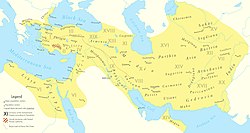
The Persian domination and kingdom in the Iranian plateau started as an extension of the Achaemenid dynasty, who expanded their earlier dominion possibly from the 9th century BC onward, laying the foundations for the empire that Cyrus the Great would later lead to unprecedented heights.
Image source: Achaemenid Empire
700 BC
Building on their earlier expansion from the 9th century BC onward, the Achaemenid dynasty consolidated its control over the Iranian plateau, establishing the political structures that would enable Cyrus the Great to forge one of history's largest empires.
559 BC
Cyrus the Great rose to prominence as ruler of the Persian kingdom, extending the Achaemenid dominion into a vast empire that dominated the Iranian plateau and beyond, becoming one of the most celebrated rulers of antiquity.
Image source: Cyrus the Great

550 BC
The use of the name Kuruş as a currency denomination for coinage goes back to the 6th century BC, dating to the time of the Croeseid, the world's first gold coin, originally minted by King Croesus of Lydia during the era of Cyrus the Great's conquests.
Image source: Croeseid

530 BC
According to the Chronicle of Michael the Syrian (AD 1166–1199), Cyrus was killed by his wife Tomyris, queen of the Massagetae (Maksata), in the 60th year of Jewish captivity, ending the reign of the empire's founder.
312 BC
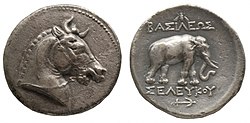
The administrative system established under Cyrus and his successors lasted for centuries, and was retained both by the invading Seleucid dynasty during their control of Persia, demonstrating the durability of Achaemenid governance.
Image source: Seleucid Empire
300 BC - 651
This system lasted for centuries, and was retained both by the invading Seleucid dynasty during their control of Persia, and later Iranian dynasties including the Parthians and Sasanians, testifying to the enduring influence of Cyrus the Great's imperial organization.
247 BC
Later Iranian dynasties including the Parthians retained the system of governance inherited from the Achaemenid era founded by Cyrus the Great, ensuring continuity across centuries of Iranian history.
Image source: Parthian Empire

224 AD
The Sasanians, like the Parthians before them, preserved the administrative framework first developed under Cyrus the Great, keeping the structures of the Achaemenid state alive well into late antiquity.
Image source: Sasanian Empire

600 BC
The use of the name Kuruş as a currency denomination for coinage goes back to the 6th century BC, dating to the time of the Croeseid minted by King Croesus of Lydia, whose kingdom fell to Cyrus the Great.
Image source: Kuruş

This Cyrus the Great timeline was generated with the help of AI, using information found on the internet.
We work hard to keep these timelines accurate, but mistakes do get through. If you spot one, email us at [email protected] and we'll fix it for future visitors.
Generate yours with AI or build it from scratch, for free.