-
Use Cases
-
Resources
-
Pricing
The Edict of Nantes was a decree issued on April 13, 1598, by King Henry IV of France, granting substantial civil rights and religious freedom to the Huguenots (French Calvinist Protestants) after decades of devastating Wars of Religion. The edict ended the conflict by establishing Catholicism as the state religion while allowing Protestant worship in designated towns, guaranteeing equal treatment in public office, and providing Huguenots with fortified strongholds for their protection. It remained a cornerstone of French religious policy until Louis XIV revoked it with the Edict of Fontainebleau in 1685, prompting mass emigration of Protestants and significant economic and demographic losses for France. More Less
Jan 1562
% complete
Promulgated 36 years before the Edict of Nantes, the Edict of Saint-Germain granted limited tolerance to Huguenots but was overtaken by events, as it was not formally registered until after the Massacre of Vassy.
Image source: Edict of Saint-Germain
Mar 1, 1562
% complete
The Massacre of Vassy on 1 March 1562 triggered the first of the French Wars of Religion, the series of conflicts that would afflict France during the second half of the 16th century and set the stage for later edicts of religious tolerance.
Image source: Massacre of Vassy
1589
% complete
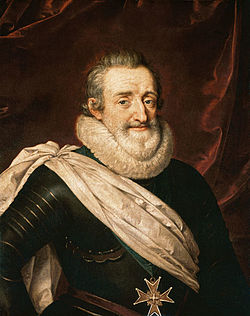
Prior to assuming the throne in 1589, Henry IV had espoused Protestantism, and he remained sympathetic to the Protestant cause throughout his reign.
Image source: Henry IV of France
1593
% complete
It was widely believed that Henry IV converted to Catholicism in 1593 only to secure his position as king, a pragmatic move that helped him consolidate power in a predominantly Catholic nation.
1598 - 1599
% complete
The Parlement of Paris delayed ten months before finally signing and setting seals to the document in 1599, after extracting concessions from the King on behalf of the clergy. The Archives Nationales in Paris preserves only the text of this shorter modified document.
1598 - 1606
% complete
Alongside the Edict, brevets were granted for a period of eight years, giving additional assurances to the Protestants; they were subject to renewal rather than permanent registration.
Apr 1598
% complete
In April 1598, King Henry IV of France signed the Edict of Nantes, granting the Calvinist Protestants of France, also known as Huguenots, substantial rights in the nation, which was predominantly Catholic. It successfully marked the end of the French Wars of Religion.
Apr 1598
% complete
The Edict of Nantes successfully marked the end of the French Wars of Religion, which had afflicted France during the second half of the 16th century.
Image source: French Wars of Religion
1606
% complete
The brevets, originally granted for eight years, were renewed by Henry IV in 1606, maintaining the special provisions granted to the Huguenots alongside the main edict.
1890
% complete
By the late 19th century the Catholic tradition cited the signing in the Maison des Tourelles, the home of the prosperous Spanish trader André Ruiz, which was destroyed by bombing during the Second World War.
Image source: Edict of Nantes
1598 - 1685
% complete
Apart from the withdrawn brevets, the Edict remained unaltered in effect, registered by the parlements as 'fundamental and irrevocable law', until its revocation in 1685.
1610
% complete
The assassination of Henry IV raised fears among the Huguenots that their protections might be revoked, threatening the stability that the Edict of Nantes had secured.
1611
% complete
Within a week of the assassination of Henry IV, Marie de' Medici confirmed the Edict and renewed the brevets, stilling Protestant fears of another wave of persecution.
Image source: Marie de' Medici
1620 - 1622
% complete
A Huguenot revolt broke out in Languedoc, one of the religious civil wars that challenged the settlement established by the Edict of Nantes.
Image source: Huguenot rebellions
1622
% complete
By the Peace of Montpellier in 1622, concluding the Huguenot revolt in Languedoc, the fortified Protestant towns were reduced to two: La Rochelle and Montauban.
1627 - 1628
% complete
Cardinal Richelieu blockaded La Rochelle for fourteen months during the siege, a decisive blow to Huguenot political and military power in France.
Image source: Siege of La Rochelle
1629
% complete
Both brevets were withdrawn in 1629 by Louis XIII following the Siege of La Rochelle, after a final religious civil war, marking the first major erosion of the protections granted by the Edict of Nantes.
1685
% complete
The revocation led to a mass exodus of Huguenots from France and a loss of talent and resources for the country.
Image source: Huguenots
1685
% complete
Some Huguenots moved to Denmark, where the city of Fredericia, laid waste after the Swedish conquest in 1656, needed new settlers; a specific clause in the city ordinance allowed Protestants other than Lutherans to live in the city.
Image source: Fredericia
Oct 1685
% complete
In October 1685, Louis XIV, the grandson of Henry IV, renounced the Edict of Nantes and declared Protestantism illegal with the Edict of Fontainebleau.
Image source: Edict of Fontainebleau
Nov 7, 1787
% complete
Freedom to worship and civil rights for non-Catholics in France were restored when Louis XVI signed the Edict of Versailles, also known as the Edict of Tolerance, 102 years after the revocation of the Edict of Nantes.
Jan 1788
% complete
The Edict of Versailles was enacted by parlement two months later, less than two years before the end of the Ancien Régime.
Image source: Edict of Versailles
1789
% complete
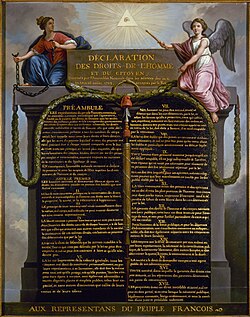
The Declaration of the Rights of Man and Citizen of 1789 fully eliminated religious discrimination in France, completing the restoration of rights begun with the Edict of Versailles.
Image source: Declaration of the Rights of Man and of the Citizen
Or browse the full history timeline directory, with more than 2,000 topics.
This Edict of Nantes timeline was generated with the help of AI, using information found on the internet.
We work hard to keep these timelines accurate, but mistakes do get through. If you spot one, email us at [email protected] and we'll fix it for future visitors.
Generate yours with AI or build it from scratch, for free.
Export your timeline, add your own events, edit or remove AI-generated events, and much more
No credit card required.
Cancel anytime.
Cancel anytime.
You can create an unlimited number of timelines with up to 10 events on each one, customize how they look, export them to PDF, PNG, PowerPoint, CSV, and Excel, and share them with a link. Paid plans raise the event limit and add features like spreadsheet imports and collaborators.
Yes. You can cancel your subscription from your account page at any time, and you will not be charged again. Your subscription stays active for the rest of the period you already paid for.
Yes. We will email you a reminder before the annual renewal, and we will also email you a receipt.
Yes. You can email us within 15 days of any payment, and we will issue you a full refund.
Check out our pricing docs or send us an email anytime: [email protected].