-
Use Cases
-
Resources
-
Pricing
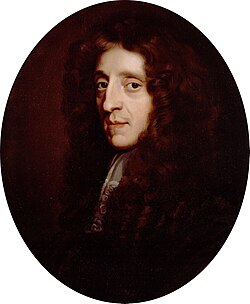
Epicurus was an ancient Greek philosopher born on Samos in 341 BCE who founded Epicureanism, a school of thought centered in Athens known as 'The Garden.' He taught that pleasure—understood as tranquility (ataraxia) and freedom from pain (aponia)—is the highest good, emphasizing friendship, simple living, and freedom from fear of gods and death. More Less
200 BC - 101 BC
Epicurus's doctrines became rather popular in Asia Minor in the 2nd century BC. Basilides, before becoming head of the school in Athens, studied under an Epicurean community in Syria, collaborating with mathematicians Apollonius of Perga and Hypsicles and teaching Philonides of Laodicea, a member of the Seleucid court.
Image source: Epicurus
200 BC - 101 BC
During the 2nd and 1st centuries BC, dissident sects of Epicureans established themselves in Cos and Rhodes who broke with the scholarchs of the Garden in Athens.
150 BC - 110 BC
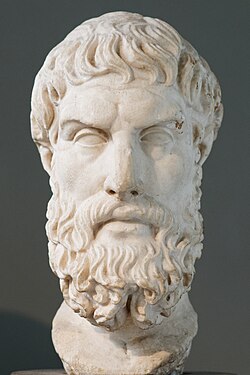
After a gap in the historical record following Basilides, Apollodorus, nicknamed 'the tyrant of the Garden', served as head of the Athenian school from roughly the middle of the second century BC until 110 BC. Though he apparently wrote over 400 books, only traces survive.
Image source: Scholarch

100 BC - 51 BC
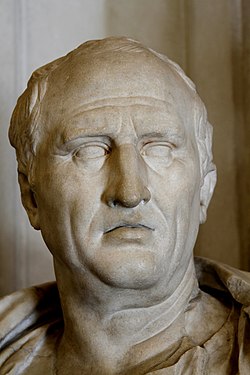
Although later texts, such as the writings of the first-century BC Roman orator Cicero, portray Epicureanism and Stoicism as rivals, this rivalry seems to have only emerged after Epicurus's death.
Image source: Cicero
99 BC - 1 BC
Three Epicurean philosophers in the 1st century BC — Philodemus, Lucretius, and Siro — did much to establish Epicurus's reputation in Italy, being later defended by Lucius Manlius Torquatus and Gaius Velleius in Cicero's works, even as Epicureanism declined in Athens.
Image source: Lucretius

88 BC - 86 BC
During Zeno's tenure as scholarch, Athens' role in the First Mithridatic War and Sulla's reconquest of the city in 86 BC plunged all of the philosophical schools in Athens into crisis.
Image source: First Mithridatic War

86 BC - 51 BC
After Zeno's death, Phaedrus (died c. 70 BC) and Patro (died after c. 51 BC) returned to Athens from Rome, where they had fled during the war, to head the Garden. The middle of the 1st century BC provides the last evidence for the Athenian Garden's existence.
100 AD - 200 AD
Some time in the 2nd century CE, an otherwise unknown Epicurean philosopher, Diogenes of Oenoanda, attempted to preserve his school's doctrines in an enormous wall inscription in Lycia spanning 260 square meters with over 25,000 words of writing, roughly a third of which has been preserved.
Image source: Diogenes of Oenoanda

1 AD - 199 AD
In the first and second centuries AD, Epicureanism gradually began to decline as it failed to compete with Stoicism, which had an ethical system more in line with traditional Roman values.
Image source: Stoicism

200 AD - 300 AD
During the third century AD, Christianity rapidly expanded throughout the Roman Empire, contributing to the marginalization of Epicurean philosophy.
Image source: History of Christianity

This Epicurus timeline was generated with the help of AI, using information found on the internet.
We work hard to keep these timelines accurate, but mistakes do get through. If you spot one, email us at [email protected] and we'll fix it for future visitors.
Generate yours with AI or build it from scratch, for free.