-
Use Cases
-
Resources
-
Pricing
The Eurovision Song Contest is an annual international music competition organized by the European Broadcasting Union (EBU), first held in Lugano, Switzerland in 1956. Featuring performers representing primarily European countries, the contest has grown into one of the world's most-watched non-sporting television events, famous for launching careers (like ABBA and Céline Dion), its unique voting system combining jury and public votes, and its celebration of musical diversity across the continent. More Less
May 24, 1956
% complete
The inaugural Eurovision Song Contest was staged at the Teatro Kursaal in Lugano, Switzerland. Seven nations each performed two songs, and Switzerland's Lys Assia won with 'Refrain', launching what would become the world's longest-running annual international music competition.
Image source: Eurovision Song Contest 1956
Mar 3, 1957
% complete
Held in Frankfurt am Main, West Germany, the second contest introduced one song per country instead of two, a format that became standard. The Netherlands won with Corry Brokken's 'Net als toen'.
Image source: Eurovision Song Contest 1957
Mar 11, 1959
% complete
At Cannes, France hosted its first Eurovision after winning in 1958. Teddy Scholten of the Netherlands won with 'Een beetje', giving that country back-to-back victories.
Image source: Eurovision Song Contest 1959
Mar 29, 1960
% complete
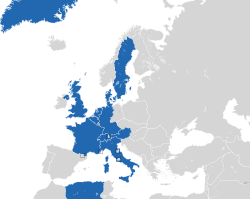
France won for the second time when Jacqueline Boyer performed 'Tom Pillibi' at the Royal Festival Hall in London, cementing France's early dominance in the competition.
Image source: Eurovision Song Contest 1960
Mar 18, 1961
% complete
Luxembourg claimed its first victory with Jean-Claude Pascal singing 'Nous les amoureux' at the Palais des Festivals in Cannes, beginning a remarkable run of success for the small nation.
Image source: Eurovision Song Contest 1961
Mar 18, 1962
% complete
Isabelle Aubret won for France with 'Un premier amour' at Villa Louvigny in Luxembourg City, marking France's third victory and reinforcing the dominance of francophone countries in the early era.
Image source: Eurovision Song Contest 1962
Mar 20, 1965
% complete
Ireland joined the contest in Naples as Luxembourg secured another win thanks to France Gall's 'Poupée de cire, poupée de son', written by Serge Gainsbourg — the first pop-style winner.
Image source: Eurovision Song Contest 1965
Mar 5, 1966
% complete
Austria earned its first and only victory when Udo Jürgens sang 'Merci Chérie' at Villa Louvigny in Luxembourg City, ending Austria's long wait for a win.
Image source: Eurovision Song Contest 1966
Apr 8, 1967
% complete
Sandie Shaw gave the United Kingdom its first victory with 'Puppet on a String' at the Großer Festsaal der Hofburg in Vienna, launching the UK's strong run in the late 1960s.
Image source: Eurovision Song Contest 1967
Apr 6, 1968
% complete
Spain won for the first time at the Royal Albert Hall in London as Massiel edged out Cliff Richard by just one point with 'La, la la'.
Image source: Eurovision Song Contest 1968
Apr 3, 1971
% complete
Séverine won Monaco's sole victory with 'Un banc, un arbre, une rue' at the Gaiety Theatre in Dublin, where the contest introduced postcards introducing each act.
Image source: Eurovision Song Contest 1971
Mar 22, 1975
% complete
Teach-In gave the Netherlands its fourth victory with 'Ding-a-dong' at Stockholm's Internationalfären. The same year introduced the iconic 'douze points' scoring system still used today.
Image source: Eurovision Song Contest 1975
Apr 3, 1976
% complete
Brotherhood of Man scored the UK's second win with 'Save Your Kisses for Me', which went on to sell millions of copies worldwide and became one of Eurovision's best-selling winners.
Image source: Eurovision Song Contest 1976
Mar 12, 1958
% complete
Although Italy's Domenico Modugno finished third with 'Volare' in Hilversum, his performance became an international sensation, topping charts worldwide and becoming one of the most famous songs ever to debut at Eurovision.
Image source: Nel blu, dipinto di blu
Mar 29, 1969
% complete
For the first time ever, four countries tied for victory: Spain's Salomé, the United Kingdom's Lulu, France's Frida Boccara, and the Netherlands' Lenny Kuhr all shared the title in Madrid.
Image source: Eurovision Song Contest 1969
Apr 6, 1974
% complete
Sweden's ABBA triumphed with 'Waterloo' at the Dome in Brighton, catapulting them to worldwide fame and becoming arguably the most famous Eurovision winner of all time.
Image source: Eurovision Song Contest 1974
Apr 19, 1980
% complete
Johnny Logan won in The Hague for Ireland with 'What's Another Year', beginning his legendary association with the contest; he would later become the only artist to win twice as a performer.
Image source: Eurovision Song Contest 1980
Apr 4, 1981
% complete
Bucks Fizz delivered the United Kingdom's fourth victory in Dublin, complete with their famous skirt-rip dance routine that became one of Eurovision's most iconic performances.
Image source: Eurovision Song Contest 1981
Apr 4, 1987
% complete
Performing 'Hold Me Now' in Brussels, Johnny Logan became the only singer to win the contest twice, having also composed Linda Martin's winning entry 'Why Me?' in 1992.
Image source: Hold Me Now (Johnny Logan song)
May 6, 1989
% complete
Riva won Yugoslavia's only Eurovision victory with 'Rock Me' in Lausanne, allowing Yugoslavia to host the final pre-reunification-era contest in Zagreb in 1990.
Image source: Rock Me (Riva song)
May 16, 2009
% complete
Norway's Alexander Rybak won in Moscow with 'Fairytale', scoring 387 points under the new combined jury-and-televote system — then the highest total in Eurovision history.
Image source: Fairytale (Alexander Rybak song)
Mar 23, 1963
% complete
The 1963 contest in London saw Denmark return after an absence and Finland participate for the first time. Denmark won with Grethe and Jørgen Ingmann's 'Dansevise'.
Image source: Eurovision Song Contest 1963
Mar 21, 1964
% complete
Portugal made its first appearance in Naples while Italy celebrated its only win of the 20th century with Gigliola Cinquetti's 'Non ho l'età', sung by the 16-year-old singer.
Image source: Eurovision Song Contest 1964
Apr 1, 1978 - Mar 31, 1979
% complete
Izhar Cohen & Alphabeta won in Paris with 'A-Ba-Ni-Bi', and Israel successfully defended the title in Jerusalem in 1979 when Milk and Honey sang 'Hallelujah', the first contest held outside Europe.
Image source: Eurovision Song Contest 1978
Mar 21, 1970
% complete
In response to the four-way tie of 1969, new tie-break procedures were introduced. Dana won for Ireland with 'All Kinds of Everything' in Amsterdam, giving Ireland its first win.
Image source: Eurovision Song Contest 1970
May 25, 1995
% complete
Norway's Secret Garden won in Dublin with the mostly instrumental 'Nocturne', a rare victory for an unconventional entry that showcased the diversity of musical styles at Eurovision.
Image source: Eurovision Song Contest 1995
May 9, 1998
% complete
Israel's Dana International won in Birmingham with 'Diva', making history as the first openly transgender performer to win Eurovision and marking a landmark moment for LGBTQ+ visibility.
Image source: Eurovision Song Contest 1998
May 29, 1999
% complete
With the free language rule restored, countries could sing in any language. Sweden's Charlotte Nilsson won 'Take Me to Your Heaven' in Jerusalem as 23 nations competed without relegation for top finishers.
Image source: Eurovision Song Contest 1999
May 12, 2001
% complete
Tanel Padar, Dave Benton, and 2XL won in Copenhagen with 'Everybody'. Dave Benton became the first Black winner of Eurovision, and Estonia became the first former Soviet republic to win.
Image source: Everybody (Tanel Padar and Dave Benton song)
May 12, 2007
% complete
Serbia, competing as an independent nation for the first time, won in Helsinki with Marija Šerifović's ballad 'Molitva' — notably the last winning entry sung entirely in a language other than English for years.
Image source: Eurovision Song Contest 2007
Or browse the full history timeline directory, with more than 2,000 topics.
This Eurovision Song Contest timeline was generated with the help of AI, using information found on the internet.
We work hard to keep these timelines accurate, but mistakes do get through. If you spot one, email us at [email protected] and we'll fix it for future visitors.
Generate yours with AI or build it from scratch, for free.
Export your timeline, add your own events, edit or remove AI-generated events, and much more
No credit card required.
Cancel anytime.
Cancel anytime.
You can create an unlimited number of timelines with up to 10 events on each one, customize how they look, export them to PDF, PNG, PowerPoint, CSV, and Excel, and share them with a link. Paid plans raise the event limit and add features like spreadsheet imports and collaborators.
Yes. You can cancel your subscription from your account page at any time, and you will not be charged again. Your subscription stays active for the rest of the period you already paid for.
Yes. We will email you a reminder before the annual renewal, and we will also email you a receipt.
Yes. You can email us within 15 days of any payment, and we will issue you a full refund.
Check out our pricing docs or send us an email anytime: [email protected].